Is a Big Brake Kit Worth It? What to Upgrade First

Thursday, July 02, 2026
by Sam Chen
CEO
Want to learn more?
brake caliper kit - ICOOH

Is a Big Brake Kit Worth It? What You Should Upgrade First

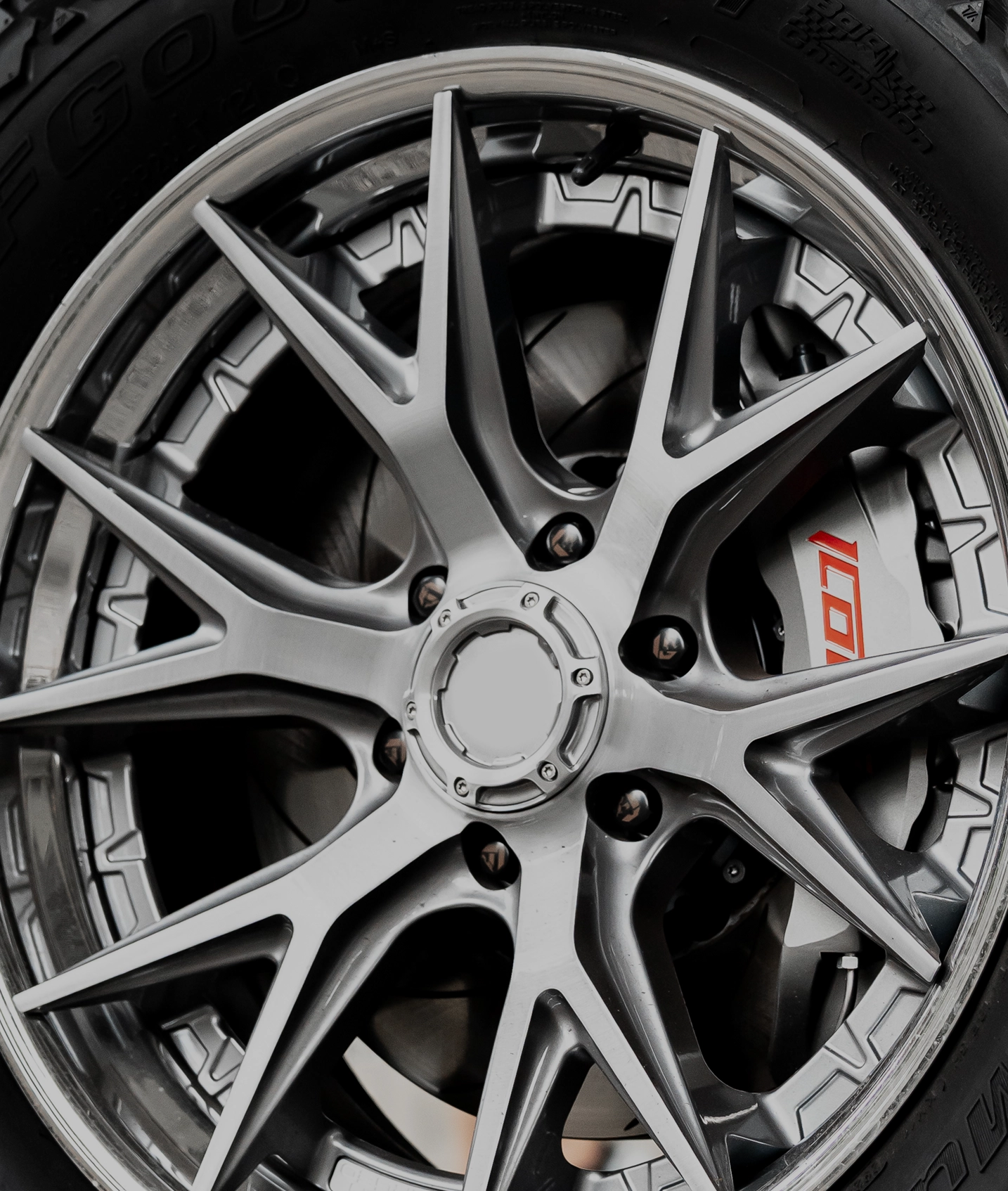
A big brake kit is worth the money only when it solves the right problem.

That is the part many drivers miss.

If your tires are old, your brake fluid is overdue, or your factory brake system already has enough force to trigger ABS, a larger caliper may not give you the dramatic shorter stopping distance you imagined. It may look better behind the wheel. It may handle heat better. It may feel more stable after repeated hard braking. But it cannot cheat tire grip.

So before asking, “Should I buy a big brake kit?” ask a sharper question:

What exactly is wrong with my current brakes?

Is the car taking too long to stop in a single panic stop?
Is the pedal getting soft after a mountain descent?
Does the brake feel strong at first, then fade after several hard stops?
Are you trying to control a heavy SUV, an EV, or a high-horsepower build that now outruns its factory brake package?

Those are different problems. They do not all need the same solution.

Quick Answer: Brake Problem vs. Right First Upgrade

Core Brake Problem What It Usually Means What to Upgrade First
Long stopping distance in a single panic stop Tire grip may be the limit Tires
Weak initial bite Pad friction may be too low Street-performance brake pads
Soft or spongy pedal Fluid, air, or hose issue Brake fluid and bleeding
Strong first stop, weak later stops Heat fade Pads, fluid, then BBK
Heavy SUV, EV, or high-power car feels under-braked Thermal load may exceed factory margin Matched big brake kit
Brake kit does not fit the wheel Clearance was not verified Wheel template and fitment check
Brake vibration after upgrade Runout, pad deposits, bracket, or installation issue Hardware and installation inspection

A big brake kit becomes a serious upgrade when the factory brake system cannot manage heat, repeated braking, vehicle weight, or performance driving. If the problem is only one-off emergency braking on normal roads, tires and brake pads often deserve attention first.

The Hard Truth: Bigger Brakes Do Not Always Mean a Shorter First Stop

A brake system creates braking torque. The tire decides how much of that torque can actually be used on the road.

That is the entire argument in one sentence.

During a single panic stop, once the brake system can already generate enough force to make ABS intervene, the limit usually shifts away from the caliper and toward the tire-road contact patch. NHTSA explains that ABS controls wheel slip within the limits of the tire-road combination, and that when tire-road braking capability is exceeded, the wheel tends to lock and ABS pressure regulation takes over.

This is why a car with a well-maintained factory brake system can sometimes post a similar first-stop distance to a car with a large aftermarket BBK. If both cars are already tire-limited, more clamping force does not create more friction at the road surface.

The useful technical term here is coefficient of friction, often written as μ. A tire with a higher usable μ on a given road surface can generate more deceleration before sliding. A larger caliper cannot increase tire μ. It can only help the brake system apply force more easily and more consistently.

NHTSA’s TireWise guidance also connects tire traction directly with wet stopping ability: higher traction grades should allow a vehicle to stop in a shorter distance on wet pavement than lower grades.

So if the real issue is one panic stop, start with the tire. Check age, tread depth, compound, pressure, wear pattern, and wet-grip performance. A tired touring tire will not become a performance tire just because you install a six-piston caliper behind it.

Where a Big Brake Kit Actually Matters

The first stop gets the attention. The tenth stop tells the truth.

Imagine a mountain road. The first few corners feel fine. The pedal is firm, the car slows down cleanly, and the factory brakes seem good enough. Then the descent continues. The rotors are radiating heat, the smell of hot pads creeps into the cabin, and the pedal starts to feel longer. One more corner comes up faster than expected. You press the brake, but instead of that crisp bite, the pedal feels dull — almost rubbery.

That is where a big brake kit earns its place.

A BBK is not mainly about defeating physics in one stop. It is about keeping the braking system inside a more stable temperature window when heat keeps coming.

Every braking event converts kinetic energy into heat. The faster and heavier the vehicle, the harder the job becomes.

Kinetic Energy = 1/2 × mass × velocity²

Using that first-principles calculation, a 1,800 kg car braking from 100 km/h carries about 694 kJ of kinetic energy. At 130 km/h, the same car carries about 1,174 kJ. Speed rises by 30%, but the energy the brakes must absorb rises by roughly 69%.

That is why high-speed braking is so punishing. Add weight, larger wheels, passengers, cargo, or an EV battery pack, and the thermal burden grows again.

A properly matched big brake kit helps by increasing one or more of these:

  • thermal capacity

  • rotor working radius

  • rotor ventilation

  • caliper stiffness

  • pad contact stability

  • pressure distribution

  • pedal consistency under heat

The result is not magic. It is heat management.

Brake Fade: The Problem Most Drivers Feel Before They Can Explain

Brake fade is easy to misunderstand because it rarely feels like total brake failure. More often, the car still stops — but not with the same confidence.

You may notice it as a longer pedal after a downhill section. You may need more pressure than before. The first stop felt sharp; the next few feel flat. Sometimes there is a burnt smell. Sometimes the steering wheel shakes. Sometimes the pedal simply feels like it has lost its edge.

Several things can cause this. Pads can move outside their ideal temperature range. Rotors can hold too much heat. Brake fluid can approach its boiling point. Pad deposits can build unevenly on the disc surface. Hardware and installation errors can add vibration that drivers mistakenly call “warped rotors.”

Brake fluid deserves special attention because most common glycol-based brake fluids are hygroscopic, meaning they absorb moisture over time. That moisture lowers the effective boiling point. Under U.S. FMVSS No. 116, DOT 3 fluid must meet a minimum dry ERBP of 401°F / 205°C and wet ERBP of 284°F / 140°C; DOT 4 must meet 446°F / 230°C dry and 311°F / 155°C wet. The federal standard also requires brake fluid containers to show the minimum wet boiling point in Fahrenheit.

This is why a soft pedal after hard driving is not always a caliper problem. It may be old fluid. It may be poor bleeding. It may be the wrong pad compound. A serious brake upgrade starts by diagnosing the symptom, not by ordering the largest caliper available.

EVs Make the Brake Question More Complicated

Electric vehicles have changed the brake conversation.

In daily traffic, regenerative braking can reduce wear on the friction brakes. Many EV drivers go thousands of miles while barely touching the mechanical brakes during gentle deceleration. That can create the impression that EVs do not need serious friction braking hardware.

But look at the other side of the equation.

Many EVs are heavy. Some accelerate extremely quickly. Their friction brakes may be called on suddenly when regenerative braking is reduced, when the battery is cold, when the battery is near full, or when the vehicle needs more deceleration than regen alone can provide.

Tesla’s owner documentation states that regenerative braking may be limited if the battery is cold or already fully charged, and that the regular braking system can be used when regenerative braking is limited. Kia owner documentation also explains that regenerative braking is used while decelerating or driving downhill to charge the high-voltage battery.

In other words, when an EV battery is at 100% or freezing cold, the driver may lose part of the “digital braking” support from regen and suddenly depend more heavily on the mechanical friction brakes. If that vehicle weighs around 2.5 tons, this is no longer just a comfort issue. It is the exact moment when an engineered friction brake system stands between a controlled stop and a shrinking safety margin.

That does not mean every EV needs a BBK. It means the old “I rarely use my brakes, so brakes do not matter” logic is incomplete.

For a heavy EV used gently in flat city traffic, tires and maintenance may still come first. For a heavy EV driven fast, downhill, in cold climates, or with repeated high-speed braking, the mechanical brake system has to be judged by its worst-case workload, not its quietest commute.

Should a Daily Driver Buy a Big Brake Kit?

For a light commuter car driven gently in the city, probably not as the first upgrade.

If the car is stock, the tires are average, the brake fluid is old, and the driver rarely brakes hard more than once in a row, a full big brake kit is difficult to justify on performance grounds. In that case, money is usually better spent on better tires, fresh fluid, and a pad compound that matches the driving style.

But “daily driving” can mean very different things.

A daily-driven 300 hp sedan on flat city streets is not the same as a daily-driven 2.5-ton EV in hilly weather. A school-run SUV is not the same as a tuned turbo car that sees weekend mountain roads. A BBK may be unnecessary for one and very reasonable for another.

The line is not “daily” versus “race.”
The line is heat, weight, speed, and repetition.

If your brakes feel the same after repeated hard stops, your factory system may be enough. If they get worse as the drive gets harder, you have found the use case where a BBK begins to make sense.

What Should You Upgrade Before Buying a BBK?

Do not buy brake parts in the order they look impressive. Buy them in the order that solves the bottleneck.

Start With Tires If the Problem Is Stopping Distance

For a single panic stop, tires usually deserve the first inspection.

Look at tread depth, age, pressure, load rating, compound, dry grip, wet grip, and uneven wear. A performance brake system cannot use force that the tire cannot put into the pavement. If the tire is the weak link, more brake torque simply pushes the system into ABS earlier.

Move to Street-Performance Brake Pads If the Problem Is Bite

If the tires are good but the brake feels lazy, the next question is pad compound.

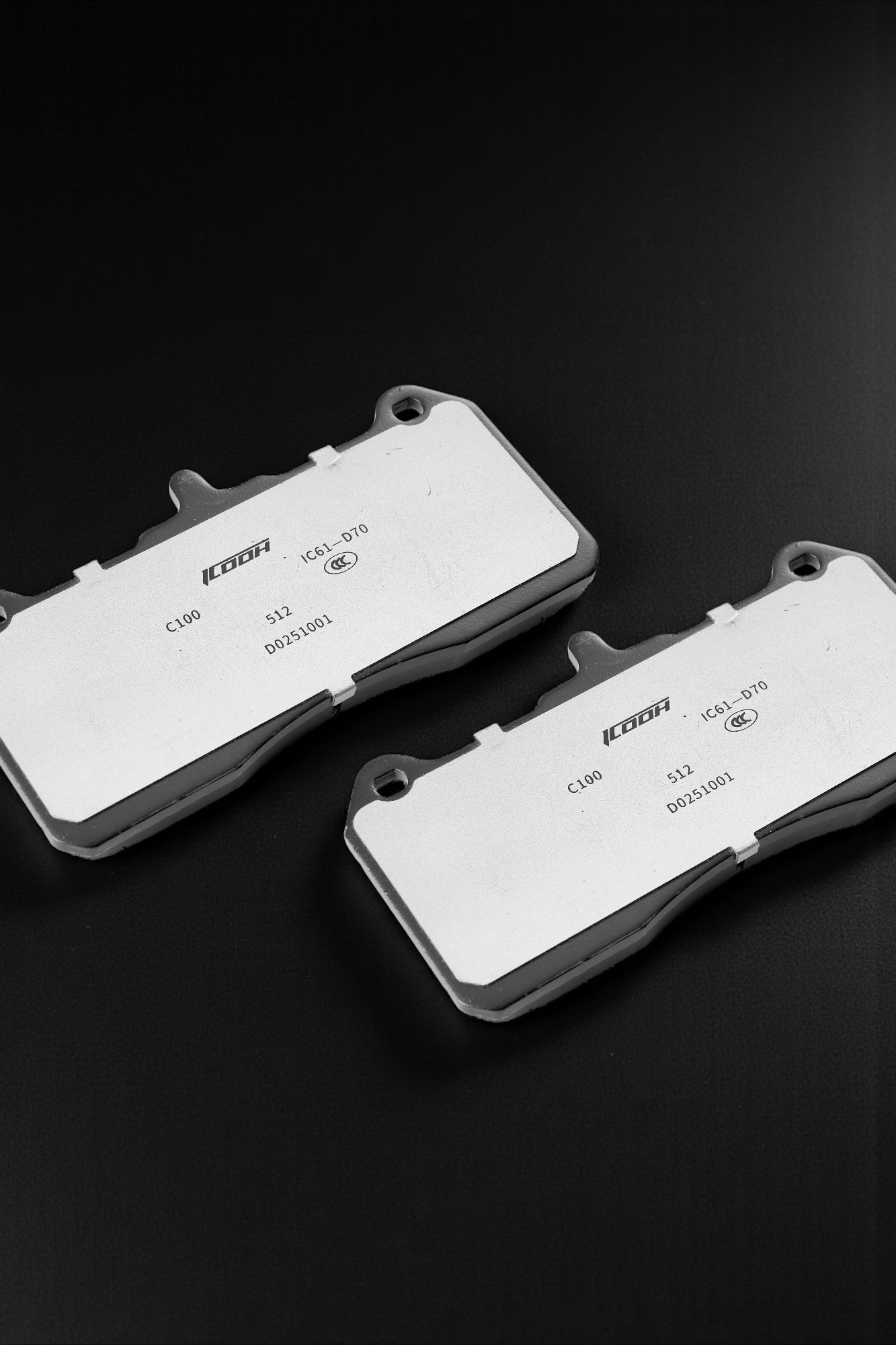
A higher-μ street-performance pad can improve initial bite and braking confidence without the cost or fitment complexity of a full BBK. But pad choice must match the use. A track pad may feel excellent when hot and miserable when cold. On a daily car, that can mean noise, dust, rotor wear, and weak low-temperature response.

For more detail on choosing pad material and matching friction characteristics to calipers and rotors, see ICOOH’s guide to street-performance brake pads.

The best street pad is not the most aggressive pad. It is the pad that works in the temperature range your car actually sees.

Check Fluid and Bleeding If the Pedal Feels Soft

Pedal sponginess is often hydraulic.

Old fluid, moisture contamination, air in the lines, flexible hoses, or an incomplete bleeding procedure can all make the pedal feel worse. Replacing calipers will not fix air in the system. A fresh high-quality DOT 4 fluid and proper bleeding may transform pedal confidence before any major hardware change.

Consider a BBK When Heat Keeps Winning

After tires, pads, fluid, and basic system health have been addressed, the remaining question is simple: does the brake still fade when used hard?

If yes, the problem is no longer just friction level or maintenance. It is heat capacity and system stability. That is when a properly engineered BBK becomes the right conversation.

Why Some BBK Upgrades Feel Worse Than Stock

A bad brake upgrade usually fails in the details.

The most common mistake is treating the caliper as the whole system. It is not. The caliper is only one part of a hydraulic, thermal, mechanical, and electronic package.

A huge caliper with the wrong piston area can create a longer pedal. A pad with the wrong μ curve can feel dead on the street. A rotor with poor runout control can cause vibration. An adapter bracket that places the caliper slightly off-center can create uneven wear and noise. A wheel that clears the caliper by diameter but not by spoke profile can force unsafe spacer decisions.

This is why “six-piston” is not a complete answer.

A well-matched four-piston kit can feel sharper, cleaner, and more predictable than a poorly matched six-piston kit. Piston area, master cylinder output, front-to-rear brake balance, rotor size, pad compound, and ABS/ESC behavior all have to work together.

The best BBK does not feel dramatic in a bad way. It feels natural. Firm without being wooden. Powerful without being grabby. Linear enough that the driver can add pressure mid-corner or at high speed without guessing.

Wheel Fitment: The Trap Behind the Purchase

“Will it fit 19-inch wheels?” is not enough.

Wheel diameter tells only part of the story. Caliper clearance also depends on wheel width, ET offset, spoke curvature, X-factor, rotor hat height, and caliper profile. Two 19-inch wheels can behave completely differently. One clears easily. The other hits the caliper face.

This is where many buyers get trapped. The kit looks right online. The rotor size seems reasonable. The wheel diameter appears large enough. Then the installer finds that the spokes do not clear.

Spacers can sometimes solve clearance, but they should not be treated as a default fix. Poorly chosen spacers can affect bolt engagement, hub-centric location, bearing load, wheel balance, fender clearance, and long-term stability. If a spacer is required, the installation has to be treated as an engineering decision, not a cosmetic shortcut.

Before ordering any BBK, confirm:

Checkpoint Why It Matters
Vehicle model, year, and trim Brake mounts and knuckles can vary
Wheel diameter and width Determines rotor and caliper envelope
ET offset Changes caliper-to-spoke clearance
X-factor / spoke clearance Determines whether the caliper face hits the wheel
Rotor diameter and hat height Affects radial and lateral fitment
Pad compound Controls cold bite, dust, noise, and temperature range
Brake fluid Affects pedal stability under heat
Bracket design Controls caliper centering and pad sweep
Bedding-in procedure Helps prevent uneven pad deposits and vibration

A proper brake upgrade begins before payment. It begins with measurement.

If the wheel itself is part of the upgrade plan, reviewing wheel rim options together with brake clearance can prevent a second round of expensive fitment corrections.

The Five Big Brake Kit Mistakes That Waste Money

The first mistake is buying rotor size as if bigger automatically means shorter stopping distance. Larger rotors can improve leverage and heat capacity, but tire grip still sets the limit in a single panic stop.

The second mistake is assuming six pistons always beat four. Piston count sells well because it is easy to see. Hydraulic matching is harder to explain, but it matters more.

The third mistake is replacing the caliper while ignoring pads, fluid, hoses, brackets, and bedding. A brake system is a chain. The weakest link decides the result.

The fourth mistake is trusting wheel diameter alone. Clearance is three-dimensional. Spoke shape can ruin what diameter seemed to allow.

The fifth mistake is using spacers to rescue a poorly planned purchase. Sometimes they are acceptable. Sometimes they create new problems. They should never be the only reason a kit “fits.”

Where ICOOH Fits Into the Decision

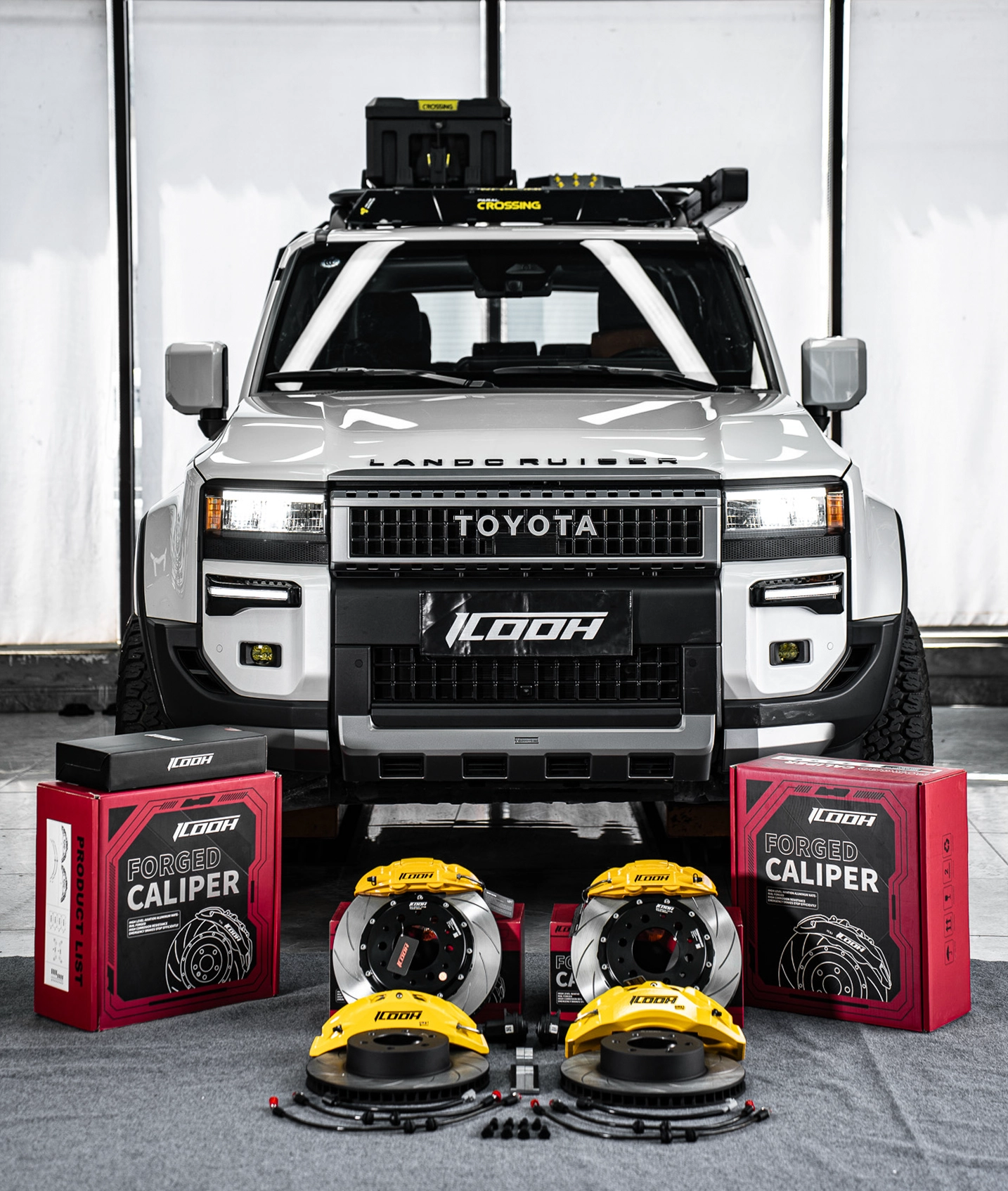
When a full BBK becomes the right upgrade, the next step is not to choose the biggest caliper in the catalog. The next step is to choose a matched brake system.

That means looking at vehicle weight, wheel clearance, rotor size, pad compound, hydraulic balance, bracket accuracy, and installation support. This is where ICOOH should be positioned: not as a brand simply offering larger brake parts, but as a manufacturer focused on hydraulic precision and matched engineering.

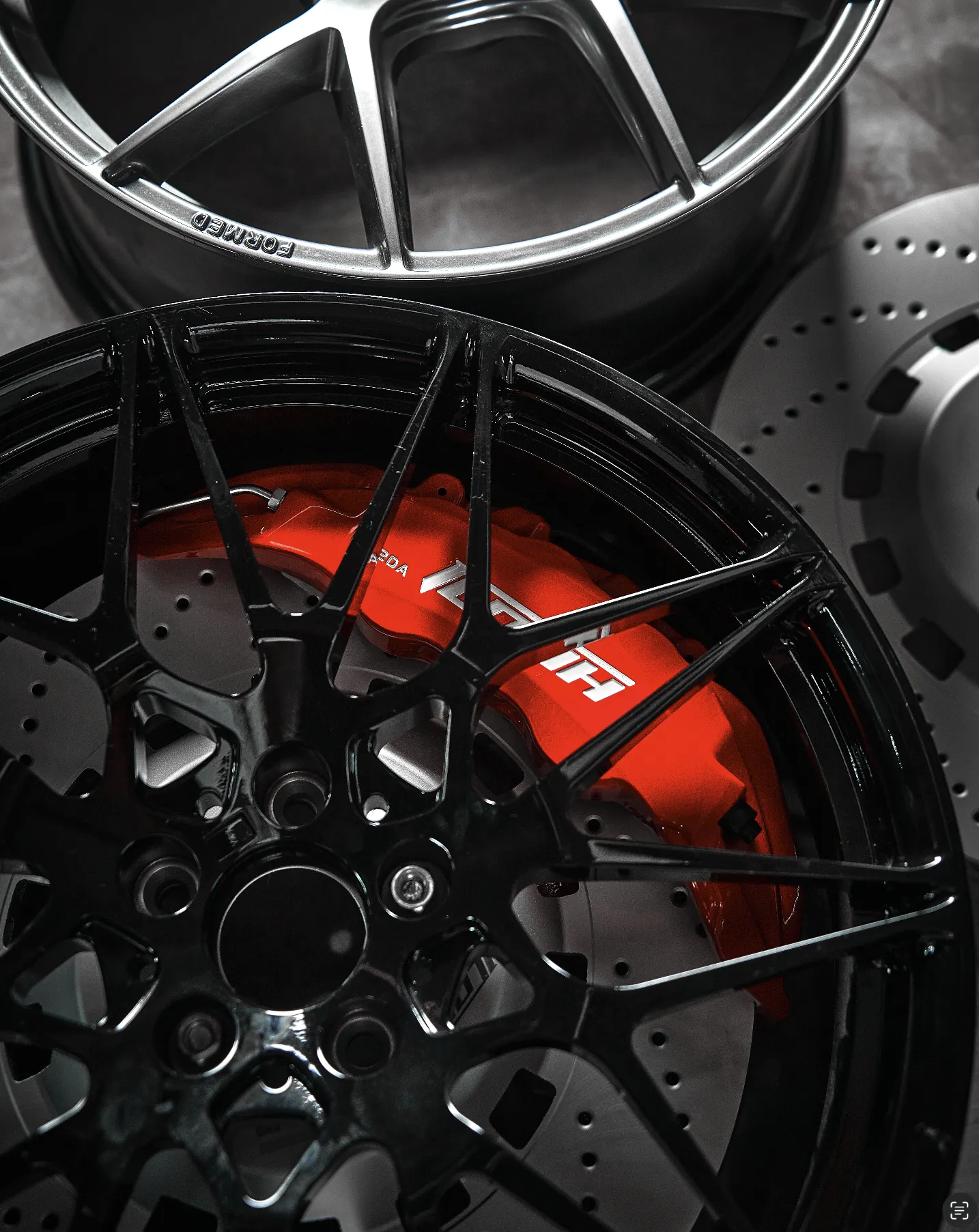
ICOOH’s website presents High-Performance Big Brake Kits as a major product category and lists multiple series including IC4, IC5, IC6, IC7, DM4, DM5, DM6, X6, DT48, and D42. Its product pages also show complete brake kit configurations involving calipers, discs, pads, and brake hoses rather than calipers alone.

That matters because the real buying decision is not “Which caliper looks strongest?” It is “Which system fits my vehicle, wheel package, brake balance, and driving use?”

For example, the ICOOH X6 Six-Piston Brake Caliper Kits are presented as a system involving brake calipers, brake discs, brake pads, and brake hoses, while the ICOOH IC4S2 Brake Kit emphasizes lightweight forged calipers, precise braking control, improved heat dissipation, and enhanced pedal feel for daily and spirited use.

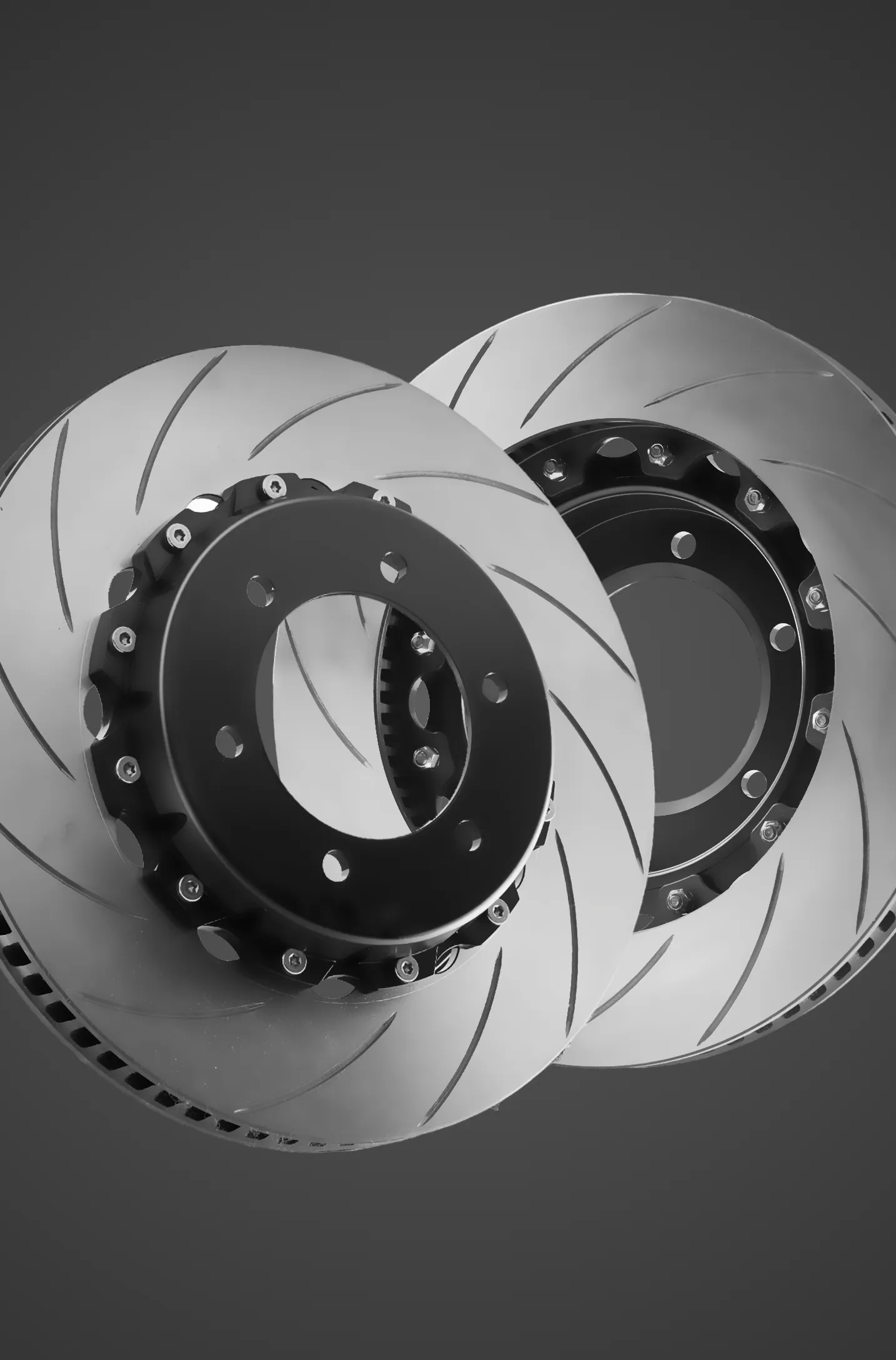
For higher-end thermal management projects, carbon ceramic brake discs can also be considered where weight reduction, heat resistance, and premium braking feel are part of the build target. ICOOH describes its carbon ceramic discs as offering lower unsprung mass and thermal resistance for demanding performance applications.

That is the right logic for this article: not product pushing, but system matching.

If the reader is unsure, the CTA should not be “buy now.” It should be:

Prepare your vehicle model, year, wheel size, tire size, and driving use. Then ask for a matched big brake kit recommendation.

That type of CTA feels useful because it continues the decision-making process instead of interrupting it.

For performance shops, tuning garages, and global distributors, this kind of systematic matching is even more critical. Noise, soft pedals, vibration, or wheel-clearance failures can quickly become customer comebacks. ICOOH’s Performance Shops Solutions page positions the brand around product sourcing, fitment support, installation guidance, marketing materials, and cooperation support for modification shops and performance businesses.

Final Verdict: Is a Big Brake Kit Worth It?

A big brake kit is worth it when the factory brake system is no longer stable under heat, weight, speed, or repetition.

It is not always the first upgrade for one-off emergency stopping distance. In that case, tires often matter more. It is not always the best fix for weak bite. Pads may solve that. It is not always the answer to a soft pedal. Fluid and bleeding may be the real issue.

But when the car is heavy, fast, driven downhill, used on mountain roads, taken to track days, or repeatedly pushed beyond the comfort zone of the factory brakes, a properly matched BBK is no longer just a visual upgrade. It becomes a thermal management and control upgrade.

The best brake upgrade is not the largest caliper.

It is the system that lets the driver brake hard, brake again, and still trust the pedal.

FAQ

Does a big brake kit reduce stopping distance?

Sometimes, but not always. In a single panic stop, if the factory brakes can already activate ABS, the stopping distance is often limited more by tire grip and road surface than caliper size. A BBK becomes more valuable during repeated braking, high heat, heavy vehicle use, mountain driving, and track conditions.

Is a big brake kit worth it for daily driving?

For light city driving, usually not as the first upgrade. For heavier vehicles, high-power cars, hilly roads, long downhill routes, or repeated hard braking, it can be worth it if the system is properly matched.

Should I upgrade tires or brakes first?

If the goal is shorter one-off emergency braking, inspect the tires first. If the problem is brake fade after repeated stops, pads, fluid, and eventually a BBK become more relevant.

Why do upgraded brakes sometimes feel soft?

Common causes include air in the brake system, old brake fluid, poor bleeding, wrong pad compound, oversized caliper piston area, or poor hydraulic matching between the caliper and master cylinder.

Will a big brake kit fit my wheels?

Not always. Wheel diameter alone is not enough. You need to check wheel width, ET offset, spoke clearance, X-factor, caliper shape, rotor size, rotor hat height, and whether spacers are required.

Recommended for you
Custom Brake Caliper Manufacturer - ICOOH

Will a Big Brake Kit Fit My Wheels? BBK Fitment Guide

Will a Big Brake Kit Fit My Wheels? BBK Fitment Guide
caliper brake piston tool - ICOOH

Track Day Brake Upgrade Order: Pads, Fluid, Lines or BBK?

Track Day Brake Upgrade Order: Pads, Fluid, Lines or BBK?
Porsche 718 Brake Kit - ICOOH

Porsche 718 Brake Kit: Why Balance Matters More Than Size

Porsche 718 Brake Kit: Why Balance Matters More Than Size
Porsche Cayenne Brake Kit - ICOOH

Porsche Cayenne Brake Kit: How to Choose the Best Upgrade

Porsche Cayenne Brake Kit: How to Choose the Best Upgrade
You may also like
ICOOH DM5 Advanced CCB Series - ICOOH
ICOOH DM5 Carbon Ceramic Brake Kits | High-Performance Upgrade
ICOOH IC4S2 Brake Kit - ICOOH
ICOOH Racing IC4S2 Brake Kits - Suitable for 17, 18, 19-inch and Larger Wheels
ICOOH DM5 Big Brake Kits - ICOOH
DM5 Six- Pistons High Performance Brake Caliper Kits - Suitable for 17-inch and 18-inch wheels

Explore More Automotive News

Subscribe to our newsletter for the latest tuning cases, technology trends, and industry analysis.

Name must not exceed 100 characters.
Invalid email format or length exceeds 100 characters. Please re-enter.
WhatsApp/Phone must not exceed 100 characters.
WhatsApp preferred for faster response.
Company Name must not exceed 100 characters.
Referral Code must not exceed 100 characters.
Blogger referral code (optional)
Please select How to use for
Content must not exceed 3000 characters.
Please enter your vehicle model, year, and tire size for product recommendations.
Contact customer service

Contact ICOOH

Have questions about our products or brand? Start a conversation with our team today.

×
Name must not exceed 100 characters.
Invalid email format or length exceeds 100 characters. Please re-enter.
WhatsApp/Phone must not exceed 100 characters.
WhatsApp preferred for faster response.
Company Name must not exceed 100 characters.
Referral Code must not exceed 100 characters.
Blogger referral code (optional)
Please select How to use for
Content must not exceed 3000 characters.
Please enter your vehicle model, year, and tire size for product recommendations.

Customize My Style

From colors to logo applications, explore options that make ICOOH products uniquely yours.

×
Name must not exceed 100 characters.
Invalid email format or length exceeds 100 characters. Please re-enter.
WhatsApp/Phone must not exceed 100 characters.
WhatsApp preferred for faster response.
Company Name must not exceed 100 characters.
Referral Code must not exceed 100 characters.
Blogger referral code (optional)
Please select How to use for
Content must not exceed 3000 characters.
Please enter your vehicle model, year, and tire size for product recommendations.

Request a Free Quote

Don’t miss out on competitive wholesale prices and OEM/ODM customization. Fill in your details now and receive a free quote within 24 hours—fast, accurate, and hassle-free.

×
Name must not exceed 100 characters.
Invalid email format or length exceeds 100 characters. Please re-enter.
WhatsApp/Phone must not exceed 100 characters.
WhatsApp preferred for faster response.
Company Name must not exceed 100 characters.
Referral Code must not exceed 100 characters.
Blogger referral code (optional)
Please select How to use for
Content must not exceed 3000 characters.
Please enter your vehicle model, year, and tire size for product recommendations.

Send My Request

Submit your details and vehicle information, and we'll provide you with a custom-tailored upgrade solution.

×
Name must not exceed 100 characters.
Invalid email format or length exceeds 100 characters. Please re-enter.
WhatsApp/Phone must not exceed 100 characters.
WhatsApp preferred for faster response.
Company Name must not exceed 100 characters.
Referral Code must not exceed 100 characters.
Blogger referral code (optional)
Please select How to use for
Content must not exceed 3000 characters.
Please enter your vehicle model, year, and tire size for product recommendations.