
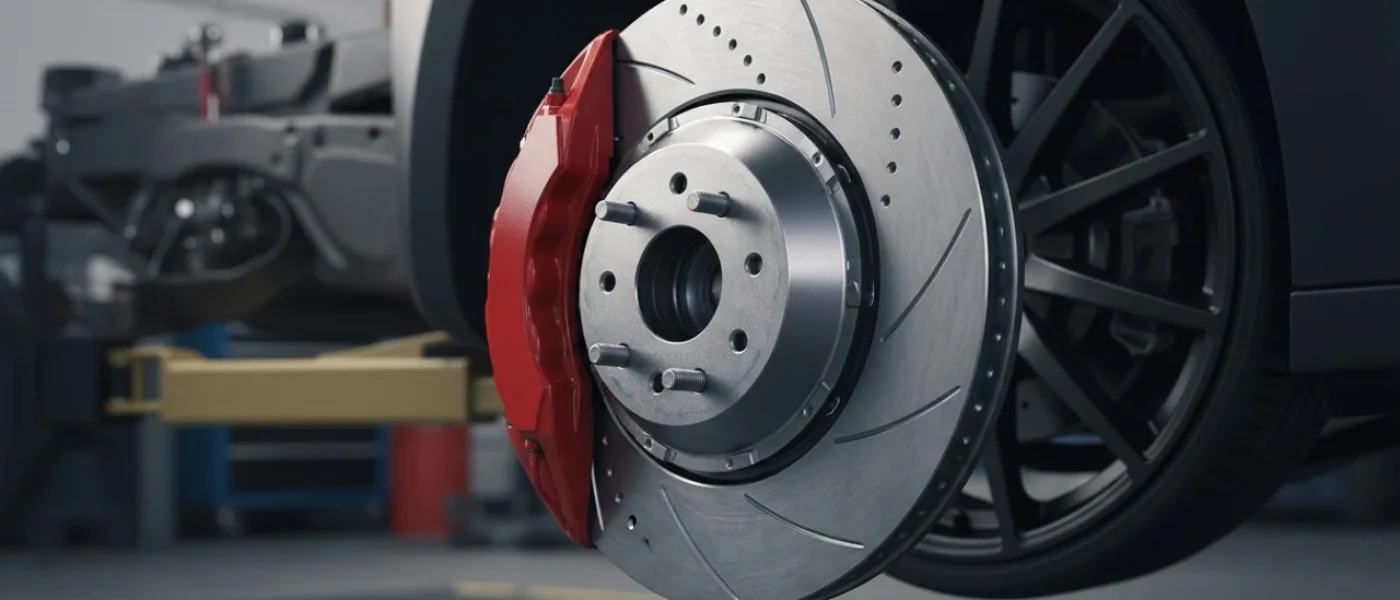
By 2026, the humble brake caliper has evolved from a simple mechanical clamp into a sophisticated component at the heart of vehicle safety and environmental compliance. With the implementation of Euro 7 regulations limiting brake dust emissions for the first time, and the rapid rise of Electric Vehicles (EVs) changing maintenance patterns, drivers must update their knowledge. Whether you are dealing with a seized caliper on a Tesla or upgrading a track car, understanding these disc brake systems is critical.
What is a Brake Caliper and How Does it Work?
A brake caliper is the hydraulic clamping mechanism in a disc brake system that houses the brake pads and pistons. When you press the brake pedal, the caliper exerts force to squeeze the pads against the spinning rotor to stop the vehicle.
How It Works:
- Hydraulic Actuation: Brake fluid is forced from the master cylinder into the caliper’s internal chambers.
- The Hydraulic Piston Mechanism: This fluid pressure pushes one or more pistons outward. The pistons force the brake pads against the rotor surface.
- Friction Generation: The resulting friction converts the vehicle’s kinetic energy into thermal energy (heat), slowing the wheels.
Key Components:
- Caliper Body: The housing (typically cast iron or aluminum) that holds the system together.
- Pistons: Cylindrical plungers that push the pads.
- Bleeder Screw: A valve used to remove air bubbles from the brake lines.
- Dust Boot: A rubber seal that prevents road grime and moisture from damaging the piston walls.
Experience Note: At Guangzhou Wantian Industrial Co., Ltd. (ICOOH), we design calipers with high-grade aluminum alloys to maximize heat dissipation while ensuring 99% vehicle model compatibility.
Quick Summary: Key Takeaways for 2026 Drivers
The automotive landscape in 2026 is defined by electrification and stricter environmental rules.
- Shift to Electronics: Modern vehicles are increasingly adopting “Brake-by-Wire” (BBW) systems, where an electronic signal replaces the direct hydraulic link for faster response times.
- The Euro 7 Impact: New regulations limiting particulate matter (PM10) from brakes are pushing manufacturers toward coated discs and advanced friction materials to reduce dust.
- The EV Paradox: While regenerative braking saves pads, it causes calipers to see less action, leading to increased risk of corrosion and seizure in wet climates.
Anatomy of a Caliper: Components You Must Know
To diagnose issues effectively, you must understand the internal structure.
- The Piston and Square-Cut Seal: This seal creates the hydraulic piston mechanism seal and, crucially, retracts the piston slightly when you release the brake pedal to prevent drag.
- Guide Pins (Floating Calipers Only): Metal pins that allow the caliper to slide back and forth. If these lack lubrication, the caliper will stick.
- Brake Pad Retaining Clips: Stainless steel springs that hold pads in place to reduce noise, vibration, and harshness (NVH).
- Bleeder Valve: The highest point in the caliper fluid chamber, essential for purging air during maintenance.
Fixed vs. Floating Calipers: Which Architecture Wins?
The choice between fixed and floating designs depends on your driving needs: cost-efficiency vs. maximum performance.
Floating Calipers (Sliding)
Definition: A caliper with pistons on only one side that slides on guide pins to clamp the rotor.
- Pros: Lower cost, lighter weight, sufficient for daily commuting.
- Cons: Prone to uneven pad wear and “flex” under hard braking.
Fixed Calipers (Performance)
Definition: A caliper rigidly mounted to the knuckle with pistons on both sides (opposed pistons).
- Pros: Multi-piston calipers (4, 6, or 8 pistons) provide superior clamping force, even pad pressure, and better heat management.
- Cons: More expensive and requires more space inside the wheel.
ICOOH Insight: For enthusiasts seeking track-level performance, ICOOH specializes in developing big brake kits featuring 6-piston forged calipers. These kits are engineered using 3D structural simulation to minimize flex, offering the precise pedal feel that floating calipers cannot match.
The Evolution of 2026: EVs and Regenerative Braking
Regenerative braking has fundamentally changed how calipers age.
In traditional cars, heat regularly dries out brake components. In EVs, regenerative braking friction happens inside the electric motor, not at the wheel. The physical brakes may not engage during mild deceleration.
The Consequences:
- Corrosion Buildup: Without heat to evaporate moisture, slide pins and pistons rust faster.
- Seized Calipers: A caliper that isn’t used frequently is more likely to freeze in place.
- Maintenance Shift: 2026 service schedules now prioritize cleaning and lubricating calipers annually, rather than just replacing pads.
Data Verification: According to 2025 automotive repair trends, EV brake pads can last over 100,000 km, but caliper-related service requests have risen due to corrosion issues in road-salt regions.
Diagnostic Guide: 7 Signs of a Failing Brake Caliper
Identifying a bad caliper early can save you thousands in rotor and pad replacements.
- Vehicle Pulling: The car veers to one side during braking because one caliper is working harder than the other.
- Spongy Pedal: Air has entered the system through a failed seal.
- Dragging Sensation: Feels like the parking brake is on; the piston isn’t retracting.
- Uneven Pad Wear: One pad is worn down to metal while the other looks new (classic slide pin failure).
- Burning Smell: A stuck caliper creates constant friction, leading to overheating and a distinct chemical odor.
- Fluid Leaks: Wet spots inside the wheel rim indicate a blown piston boot or seal.
- Grinding Noise: Metal-on-metal contact due to neglected pads.
Expert Maintenance Tips: Extending Caliper Life
Preventative care is cheaper than replacement.
- Annual Pin Lubrication: Remove guide pins, clean them, and apply high-temperature silicone brake grease.
- Fluid Flushes: Brake fluid is hygroscopic (absorbs water). Flush it every 2 years to prevent internal piston rust.
- Inspect Dust Boots: Check for tears. If the boot is ripped, road salt will destroy the piston.
2026 Replacement Cost and Buyer’s Guide
Budgeting for brake repairs requires understanding the tiered pricing of modern components.
In 2026, the brake caliper replacement cost varies significantly based on vehicle technology:
- Standard Floating Caliper: $300 – $600 per axle (Parts + Labor).
- Electronic Parking Brake (EPB) Caliper: $500 – $800 per unit due to the integrated motor.
- Performance/Luxury (Fixed Caliper): $800 – $1,500+ per unit.
Cost Factors:
- Labor: 1.5 to 3 hours per axle, depending on bleeding requirements.
- Remanufactured vs. New: Remanufactured units (cores) offer a greener, cheaper alternative (~30% savings).
- Aftermarket Solutions: Companies like ICOOH provide high-performance alternatives that often exceed OEM specifications at a competitive price point, backed by rigorous R&D and aerodynamic analysis.
FAQ
How do I know if my brake caliper is sticking? Look for excessive heat radiating from one wheel after a drive, a burning smell, or the vehicle pulling to one side. A “stuck” caliper will also cause the car to struggle to coast freely.
Can you replace just one brake caliper? Technically yes, but it is highly recommended to replace them in pairs (per axle). Replacing only one causes uneven braking force, as the new caliper will have a faster piston response time than the old one.
Is it worth upgrading to 4-piston or 6-piston calipers? Yes, if you tow heavy loads, drive in mountains, or track your car. Multi-piston calipers distribute pressure more evenly across the pad, preventing fade and improving modulation. For standard city driving, the benefit is primarily aesthetic.
How does regenerative braking affect caliper longevity in 2026? It extends pad life but reduces caliper life in corrosive environments. Because the mechanical brakes are used less (thanks to regenerative braking friction taking the load), moisture sits on the components longer, leading to seized slides and pistons.
What are the symptoms of a bad caliper seal? Symptoms include visible fluid leaks around the wheel, a brake pedal that slowly sinks to the floor at stoplights, and a low brake fluid warning light on the dashboard.
Should I choose aluminum or cast iron calipers? Aluminum is superior for performance (unsprung weight reduction) and heat dissipation, which is why ICOOH uses it for performance kits. Cast iron is cheaper and durable but heavier.
How long do brake calipers typically last? They are designed to last 75,000 to 100,000 miles. However, in regions with heavy road salt usage, they may fail prematurely (5-7 years) due to external corrosion.
What is the average cost of brake caliper replacement in 2026? For a standard vehicle, expect to pay between $300 and $600 per axle. High-end EVs or performance cars with complex electric parking brake integration can cost upwards of $1,000 per caliper.