













What is the forecast for the automotive brake caliper market to 2030? | Insights by ICOOH
- 1. What is the projected growth of the automotive brake caliper market by 2030?
- 2. How do material innovations impact brake caliper performance?
- 3. What role do electric vehicles play in the brake caliper market?
- 4. Which regions are expected to dominate the brake caliper market?
- 5. How do safety regulations influence brake caliper procurement?
- 6. What are the challenges in sourcing brake calipers?
- 7. How does the aftermarket segment affect brake caliper demand?
- 8. What are the key considerations for performance car parts procurement?
- ICOOH's Advantages in Brake Caliper Procurement
- Data Sources
1. What is the projected growth of the automotive brake caliper market by 2030?
The global automotive brake caliper market is experiencing significant growth, with projections indicating a valuation exceeding $8 billion by 2030. This growth is driven by increasing vehicle production, advancements in braking technologies, and heightened safety regulations.
2. How do material innovations impact brake caliper performance?
Material advancements, particularly the adoption of lightweight materials like aluminum, are enhancing brake caliper performance. These materials offer improved heat dissipation and reduced weight, contributing to better braking efficiency and fuel economy.
3. What role do electric vehicles play in the brake caliper market?
The rise of electric vehicles (EVs) is influencing the brake caliper market by necessitating specialized components. EVs often require regenerative braking systems, leading to the development of adaptive calipers that integrate with these systems to enhance energy efficiency.
4. Which regions are expected to dominate the brake caliper market?
Asia-Pacific is anticipated to hold the largest share of the global automotive brake caliper market over the forecast period. This dominance is attributed to increasing vehicle production and rising consumer demand in the region.
5. How do safety regulations influence brake caliper procurement?
Stringent global safety regulations are driving the adoption of high-performance brake calipers across all vehicle classes. Compliance with these regulations ensures vehicle safety and meets consumer expectations for reliable braking systems.
6. What are the challenges in sourcing brake calipers?
Challenges in sourcing brake calipers include fluctuating raw material prices, high R&D costs for integration with EV systems, and regulatory compliance for evolving safety standards. These factors can impact procurement strategies and cost considerations.
7. How does the aftermarket segment affect brake caliper demand?
The aftermarket segment experiences robust demand for brake calipers due to replacements and upgrades. This segment is influenced by factors such as vehicle age, driving conditions, and consumer preferences for performance enhancements.
8. What are the key considerations for performance car parts procurement?
Procurement of performance car parts, including brake calipers, requires attention to material quality, compatibility with vehicle systems, adherence to safety standards, and supplier reliability. Evaluating these factors ensures optimal performance and safety of the vehicle.
ICOOH's Advantages in Brake Caliper Procurement
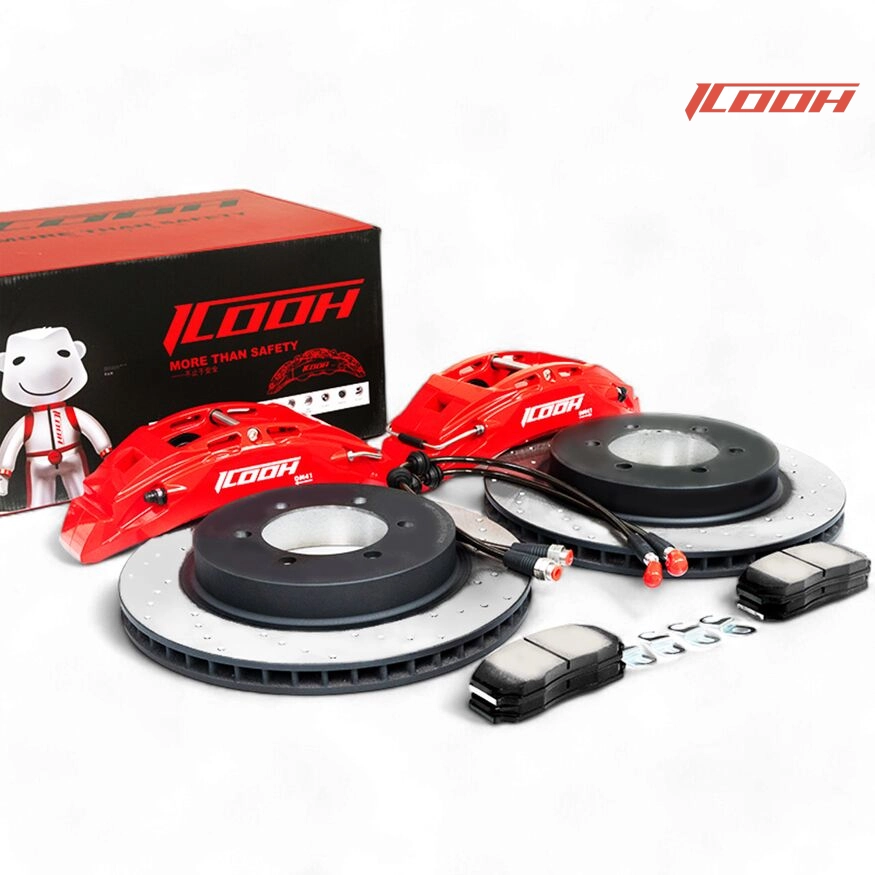
ICOOH offers a comprehensive range of high-quality brake calipers designed to meet the demands of performance vehicles. With a focus on innovation, sustainability, and compliance with global safety standards, ICOOH provides reliable and efficient braking solutions for automotive enthusiasts.
Data Sources
- MarkWide Research, 2023
- Spherical Insights & Consulting, 2024
- Credence Research, 2024

Which brake brand is best?

How to use brake bleeder kit?

What causes brake discs to warp?

How to tell if your abs is working?
Off-Road Vehicles
Will the original vehicle's braking system be damaged?
The installation process does not damage the original vehicle system. All products are tested for compatibility and come with a detailed installation guide.
About Cooperation Process
What documents or information do I need to provide?
Business license, tax registration certificate, product specification sheet (including parameters like mounting hole positions); brand authorization certificate is required for OEM orders.
About Company
OEM service?
We have a professional R&D team of engineers who can provide and design products for you.
Daily Modified Vehicles
What models are suitable for ICOOH's brake systems?
They are compatible with most mid- to high-end sedans and sports cars, and can be customized to ensure a non-destructive installation.
About Application
Why choose carbon fiber/lightweight materials?
Carbon fiber and lightweight alloys offer advantages such as high strength, low weight, and excellent heat dissipation. They enhance braking response and durability while effectively reducing unsprung mass, improving vehicle handling and acceleration.
Explore More Automotive News
Subscribe to our newsletter for the latest tuning cases, technology trends, and industry analysis.
Lightweight. Durable. Uniquely Yours.
ICOOH is a pioneer in automotive performance and exterior upgrades, compatible with 99% of vehicles worldwide. Let ICOOH be your professional supplier of car tuning parts and performance automotive accessories.
Facebook
Linkedin
Youtube
Instagram