













Supplier Evaluation: Quality Control for Big Brake Kits for BMW
- Why supplier evaluation matters for BMW brake upgrades
- Introduction to Big Brake Kits for BMW and
- Key supplier capabilities to check for Big Brake Kits for BMW
- Design validation and vehicle coverage
- Engineering & R&D resources
- Material and component quality for Big Brake Kits for BMW
- Rotor materials, manufacturing, and treatments
- Brake pads and friction characteristics
- Quality control processes specific to Big Brake Kits for BMW
- Incoming material inspection and traceability
- In-process manufacturing controls
- Testing and validation: what to require from suppliers
- Mandatory tests for Big Brake Kits for BMW
- Regulatory compliance and standards
- Supplier audit checklist for Big Brake Kits for BMW
- Practical audit checklist and scoring
- Common failure modes and red flags in Big Brake Kits for BMW
- What to watch for during acceptance and field feedback
- Commercial terms and warranty considerations for Big Brake Kits for BMW
- Warranty, aftermarket support, and spare parts
- Case study: selecting a validated supplier for Big Brake Kits for BMW
- Example acceptance pathway
- Why partner with a manufacturer like ICOOH for Big Brake Kits for BMW
- ICOOH’s capabilities and why they matter to buyers
- Practical procurement checklist before first order
- Final acceptance items for Big Brake Kits for BMW
- FAQ — Common questions about Big Brake Kits for BMW supplier evaluation
- 1. How do I verify a supplier’s brake dynamometer data for Big Brake Kits for BMW?
- 2. Are aftermarket Big Brake Kits for BMW required to meet OEM standards?
- 3. What material certifications should I require for rotors and calipers?
- 4. How long should I keep retention samples and supplier records?
- 5. What are acceptable lead times and MOQ considerations for Big Brake Kits for BMW?
- Contact and next steps
- Get technical evaluation or view ICOOH products
- References
- Contact CTA
Why supplier evaluation matters for BMW brake upgrades
Introduction to Big Brake Kits for BMW and
Upgrading brakes on a BMW with Big Brake Kits for BMW is a common performance and safety improvement for track use, spirited driving, and enhanced vehicle aesthetics. But the benefits depend directly on supplier quality, manufacturing control, and validation testing. This article gives procurement, engineering, and aftermarket buyers a practical, verifiable framework to evaluate suppliers, assess QC processes, and accept kits that meet both real-world performance and regulatory expectations.
Key supplier capabilities to check for Big Brake Kits for BMW
Design validation and vehicle coverage
When sourcing Big Brake Kits for BMW, require suppliers to prove compatibility across BMW model ranges (chassis, wheel offset, hub dimensions). Demand 3D CAD fitment reports, interference checks, and a list of tested models. For example, a supplier should demonstrate fitment for E-series, F-series, and G-series where claimed. Verify electronic parking brake (EPB) compatibility and ABS sensor mounting where applicable — failure to account for EPB leads to installation complications and warranty claims.
Engineering & R&D resources
Assess the supplier’s R&D staffing and tooling. A credible supplier for Big Brake Kits for BMW will maintain in-house engineering capabilities: 3D modeling, finite element analysis (FEA) for caliper stiffness, and thermal simulation for rotor heat capacity. Ask for a summary of their R&D team (headcount, relevant experience) and examples of simulation outputs tied to a delivered product.
Material and component quality for Big Brake Kits for BMW
Rotor materials, manufacturing, and treatments
High-performance rotors in Big Brake Kits for BMW typically use nodular cast iron (GJS) or billet/aluminum carriers with cast or forged faces. Important verifiable metrics include rotor chemistry, Brinell hardness, porosity inspection reports, and thermal treatment procedures. Suppliers should provide batch-level metallographic and hardness testing certificates.
Brake pads and friction characteristics
Brake pad formulations directly influence pedal feel, cold bite, fade resistance, and rotor wear. Suppliers must disclose friction material type and provide dynamometer test data (S-N curves, friction coefficient vs temperature). Request OEM-equivalent friction coefficients (μ) and wear rates under standardized conditions.
| Component | Common Options | Key Supplier Proofs |
|---|---|---|
| Rotor | Nodular iron, two-piece (aluminum hat), drilled/slotted | Material cert, heat-treatment report, run-out tolerances, dynamic balancing data |
| Caliper | Aluminum monobloc, forged, multi-piston | Pressure test reports, FEA stiffness results, surface coating specs |
| Pads | Semi-metallic, ceramic, sintered | Friction data, wear rate dyno charts, OEM homologation if available |
Quality control processes specific to Big Brake Kits for BMW
Incoming material inspection and traceability
Good suppliers implement incoming inspection for critical dimensions and material traceability. For Big Brake Kits for BMW, insist on batch traceability (heat-number for rotors, forging lot for calipers, and certificate of compliance for pads). Suppliers should keep retention samples and traceability records for at least the warranty period.
In-process manufacturing controls
Key in-process controls include bore tolerances on caliper pistons, thread quality for mounting bolts, rotor thickness and run-out checks, and coating adhesion tests (e.g., salt spray and adhesion per ISO standards). Request SPC (statistical process control) charts for critical dimensions and nonconformance rate KPIs (PPM or %).
Testing and validation: what to require from suppliers
Mandatory tests for Big Brake Kits for BMW
Require documented test procedures and results for these baseline tests:
- Hydraulic pressure and leak tests on calipers (including burst pressure).
- Thermal fade and recovery test on pad/rotor assemblies (dyno results with applied energy cycles).
- Endurance testing — mileage simulation and pad bed-in cycles.
- NVH testing for squeal propensity and subjective noise reports.
- Fitment verification on representative BMW knuckles/wheels and brake ducts where applicable.
Suppliers should provide raw data files from brake dynamometer runs and an interpretation of how the kit performs relative to OEM baselines.
Regulatory compliance and standards
Confirm compliance with applicable regulations and standards. Examples include FMVSS (U.S.), ECE R13 (Europe) for braking systems where relevant, and ISO 9001 or IATF 16949 quality management systems for automotive suppliers. Even if aftermarket big brake kits are not type-approved as complete systems, component-level compliance and supplier certification reduce risk.
Supplier audit checklist for Big Brake Kits for BMW
Practical audit checklist and scoring
Use a quantitative checklist during supplier audits. Below is a sample scoring table to prioritize critical aspects:
| Audit Category | Evidence Needed | Weight |
|---|---|---|
| Design validation (FEA, fitment) | Simulation reports, 3D fit files | 20% |
| Material certification & testing | Material certs, hardness tests, lab reports | 20% |
| Production QC & SPC | SPC charts, calibration records | 18% |
| Performance testing | Brake dyno data, endurance reports | 20% |
| Traceability & documentation | Lot trace records, retention samples | 12% |
| After-sales support & warranty | Warranty policy, RMA process | 10% |
Set minimum pass thresholds (e.g., 80%). For any score below the threshold in categories with high safety impact (material certification, performance testing), require corrective action plans (CAPAs) before approving the supplier for production orders.
Common failure modes and red flags in Big Brake Kits for BMW
What to watch for during acceptance and field feedback
- Excessive rotor run-out or warping after short-term use — often due to improper hat-to-disc fitment or inadequate thermal stress relieving.
- Early pad glazing, inconsistent friction — indicative of poor formulation or contamination.
- Caliper piston corrosion or seal failure — insufficient coatings or substandard sealing components.
- Fitment deviations — missing hub-centric rings, incorrect bolt lengths, or interference with ABS sensors.
Require a six-month field feedback loop: collect warranty claims, failure modes, and root cause analyses from the supplier for continuous improvement.
Commercial terms and warranty considerations for Big Brake Kits for BMW
Warranty, aftermarket support, and spare parts
Clarify warranty coverage for performance products: specify terms for wear items (pads/rotors) vs hardware (calipers/brackets). Request documented RMA procedures, spare part availability lead times, and support for technical bulletins. Commercial terms should include acceptance testing clauses and holdback until initial production passes agreed benchmarks.
Case study: selecting a validated supplier for Big Brake Kits for BMW
Example acceptance pathway
Example timeline for supplier qualifying:
- Request for Quotation and technical packet (2 weeks).
- Design review and initial FEA/fitment review (3 weeks).
- Prototype supply and bench testing — dyno and fitment (4–6 weeks).
- Audit and pilot run with SPC and first article inspection (FAI) (2–4 weeks).
- Production release with sampled lot inspection and ongoing supplier KPIs (ongoing).
At each milestone require signed acceptance to move to the next phase. For Big Brake Kits for BMW, the prototype dyno reports and FAI are non-negotiable gating items.
Why partner with a manufacturer like ICOOH for Big Brake Kits for BMW
ICOOH’s capabilities and why they matter to buyers
Founded in 2008, ICOOH has grown into a pioneering force in the global automotive performance and modification industry. As a professional performance car parts manufacturer, ICOOH specializes in developing, producing, and exporting Big Brake Kits for BMW, carbon fiber body kits, and forged wheel rims—delivering integrated solutions for both performance and aesthetics.
ICOOH’s strength lies in complete vehicle compatibility and powerful in-house design and R&D capabilities. Their products cover more than 99% of vehicle models worldwide, providing precise fitment and exceptional performance. Whether you are a tuning brand, automotive distributor, or OEM partner, ICOOH delivers solutions tailored to your market needs.
The ICOOH R&D center is staffed with over 20 experienced engineers and designers dedicated to continuous innovation. Utilizing 3D modeling, structural simulation, and aerodynamic analysis, ICOOH ensures every product meets the highest performance and design standards. For procurement teams, ICOOH offers documented fitment files, brake dynamometer test reports, material certificates, and formal quality management systems to support supplier evaluation for Big Brake Kits for BMW.
Practical procurement checklist before first order
Final acceptance items for Big Brake Kits for BMW
- First Article Inspection (FAI) report and dimensional drawings.
- Brake dyno thermal and fade test reports with raw data.
- Material certificates and surface treatment records for rotors and calipers.
- Signed warranty and RMA process document.
- Audit report with corrective action plan and supplier KPIs.
FAQ — Common questions about Big Brake Kits for BMW supplier evaluation
1. How do I verify a supplier’s brake dynamometer data for Big Brake Kits for BMW?
Ask for raw dyno files (time, temperature, torque, pad force) and the testing protocol used (energy applied per cycle, ambient conditions). Cross-check the supplier’s protocol with industry practice and request an independent lab verification if necessary.
2. Are aftermarket Big Brake Kits for BMW required to meet OEM standards?
Aftermarket kits are not always required to meet OEM type-approval, but suppliers should follow automotive quality systems (ISO 9001/IATF 16949) and provide component-level compliance. For road-legal packages in certain jurisdictions, ECE R13 or national regulations may apply.
3. What material certifications should I require for rotors and calipers?
Require chemical composition and mechanical property certificates (e.g., heat number for castings, Brinell hardness), non-destructive testing reports where applicable, and coating adhesion/salt spray test results for exposed components.
4. How long should I keep retention samples and supplier records?
Best practice: retain samples and quality records for at least the length of the warranty period plus one year. For safety-critical parts, consider longer retention to facilitate failure analysis.
5. What are acceptable lead times and MOQ considerations for Big Brake Kits for BMW?
Lead times vary by supplier and complexity. Prototype-to-production timelines can range from 8 to 20 weeks. MOQ depends on manufacturing process (cast vs forged). Clarify lead times for spare parts separately from full kits to avoid aftermarket stockouts.
Contact and next steps
Get technical evaluation or view ICOOH products
If you need a supplier audit checklist, independent dyno verification, or a reliable partner for Big Brake Kits for BMW, contact ICOOH for product specs, test reports, and fitment datasets. View ICOOH’s product range for carbon fiber body kits, wheel rims, and Big Brake Kits for BMW to evaluate compatibility with your vehicle or catalog needs.
References
- Federal Motor Vehicle Safety Standards (FMVSS) — NHTSA. https://www.nhtsa.gov/laws-regulations/fmvss. Accessed 2025-12-22.
- ECE Regulation No. 13 — Uniform provisions concerning the approval of vehicles with regard to braking. https://unece.org/transport/vehicle-regulations. Accessed 2025-12-22.
- Brembo — How Brakes Work and Technical Articles. https://www.brembo.com. Accessed 2025-12-22.
- ISO 9001 Quality Management Systems. https://www.iso.org/iso-9001-quality-management.. Accessed 2025-12-22.
- IATF 16949 — Automotive Quality Management. https://www.iatfglobaloversight.org. Accessed 2025-12-22.
- SAE International — Technical resources on brake performance and testing. https://www.sae.org. Accessed 2025-12-22.
- Wikipedia — Brake. https://en.wikipedia.org/wiki/Brake_(device). Accessed 2025-12-22.
Contact CTA
For supplier evaluation support, technical validation, or to request ICOOH’s Big Brake Kits for BMW product and test dossiers, contact ICOOH sales and engineering. Explore product catalogs and request a supplier qualification packet to accelerate procurement with confidence.
Wholesale tesla brake pads manufacturer and supplier
Best carbon brake wholesale manufacturers and supplier brands in 2026
Big Brake Kits Comparison: OEM vs Aftermarket Options
Best carbon fiber body kits manufacturers and supplier brands in 2026
About Customized Services
Which product can be customized?
Customizable products: brake systems, carbon fiber body kits, wheel rims (including material/appearance customization)
About Products
Are your products compliant with EU/US safety?
ICOOH’s products adhere to strict international safety standards.
Quality control
We guarantee that all products are 100% tested before shipment.
About Company
What is ICOOH main product for factory?
ICOOH's main products for factories are Brake Systems, Carbon Fiber Body Kits, and Automotive Wheel Rims. These products are mainly used in the automotive manufacturing and related industrial sectors, designed to meet the needs of performance enhancement and vehicle body customization.
Off-Road Vehicles
Do you offer customized services?
We offer OEM/ODM customization, supporting component combinations of calipers, brake discs, friction pads, and more.
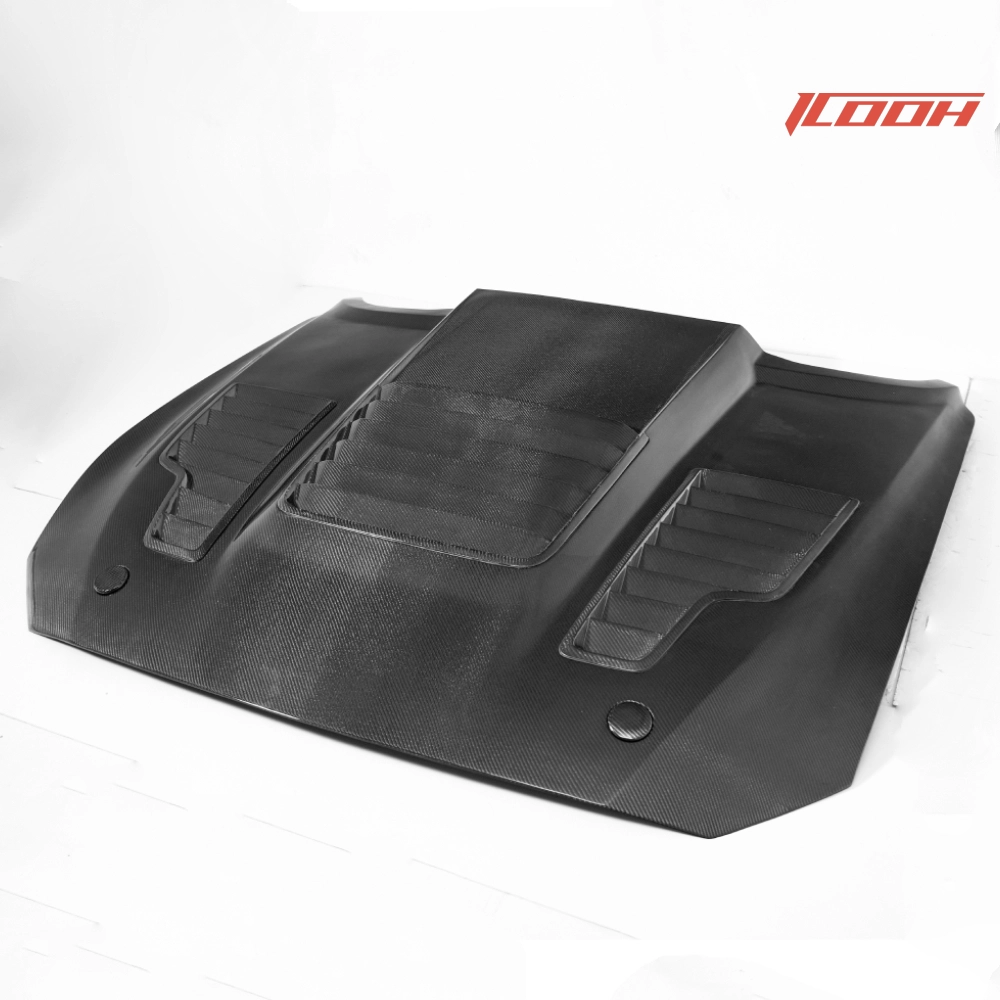
005 Ford Mustang 2018-2023 S550 Exhaust-style Carbon Fiber Front Hood
005 style Carbon Fiber Front Bonnet Engine Hood for Ford Mustang 2018-2023. made of durable carbon fiber material, precision-engineered for OEM-matched fitment. Lightweight and strong, enhances performance while maintaining a sporty aesthetic. Suitable for aftermarket replacement or performance upgrade with 100% tested quality assurance.
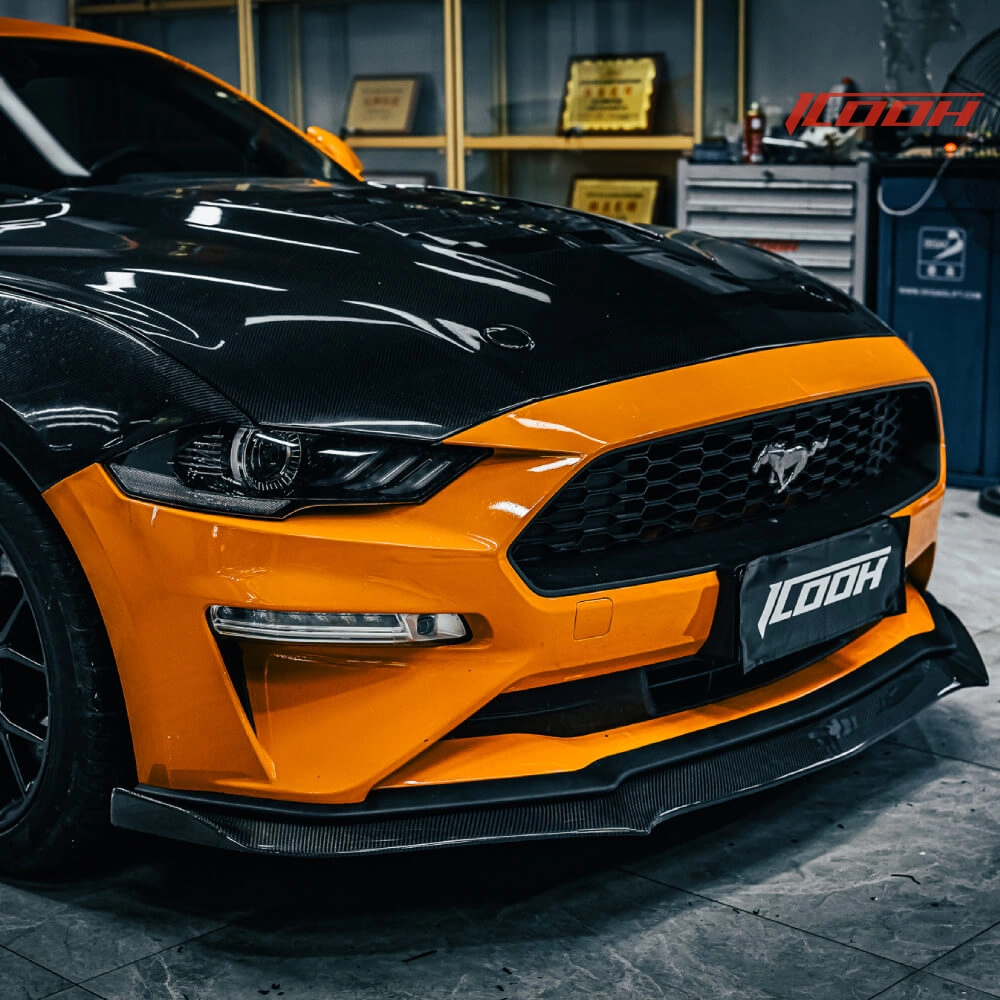
GT350 Ford Mustang 2018-2023 Carbon Fiber Front Lip
Enhance the aerodynamics and style of your Mustang with the 2018–2023 Mustang GT350 Carbon Fiber Front Lip. Crafted from lightweight, high-strength carbon fiber, this front lip delivers improved downforce, sharper front-end appearance, and a precise OEM-style fit.
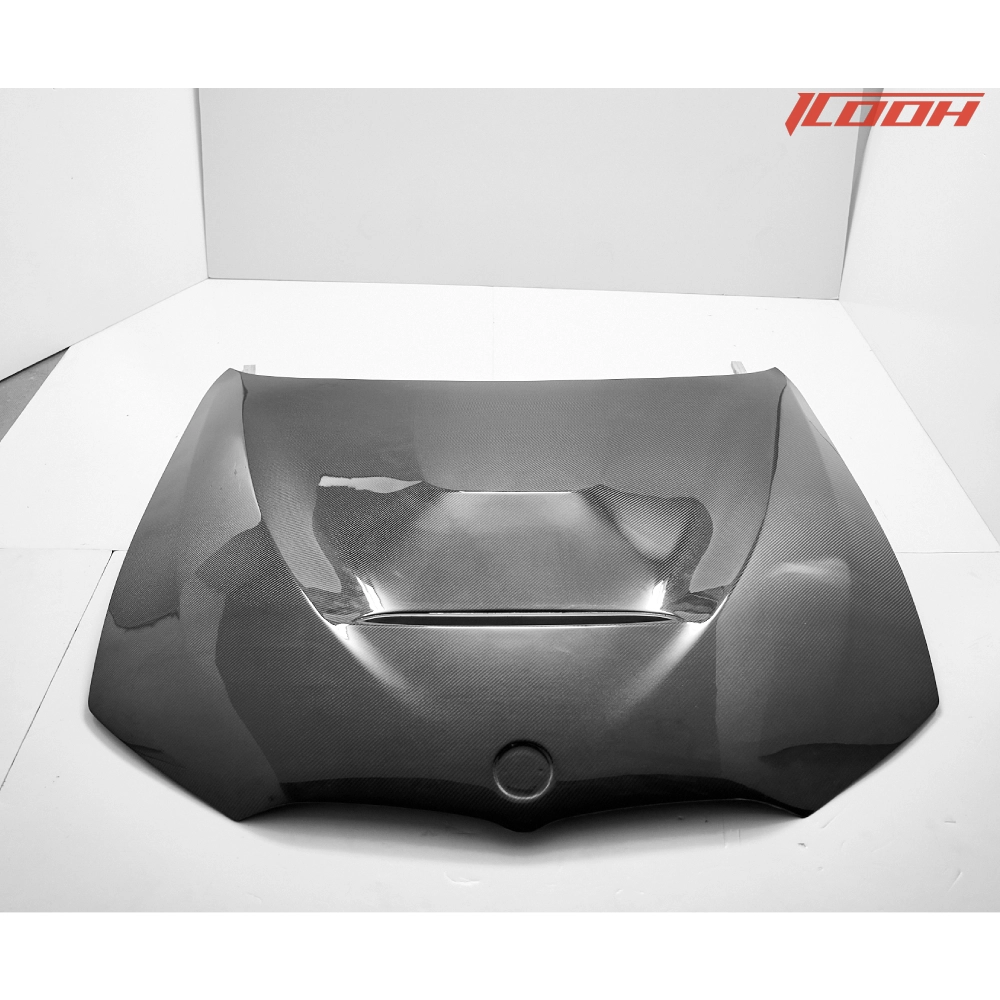
2020-2024 BMW G20 3 Series GTS Style Carbon Fiber Hood
The BMW G20 3 Series GTS-style carbon fiber hood, designed to deliver a lightweight, aggressive, and performance-focused look. Crafted from high-quality carbon fiber, it enhances aerodynamics, improves heat dissipation, and gives your G20 a striking motorsport appearance.

BMW 1 Series F20 GTS style carbon fiber front hood
The BMW 1 Series F20 GTS-style carbon fiber front hood. Made from high-quality carbon fiber, it offers a lightweight, durable construction with improved cooling and a striking performance look. Designed for precise fitment, it enhances both style and aerodynamics for a true motorsport feel.
Lightweight. Durable. Uniquely Yours.
ICOOH is a pioneer in automotive performance and exterior upgrades, compatible with 99% of vehicles worldwide. Let ICOOH be your professional supplier of car tuning parts and performance automotive accessories.
Facebook
Linkedin
Youtube
Instagram