













Sourcing Strategies: Finding Reliable Big Brake Kit Suppliers
- How to Evaluate Big Brake Kit Suppliers
- Understanding buyer intent when sourcing Big Brake Kits
- Key evaluation criteria for Big Brake Kits suppliers
- Supplier types: OEM, aftermarket mass-market, and performance-specialist for Big Brake Kits
- Material and design trade-offs for Big Brake Kits
- Quality assurance, testing and certification expectations for Big Brake Kits
- Supply chain, lead time, MOQ and pricing strategies for Big Brake Kits
- Technical validation checklist before placing larger orders for Big Brake Kits
- Negotiation levers and long-term supplier relationships for Big Brake Kits
- Why technical transparency matters when sourcing Big Brake Kits
- ICOOH: a supplier profile and why it may fit your Big Brake Kits sourcing strategy
- ICOOH competitive advantages for buyers
- Practical checklist to run your supplier selection process for Big Brake Kits
- FAQ: Frequently asked questions about sourcing Big Brake Kits
- 1. How do I ensure fitment for multiple wheel and tire packages?
- 2. What certifications are essential when buying Big Brake Kits for European markets?
- 3. Are carbon-ceramic rotors worth offering in a product lineup?
- 4. How should warranty and after-sales support be structured?
- 5. What red flags indicate an unreliable Big Brake Kits supplier?
- 6. Can I private-label Big Brake Kits and how to protect IP?
- 7. How important is pad compound selection with Big Brake Kits?
- Contact / Request a quote
- References
How to Evaluate Big Brake Kit Suppliers
Understanding buyer intent when sourcing Big Brake Kits
When purchasing Big Brake Kits—whether for aftermarket distribution, OEM fitment, or performance tuning—the buyer intent can be categorized into three broad needs: performance upgrades, fitment-for-sale (aftermarket catalog), and original-equipment or private-label supply. Clarifying your primary intent upfront determines acceptable trade-offs in cost, lead time, certification, and technical support. This article provides a step-by-step sourcing playbook to locate suppliers who consistently deliver on quality, fitment, and aftermarket/brand requirements.
Key evaluation criteria for Big Brake Kits suppliers
Use a consistent rubric to evaluate candidates. Prioritize the following criteria and score suppliers on them: product fitment coverage, technical documentation, material and manufacturing processes, quality control and certifications, lead time and MOQ, pricing transparency, testing data (thermal/fade testing, torque specs), and after-sales support (warranties, replacement parts).
- Fitment coverage: Does the supplier provide a comprehensive vehicle fitment database and CAD files?
- Technical validation: Are there dyno or track test reports, and can the supplier share thermographic or brake torque data?
- Manufacturing capability: Are calipers forged, cast, or billet? What machining tolerances and surface treatments are used?
- Quality systems: Does the supplier hold ISO 9001/IATF 16949, and do they run in-process inspections and final test benches?
- Certifications and compliance: Are rotors and pads compliant with regional regulations (for example ECE R90 in Europe for replacement brakes)?
Supplier types: OEM, aftermarket mass-market, and performance-specialist for Big Brake Kits
Different supplier types match different commercial goals. The table below summarizes their typical strengths and limitations.
| Supplier Type | Pros | Cons | Typical Lead Time | Certifications/Examples |
|---|---|---|---|---|
| OEM / Tier-1 | High engineering maturity, tight tolerances, strong testing | Higher price, longer approval timelines, low customization | 12–24 weeks (development included) | IATF 16949, ISO 9001 |
| Aftermarket mass-market | Competitive pricing, catalog-ready SKUs, faster volumes | Variable quality, limited performance validation | 6–12 weeks | ISO 9001, regional material standards |
| Performance-specialist | Track-proven designs, advanced metallurgy, bespoke options | Higher cost per kit, lower volumes | 8–16 weeks | Independent dyno/track reports, material test certificates |
Sources: industry supply-chain practices and certification standards (see References).
Material and design trade-offs for Big Brake Kits
Key material choices include cast iron, forged aluminum calipers, and carbon-ceramic rotors. Each has trade-offs in weight, thermal capacity, cost, and target application. Comparing common options helps match product offerings to customer expectations.
| Material / Type | Performance | Weight | Cost | Best use case |
|---|---|---|---|---|
| Cast iron rotors + multi-piston calipers | Good everyday performance, predictable feel | Heavier | Low–Medium | Street and general performance cars |
| Slotted/drilled variants | Improved pad cleaning and fade resistance | Similar to cast iron | Medium | Track-day and aggressive street use |
| Carbon-ceramic rotors | Outstanding thermal capacity and fade resistance | Much lighter | High | High-end sports/exotic cars and endurance racing |
| Forged aluminum calipers | Stiff, lightweight, precise pedal feel | Lower than cast | Medium–High | Performance road and race applications |
When sourcing, request material certificates (chemical composition, tensile strength) and testing records (brake torque vs. temperature, fade cycles). Suppliers should share traceability for critical components such as pistons, seals, and rotor metallurgy.
Quality assurance, testing and certification expectations for Big Brake Kits
Quality assurance is non-negotiable. At minimum, demand the following from potential suppliers:
- Documented quality management system (ISO 9001). For automotive volume/OEM projects, prefer IATF 16949 compliance.
- Material test certificates and batch traceability.
- End-of-line functional tests: hydraulic leak tests, torque tests, runout/flatness measurements.
- Performance test data: fade testing, thermal imaging, pad wear curves, and if possible NVH reports.
- Regulatory compliance: in Europe, ECE R90 applies to replacement brake components—confirm applicability and compliance where required.
Request third-party lab reports where feasible. Independent test labs or university engineering departments can confirm thermal and mechanical performance.
Supply chain, lead time, MOQ and pricing strategies for Big Brake Kits
Negotiate supply terms with realistic expectations:
- MOQ: Performance-specialist suppliers will have higher unit costs but lower MOQs than OEMs. Ask for tiered pricing that reduces per-unit cost as volumes grow.
- Lead time: Expect 6–16 weeks after order for production-ready SKUs. For private-label or custom designs, add 12–24 weeks for development and testing.
- Payment terms: Aim for staggered payments—deposit, production, and final inspection—to balance cashflow and supplier risk.
- Inventory strategy: For catalogs, maintain safety stock for high-velocity SKUs; consider vendor-managed inventory (VMI) arrangements for stable sellers.
Technical validation checklist before placing larger orders for Big Brake Kits
Before scaling orders, validate suppliers using the following checklist:
- Prototype fitment: Install a full kit on sample vehicles that represent your target fitments. Verify clearances, wheel compatibility, and hub fit.
- Thermal/fade test: Run repeated braking cycles to check for pad glazing, rotor warping, and performance drop-off.
- Endurance: Validate pad life and rotor wear under simulated real-world mileage.
- Compatibility: Confirm ABS/ESC sensor and hub compatibility; ensure no ECU fault codes are triggered.
- Documentation: Ensure assembly instructions, torque charts, and parts diagrams are complete and branded for aftermarket sale.
Negotiation levers and long-term supplier relationships for Big Brake Kits
To build reliable long-term partnerships, focus on value beyond price:
- Volume commitments: Offer forecast-driven volume commitments with quarterly reviews to gain better pricing and priority production slots.
- Design collaboration: Co-develop SKUs to lock in exclusivity or private-label options that differentiate your catalog.
- Quality incentives: Implement a shared quality bonus/penalty system tied to defect rates or warranty claims.
- Joint marketing: Propose co-branded promotions or technical seminars to leverage supplier engineering credibility for sales.
Why technical transparency matters when sourcing Big Brake Kits
Performance buyers evaluate not just appearance but quantifiable gains: stopping distance reduction, fade resistance, and rotor operating temperature ranges. Suppliers that provide raw test data, CAD models, and material certificates reduce risk and accelerate approvals. Demand data packages as part of your RFQ (request for quotation).
ICOOH: a supplier profile and why it may fit your Big Brake Kits sourcing strategy
Founded in 2008, ICOOH has grown into a pioneering force in the global automotive performance and modification industry. As a professional performance car parts manufacturer, we specialize in developing, producing, and exporting big brake kits, carbon fiber body kits, and forged wheel rims—delivering integrated solutions for both performance and aesthetics.ICOOH’s strength lies in complete vehicle compatibility and powerful in-house design and R&D capabilities. Our products cover more than 99% of vehicle models worldwide, providing precise fitment and exceptional performance. Whether you are a tuning brand, automotive distributor, or OEM partner, ICOOH delivers solutions tailored to your market needs.Our R&D center is staffed with over 20 experienced engineers and designers dedicated to continuous innovation. Utilizing 3D modeling, structural simulation, and aerodynamic analysis, we ensure every product meets the highest performance and design standards.At ICOOH, our mission is to redefine automotive performance and aesthetics through precision engineering and creative innovation.
ICOOH competitive advantages for buyers
- Extensive fitment database covering 99%+ of models, reducing integration time.
- In-house R&D with 3D modeling and structural simulation to shorten development cycles.
- Integrated product portfolio (big brake kits, carbon fiber body kits, and forged rims) that enables bundled offers for performance projects.
- Flexible supply options for distributors, tuners, and OEMs.
Practical checklist to run your supplier selection process for Big Brake Kits
Follow these steps to minimize procurement risk:
- Define product specification (material, dimensions, application, target price).
- Shortlist suppliers based on prior experience, certifications, and catalog fitment.
- Request samples and test them on representative vehicles.
- Ask for full test reports, material certificates, and inspection data.
- Negotiate terms: MOQ, lead time, payment, warranty, support, and exclusivity if needed.
- Run a pilot order, measure returns/warranty claims, and then expand volumes.
FAQ: Frequently asked questions about sourcing Big Brake Kits
1. How do I ensure fitment for multiple wheel and tire packages?
Ask suppliers for CAD files and brake-to-wheel clearance templates. Test-fit physical samples with your common wheel offsets and tire sizes. Document clearance margins and provide wheel compatibility charts to customers.
2. What certifications are essential when buying Big Brake Kits for European markets?
For replacement brake parts in Europe, ECE R90 is relevant for rotors and pads. Additionally, suppliers with ISO 9001 and IATF 16949 systems demonstrate robust quality management suitable for automotive supply chains.
3. Are carbon-ceramic rotors worth offering in a product lineup?
Carbon-ceramic rotors provide superior fade resistance and weight savings ideal for high-end sports cars and endurance applications, but they are expensive and require proper pad selection. Offer them as a High Quality option for clients targeting top-tier performance or exotic fitments.
4. How should warranty and after-sales support be structured?
Define warranty in terms of manufacturing defects and provide clear exclusions for misuse or track abuse. Ensure spare parts and replacement pads are available and that the supplier can support technical inquiries for installers and end users.
5. What red flags indicate an unreliable Big Brake Kits supplier?
Watch for lack of test data, missing material certificates, poor traceability, inconsistent sample quality, or reluctance to allow factory audits. Excessive lead-time variability and frequent design changes without documentation are also warning signs.
6. Can I private-label Big Brake Kits and how to protect IP?
Private-labeling is common. Protect your IP through clear contract terms on design ownership, NDAs during development, and tooling ownership clauses. Work with suppliers that accept contractually defined exclusivity territories if needed.
7. How important is pad compound selection with Big Brake Kits?
Critical. Pad compound affects bite, wear, dust, and operating temperature range. For mixed-use (street/track) kits, choose semi-metallic or high-friction ceramic compounds with documented temperature ranges. Require pad friction test data from the supplier.
Contact / Request a quote
If you want to evaluate OEM-caliber or performance-specialist Big Brake Kits, request sample kits or technical packages today. Contact ICOOH sales and engineering to discuss fitment coverage, custom design, and volume pricing—whether you are a tuner shop, distributor, or OEM partner. Email sales inquiries or request a quote through the company contact channels to start a technical review and RFQ process.
References
- ISO 9001 — Quality management systems. https://www.iso.org/iso-9001-quality-management.. Accessed 2025-12-18.
- IATF 16949 — International Automotive Quality Management. https://www.iatfglobaloversight.org. Accessed 2025-12-18.
- UNECE — Vehicle regulations (including ECE R90 information). https://unece.org/transport/transport-policy. Accessed 2025-12-18.
- SEMA — Industry resources and market data. https://www.sema.org/industry-resources. Accessed 2025-12-18.
- NHTSA — Vehicle safety and component information. https://www.nhtsa.gov. Accessed 2025-12-18.
- Technical overviews of brake materials and performance practices — Brembo (manufacturer technical resources). https://www.brembo.com. Accessed 2025-12-18.
Data and best practices in this article are based on industry standards, supplier audits, and performance parts procurement experience. For tailored sourcing assistance and product demonstrations, contact ICOOH to schedule a technical review.
Best carbon fiber body kits manufacturers and supplier brands in 2026
Top 10 big brake kits Manufacturers and Supplier Brands in 2026
Best Big Brake Kits for Popular Performance Cars
What are the different types of pros and cons of brake discs?
Racing Vehicles
Is replacement or maintenance easy?
The modular quick-release design allows for rapid on-track brake pad/disc replacement, minimizing downtime.
Off-Road Vehicles
Will the original vehicle's braking system be damaged?
The installation process does not damage the original vehicle system. All products are tested for compatibility and come with a detailed installation guide.
About Products
Quality control
We guarantee that all products are 100% tested before shipment.
ICOOH IC6
Why choose us?
ICOOH delivers products that match the performance of international brands while being more competitively priced. It stands as a brand with robust R&D capabilities, reliable quality, and comprehensive support.
How do I choose the right product?
Please send us an inquiry or contact us through TradeManager and provide your vehicle model and year of production. We will provide you with the right product as soon as possible after receiving your information.
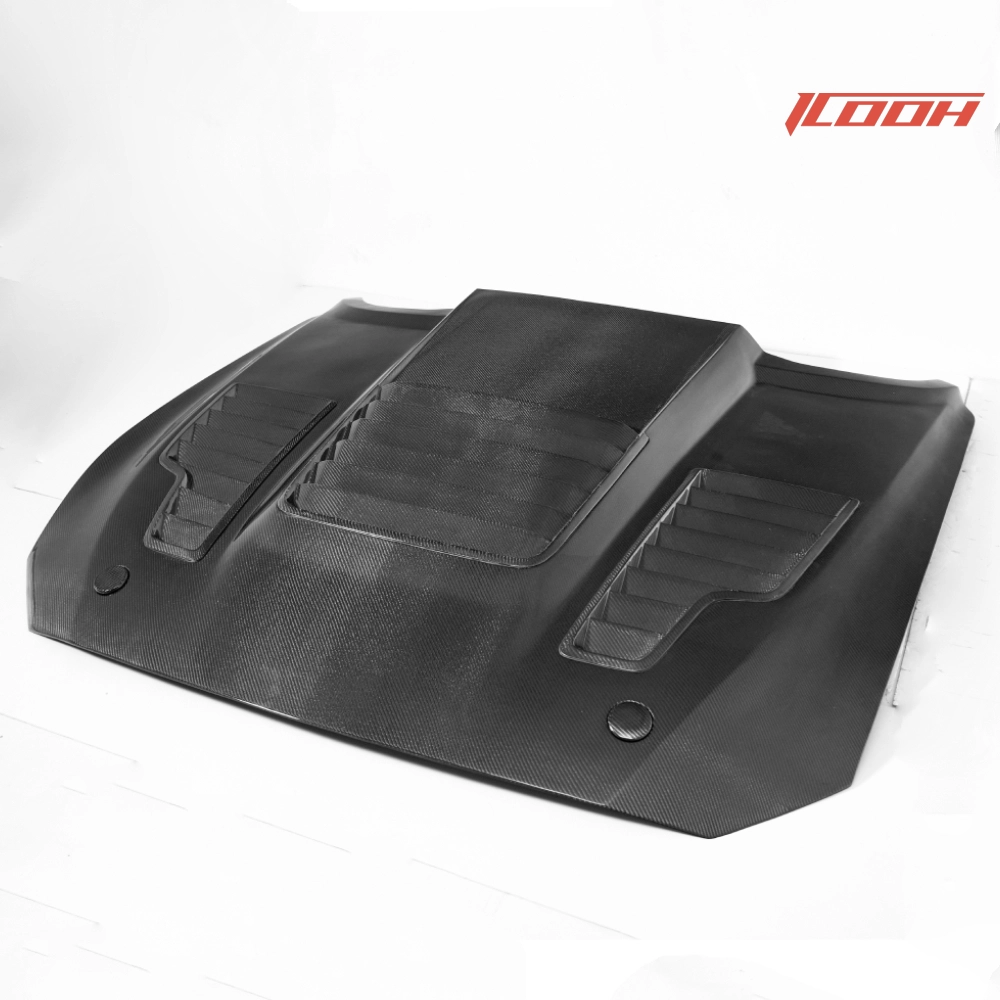
005 Ford Mustang 2018-2023 S550 Exhaust-style Carbon Fiber Front Hood
005 style Carbon Fiber Front Bonnet Engine Hood for Ford Mustang 2018-2023. made of durable carbon fiber material, precision-engineered for OEM-matched fitment. Lightweight and strong, enhances performance while maintaining a sporty aesthetic. Suitable for aftermarket replacement or performance upgrade with 100% tested quality assurance.
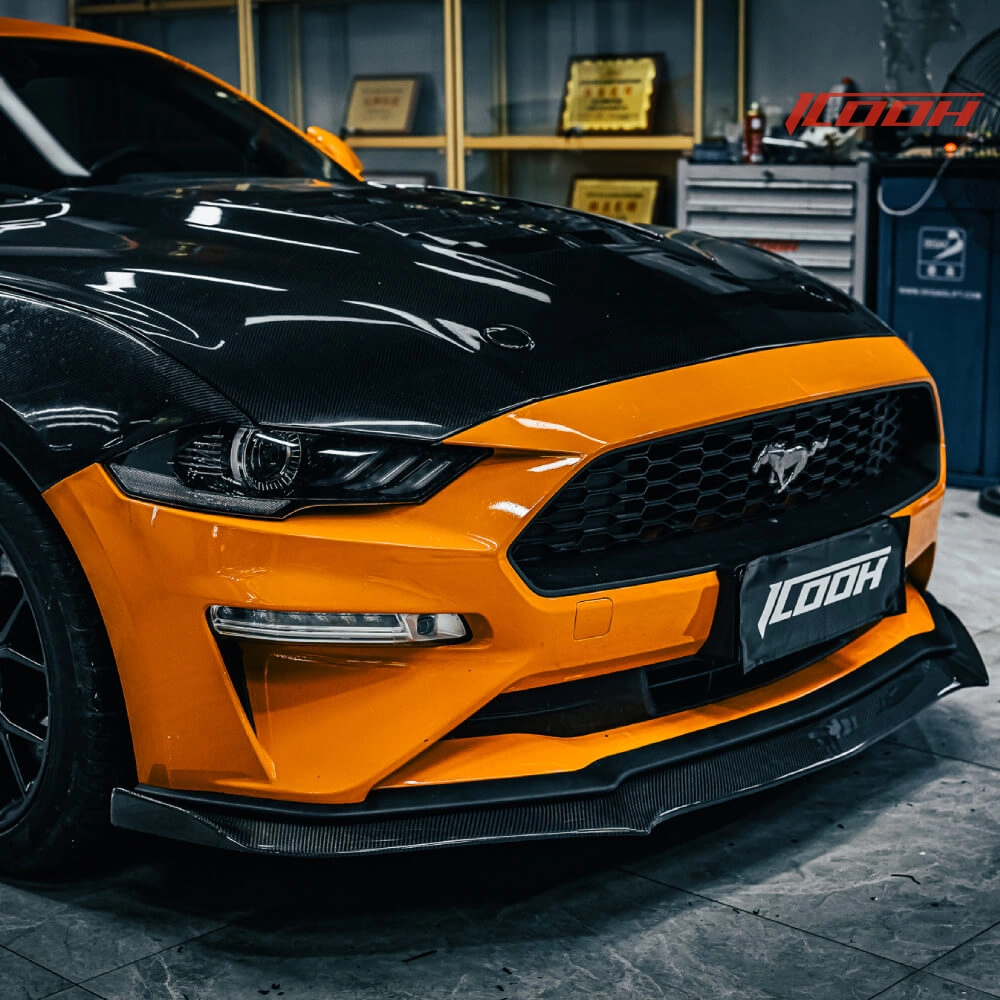
GT350 Ford Mustang 2018-2023 Carbon Fiber Front Lip
Enhance the aerodynamics and style of your Mustang with the 2018–2023 Mustang GT350 Carbon Fiber Front Lip. Crafted from lightweight, high-strength carbon fiber, this front lip delivers improved downforce, sharper front-end appearance, and a precise OEM-style fit.
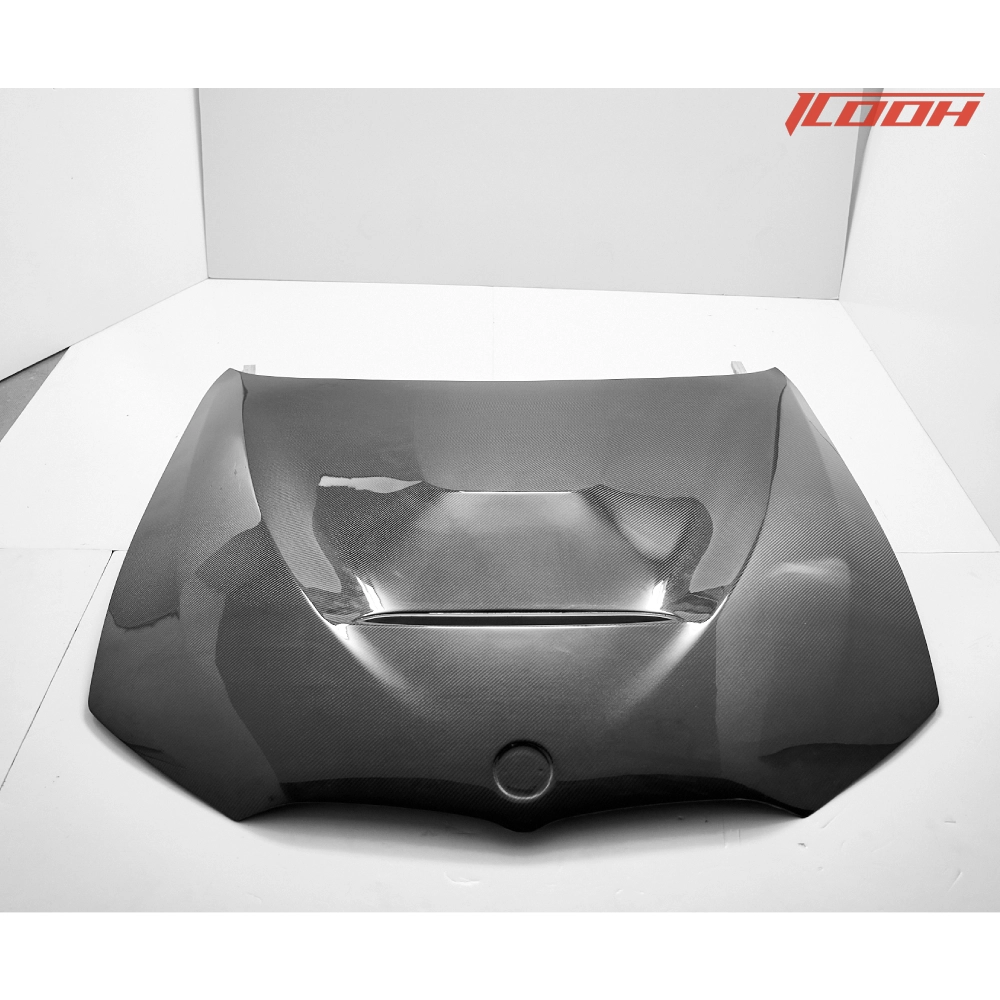
2020-2024 BMW G20 3 Series GTS Style Carbon Fiber Hood
The BMW G20 3 Series GTS-style carbon fiber hood, designed to deliver a lightweight, aggressive, and performance-focused look. Crafted from high-quality carbon fiber, it enhances aerodynamics, improves heat dissipation, and gives your G20 a striking motorsport appearance.

BMW 1 Series F20 GTS style carbon fiber front hood
The BMW 1 Series F20 GTS-style carbon fiber front hood. Made from high-quality carbon fiber, it offers a lightweight, durable construction with improved cooling and a striking performance look. Designed for precise fitment, it enhances both style and aerodynamics for a true motorsport feel.
Lightweight. Durable. Uniquely Yours.
ICOOH is a pioneer in automotive performance and exterior upgrades, compatible with 99% of vehicles worldwide. Let ICOOH be your professional supplier of car tuning parts and performance automotive accessories.
Facebook
Linkedin
Youtube
Instagram