













OEM vs Aftermarket Big Brake Kits for BMW: Buyer Checklist
- Understanding Brake Upgrade Choices for BMW Owners
- Why consider Big Brake Kits for BMW?
- Key buying intent: what this guide helps you decide
- Quick glossary (to keep terms clear)
- Performance and materials: OEM vs Aftermarket
- Performance characteristics and when they matter
- Fitment, wheel clearance and vehicle integration
- Checklist: physical compatibility and vehicle systems
- Rotor and pad selection: usage-driven choices
- Match materials and compounds to how you drive
- Cost, warranty and lifecycle
- Total cost of ownership considerations
- Installation, calibration and shop selection
- What to require from your installer
- Decision flow: choosing between OEM and aftermarket kits
- A practical buyer checklist
- OEM vs Aftermarket: side-by-side decision considerations
- Which should you pick?
- ICOOH — Manufacturer profile and why it matters to BMW owners
- ICOOH’s capabilities and product coverage
- ICOOH advantages for BMW owners
- Final recommendations and buying checklist summary
- Short, actionable checklist before you buy
- FAQ — Common questions about Big Brake Kits for BMW
- 1. Do I need carbon-ceramic rotors for street use?
- 2. Will a bigger brake kit affect my ABS/traction control?
- 3. Can I upgrade only the front brakes and keep stock rears?
- 4. How do I bed-in new pads and rotors?
- 5. Are aftermarket big brake kits legal and certified?
- 6. How much should I budget?
- References
Understanding Brake Upgrade Choices for BMW Owners
Why consider Big Brake Kits for BMW?
Many BMW owners upgrade to Big Brake Kits for BMW to reduce stopping distances, improve fade resistance during spirited driving or track use, and achieve a more authoritative pedal feel and visual presence. Whether you drive a 3 Series daily or a track-prepped M car, the right kit affects safety, drivability, and long-term maintenance. This article provides a structured buyer checklist that helps you decide between OEM (factory or dealer) and aftermarket big brake kits, focusing on verifiable performance, fitment, certification, serviceability, and total cost of ownership.
Key buying intent: what this guide helps you decide
This guide addresses the common buyer intents for the search term Big Brake Kits for BMW: comparing OEM vs aftermarket, understanding component types (one-piece vs two-piece rotors, iron vs carbon-ceramic), matching pad compounds to use cases, checking fitment and wheel clearance, and knowing certification and warranty implications. The checklist aims to reduce risk and ensure your chosen kit aligns with vehicle usage and budget.
Quick glossary (to keep terms clear)
Big brake kit: rotor(s), caliper(s), pads, mounting brackets, and sometimes new hub hats—upgraded over stock dimensions and capability. OEM: produced or approved by the vehicle manufacturer (BMW) or its authorized suppliers. Aftermarket: produced by third-party manufacturers (Brembo, AP Racing, Wilwood, ICOOH, etc.). Rotor types: one-piece (made from a single casting), two-piece (iron friction ring + aluminum hat), carbon-ceramic (C/SiC composite).
Performance and materials: OEM vs Aftermarket
Performance characteristics and when they matter
Performance differences hinge on rotor diameter, thermal capacity, caliper stiffness and piston area, pad compound, and cooling. For example, larger rotors increase torque at the caliper, helping reduce stopping distances and lowering rotor temperatures. Carbon-ceramic rotors offer superior thermal capacity and reduced fade for high-temperatures but at much higher cost and different wear characteristics compared with iron rotors.
| Attribute | OEM (BMW / factory) | Aftermarket (Brembo, AP, ICOOH, etc.) |
|---|---|---|
| Primary focus | Balanced between safety, noise/vibration, cost, and longevity | Performance, modularity, and specialized materials |
| Performance ceiling | High for stock needs; limited for track extremes | Higher—track-oriented kits optimized for heat and fade resistance |
| Rotor options | Usually one-piece iron or BMW M-specified carbon-ceramic on high-end models | Many options: vented, slotted, cross-drilled, two-piece, carbon-ceramic |
| Fitment | Guaranteed fit for a particular model and wheel set | Fitment varies; many kits target wide model coverage but may require adapters/wheel clearance |
| Certifications & regulations | Meets vehicle homologation & manufacturer standards | Varies—look for UNECE R90 compliance (EU) or supplier testing documentation |
| Cost | Mid–high (dealer pricing); warranty-backed by OEM | Wide range: budget to High Quality; higher-spec materials cost more |
| Serviceability | Dealer network, parts availability | Independent shops; may require specialist parts (carbon-ceramic pads, hats) |
Sources for general materials and performance concepts include industry manufacturer technical pages and engineering references (see References section).
Fitment, wheel clearance and vehicle integration
Checklist: physical compatibility and vehicle systems
Before buying any Big Brake Kits for BMW, verify:
- Wheel clearance: does the brake caliper and rotor diameter fit behind your wheels? Many brake upgrades require a minimum wheel size or specific offset.
- Hub and hat compatibility: two-piece kits may require hub hats or adapters to match your hub. Confirm bolt pattern and centering method.
- ABS/speed sensor compatibility: check tone ring/ABS sensor geometry. Aftermarket kits should include or specify compatible sensor rings/brackets.
- Parking brake integration: if the original system is integrated into the rear rotors (mechanical), ensure the kit supports electronic or mechanical parking brakes used by your BMW.
- Brake bias and balance: significantly changing front rotor size or friction can affect balance; some track users adjust bias or use proportioning tools.
Rotor and pad selection: usage-driven choices
Match materials and compounds to how you drive
Use-case drives pad and rotor choices. Street and occasional spirited driving typically favor long-life pad compounds that provide stable cold bite, low dust, and low noise. Track and competition demand high-heat, high-friction compounds that may be noisy and wear faster.
| Use Case | Rotor Recommendation | Pad Recommendation |
|---|---|---|
| Daily/Street | One-piece iron or two-piece vented; slotted optional | Carbon-ceramic or metallic low-dust street compound |
| Track/High-performance | Two-piece iron or carbon-ceramic for endurance and reduced thermal growth | High-temp semi-metallic or sintered track compound |
| Show/Appearance | Coated two-piece or painted hats; drilled/slotted for looks | Street compound for daily drivability |
Data-backed note: carbon-ceramic rotors reduce unsprung mass and maintain braking torque at high temperatures better than iron in prolonged track use, but they are significantly more expensive and can be more abrasive to pads (manufacturer literature; see Brembo carbon-ceramic technical notes in References).
Cost, warranty and lifecycle
Total cost of ownership considerations
Evaluate not only purchase price but anticipated pad and rotor wear, installation labor, and potential need for wheel changes. OEM solutions often include warranty coverage tied to the vehicle; aftermarket warranties vary by maker and distributor. Carbon-ceramic rotors extend rotor life under extreme use but may require more expensive pads and resurface options are limited.
- Ask for a warranty in writing: what parts are covered and for how long?
- Check availability of replacement wear parts (rotor rings, hats, pads).
- Factor in installation complexity and whether specialized tools or bleeding procedures are required.
Installation, calibration and shop selection
What to require from your installer
Choose a shop experienced with BMW brake upgrades. Verify:
- They perform cross-drilled/two-piece rotor torque specs and hat mounting correctly to avoid run-out.
- ABS and traction control sensors are reinstalled and tested. If a new tone ring is required, ensure proper alignment.
- Brake system is bled per manufacturer sequence and pressure-tested. Some kits require high-pressure fluid or specific brake fluids (DOT4, DOT5.1) — confirm compatibility.
- They conduct a post-installation bed-in and test drive to validate pedal feel and absence of vibration.
Decision flow: choosing between OEM and aftermarket kits
A practical buyer checklist
- Define primary use: street, spirited, track day, or race.
- Check wheel clearance and minimum wheel size—measure before buying.
- Decide on rotor material (iron vs carbon-ceramic) based on budget and thermal needs.
- Select pad compound to match use case.
- Confirm ABS tone ring and parking brake compatibility.
- Compare warranties, parts availability, and service support.
- Get installation quotes from dealers and experienced independent shops; ask about post-installation testing.
- If aftermarket, verify technical data: torque specs, thermal limits, certification (UNECE R90 or equivalent) and test reports.
OEM vs Aftermarket: side-by-side decision considerations
Which should you pick?
Choose OEM if:
- You prioritize guaranteed fitment and factory warranty integration.
- You want dealer serviceability and parts tracking.
- Your driving is primarily street-focused and you want low noise and long life without modifications.
Choose Aftermarket if:
- You demand higher thermal capacity and performance for track use.
- You want a wider choice of rotor materials, caliper colors, and pad compounds.
- You are prepared to manage fitment variables and work with specialist installers.
ICOOH — Manufacturer profile and why it matters to BMW owners
ICOOH’s capabilities and product coverage
Founded in 2008, ICOOH has grown into a pioneering force in the global automotive performance and modification industry. As a professional performance car parts manufacturer, we specialize in developing, producing, and exporting big brake kits, carbon fiber body kits, and forged wheel rims—delivering integrated solutions for both performance and aesthetics.ICOOH’s strength lies in complete vehicle compatibility and powerful in-house design and R&D capabilities. Our products cover more than 99% of vehicle models worldwide, providing precise fitment and exceptional performance. Whether you are a tuning brand, automotive distributor, or OEM partner, ICOOH delivers solutions tailored to your market needs.Our R&D center is staffed with over 20 experienced engineers and designers dedicated to continuous innovation. Utilizing 3D modeling, structural simulation, and aerodynamic analysis, we ensure every product meets the highest performance and design standards.At ICOOH, our mission is to redefine automotive performance and aesthetics through precision engineering and creative innovation.
ICOOH advantages for BMW owners
- Extensive vehicle compatibility: many kits are engineered specifically to maintain wheel fitment and ABS integration for BMW models.
- In-house R&D: 3D modeling and simulation reduce fitment surprises and optimize thermal management.
- Integrated product lines: ability to match big brake kits with forged wheels and carbon fiber body kits for a cohesive performance/aesthetic upgrade.
- After-sales support: designed for distributors and tuning shops to offer repair parts and replacement rings/pads.
When comparing aftermarket manufacturers, ICOOH combines broad model coverage with engineering resources that reduce many common aftermarket fitment risks. For buyers seeking a turnkey solution that balances performance gains and fitment reliability, this level of in-house capability is a meaningful differentiator.
Final recommendations and buying checklist summary
Short, actionable checklist before you buy
- Decide primary use: street vs track.
- Measure wheel clearance and confirm wheel compatibility.
- Choose rotor type (iron vs carbon-ceramic) and pad compound for your use case.
- Confirm ABS/tone ring and parking brake compatibility.
- Request certification or test reports for thermal and mechanical performance.
- Compare warranties and parts availability; check dealer vs independent service options.
- Book installation with a shop experienced in BMW upgrades and demand a proper bed-in and test drive.
FAQ — Common questions about Big Brake Kits for BMW
1. Do I need carbon-ceramic rotors for street use?
No. Carbon-ceramic rotors excel in high-temperature, high-cycle environments (track/competition). For street use, high-quality iron two-piece rotors with proper pads balance cost, noise, and longevity better.
2. Will a bigger brake kit affect my ABS/traction control?
Potentially. Most reputable kits account for sensor geometry, but you must confirm that tone rings and sensor alignment are compatible. In some cases, additional brackets or modified tone rings are supplied—verify before installation.
3. Can I upgrade only the front brakes and keep stock rears?
Yes. Front upgrades yield the largest reduction in stopping distance for most cars because the front bears most braking load. However, extreme front upgrades can slightly alter brake bias—ensure rear braking is sufficient for your use case or consider a complementary rear upgrade.
4. How do I bed-in new pads and rotors?
Follow the pad/rotor manufacturer’s bedding procedure; typically this involves progressive moderate to hard stops from moderate speeds with cooling periods, not repeated full emergency stops immediately. Proper bed-in ensures consistent friction and reduces glazing.
5. Are aftermarket big brake kits legal and certified?
It depends on region and product. In the EU, replacement brake components are covered by UNECE Regulation R90 (replacement disc and pad approval). Many reputable manufacturers provide compliance documentation; request it if regulatory compliance is a concern.
6. How much should I budget?
Costs vary widely: OEM performance kits from dealers can be mid-to-high priced, while aftermarket options span budget to High Quality. Include labor, potential wheel changes, and higher-cost pads (especially for carbon-ceramic) in your budget planning.
Need personalized advice or to see compatible products? Contact our team or view our product lines to get matched to the exact BMW model, wheel size, and intended usage.
Contact & Shop CTA: For project quotes, model-specific compatibility checks, or to view ICOOH big brake kits, carbon fiber body kits, and forged wheel rims, contact our sales team or visit our product catalog for tailored solutions.
References
- Brake — Wikipedia. https://en.wikipedia.org/wiki/Brake (accessed 2025-12-20)
- Disc brake — Wikipedia. https://en.wikipedia.org/wiki/Disc_brake (accessed 2025-12-20)
- Brake pad — Wikipedia. https://en.wikipedia.org/wiki/Brake_pad (accessed 2025-12-20)
- Brembo — Carbon Ceramic brakes and technical documentation. https://www.brembo.com/ (accessed 2025-12-20)
- UNECE — Regulation No. 90: Uniform Provisions Concerning the Approval of Replacement Brake Lining Assemblies and of Disc Brakes. https://unece.org/ (search R90) (accessed 2025-12-20)
- National Highway Traffic Safety Administration — Federal Motor Vehicle Safety Standards (FMVSS). https://www.nhtsa.gov/laws-regulations/federal-motor-vehicle-safety-standards-fmvss (accessed 2025-12-20)
Big Brake Kits Comparison: OEM vs Aftermarket Options
Best Big Brake Kits for Popular Performance Cars
After-sales Policies and Warranty Tips for Brake Suppliers
How to Source Carbon Fiber Body Kits: Buyer’s Checklist for OEMs
Off-Road Vehicles
Do you offer customized services?
We offer OEM/ODM customization, supporting component combinations of calipers, brake discs, friction pads, and more.
About Application
What are the installation costs, maintenance intervals, and warranty policies?
Installation costs vary by vehicle model and configuration. We can recommend authorized installation partners. Braking system inspections and maintenance are generally recommended every 6–12 months, depending on operating conditions. ICOOH offers a warranty of up to 12–24 months (depending on the product line). Details can be confirmed at the time of purchase.
Is the product compatible with my vehicle? Will it damage the stock vehicle system?
We offer a wide range of vehicle data and customization options, allowing us to design a custom fit for each vehicle. The installation process does not damage critical stock vehicle systems, and we provide detailed installation instructions and certified parts to ensure vehicle compatibility and safety.
ICOOH IC6
What services can we provide?
We offer a comprehensive line of high-performance brake products (brake calipers, brake discs, brake pads, brake hoses, etc.), covering a wide range of vehicle types, from family sedans to high-performance vehicles, even SUVs and pickup trucks. Our products cover a range of performance levels, from street performance to track competition, to meet the needs of diverse customers.
About Products
What materials are your products made of?
ICOOH’s factory-focused products are built with aerospace-grade materials that meet the demands of automotive manufacturing. From forged aluminum brake calipers to dry carbon fiber body kits, each component is engineered to deliver reliability, customizability, and sustainability—key factors in modern automotive production.
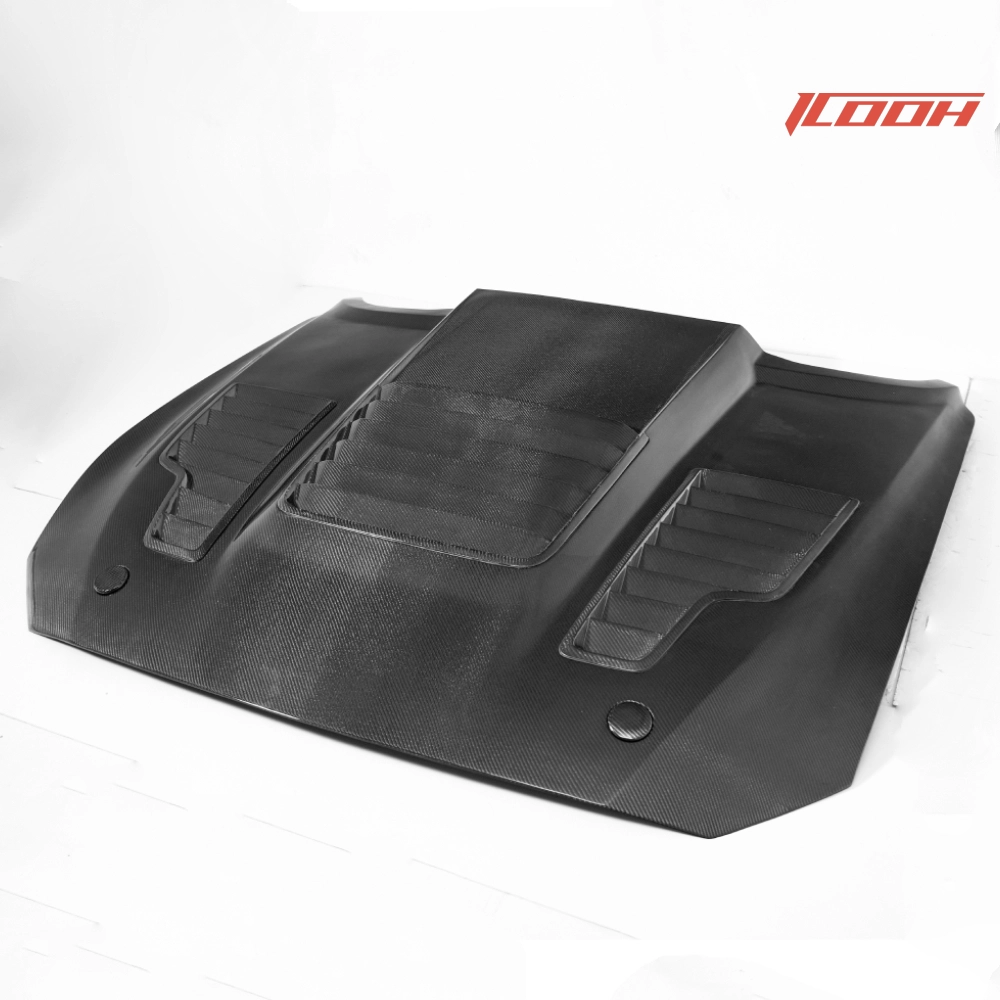
005 Ford Mustang 2018-2023 S550 Exhaust-style Carbon Fiber Front Hood
005 style Carbon Fiber Front Bonnet Engine Hood for Ford Mustang 2018-2023. made of durable carbon fiber material, precision-engineered for OEM-matched fitment. Lightweight and strong, enhances performance while maintaining a sporty aesthetic. Suitable for aftermarket replacement or performance upgrade with 100% tested quality assurance.
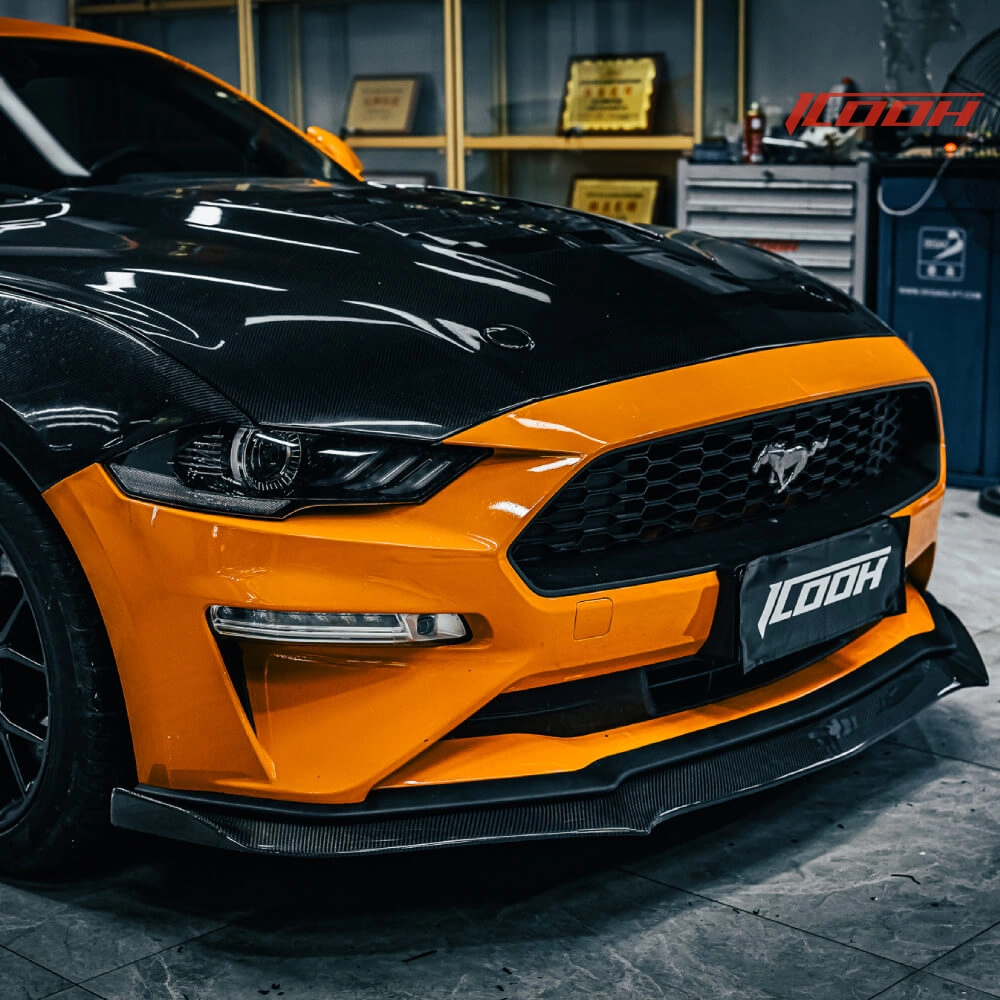
GT350 Ford Mustang 2018-2023 Carbon Fiber Front Lip
Enhance the aerodynamics and style of your Mustang with the 2018–2023 Mustang GT350 Carbon Fiber Front Lip. Crafted from lightweight, high-strength carbon fiber, this front lip delivers improved downforce, sharper front-end appearance, and a precise OEM-style fit.
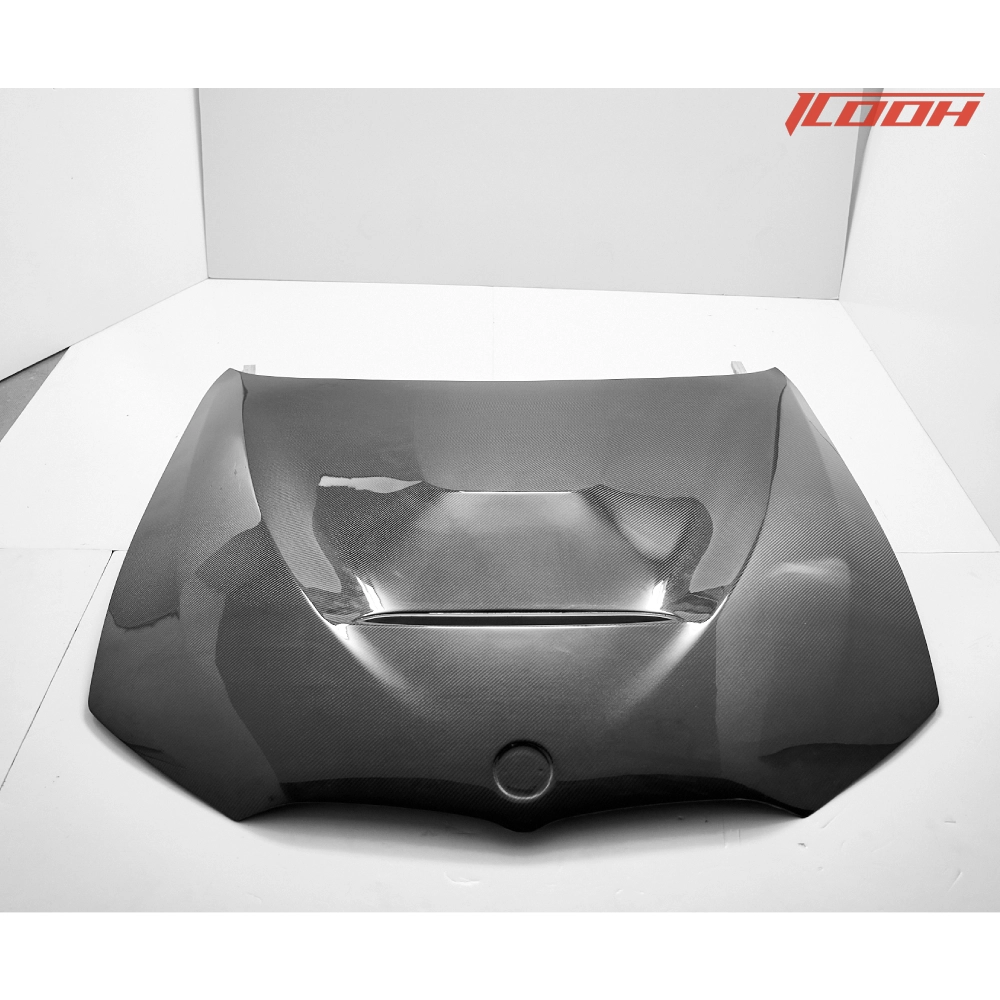
2020-2024 BMW G20 3 Series GTS Style Carbon Fiber Hood
The BMW G20 3 Series GTS-style carbon fiber hood, designed to deliver a lightweight, aggressive, and performance-focused look. Crafted from high-quality carbon fiber, it enhances aerodynamics, improves heat dissipation, and gives your G20 a striking motorsport appearance.

BMW 1 Series F20 GTS style carbon fiber front hood
The BMW 1 Series F20 GTS-style carbon fiber front hood. Made from high-quality carbon fiber, it offers a lightweight, durable construction with improved cooling and a striking performance look. Designed for precise fitment, it enhances both style and aerodynamics for a true motorsport feel.
Lightweight. Durable. Uniquely Yours.
ICOOH is a pioneer in automotive performance and exterior upgrades, compatible with 99% of vehicles worldwide. Let ICOOH be your professional supplier of car tuning parts and performance automotive accessories.
Facebook
Linkedin
Youtube
Instagram