How Brake Caliper Manufacturing Affects Stopping Performance
- Why Brake-System Design Matters
- Braking is a system-level function
- Calipers: the load-bearing actuator
- Key performance outcomes affected by caliper design
- How Caliper Manufacturing Impacts Stopping Performance
- Material choice: cast iron vs aluminum vs forged alloys
- Manufacturing method: casting, forging, or machining
- Precision machining and tolerances
- Materials, Thermal Management and Durability
- Heat generation and dissipation
- Surface treatments and corrosion protection
- Seal systems, piston materials and friction behavior
- Testing, Standards, and Real-World Effects
- Industry standards and validation
- Laboratory vs. field testing
- How manufacturing choices show up in stopping data
- Practical Comparison of Caliper Types
- Choosing a Brake Caliper Manufacturer
- What to verify in supplier capabilities
- ICOOH — example of capability (company profile)
- Where manufacturing differences give market advantage
- Maintenance, Retrofit and Practical Recommendations
- When to upgrade calipers
- Brake fluid, bedding, and service
- Integration checklist for retrofit projects
- FAQ
- 1. How do caliper manufacturers affect stopping distance?
- 2. Are forged monoblock calipers always better than cast calipers?
- 3. How important is caliper thermal design for street cars?
- 4. Can changing calipers affect ABS and traction control behavior?
- 5. How do I choose the right brake caliper manufacturer for a retrofit?
- Contact & Call to Action
High-quality stopping performance depends on more than pad compound and rotor size. The choices that brake caliper manufacturers make—materials, casting vs. forging, piston count and arrangement, machining tolerances, sealing systems, and assembly validation—directly change how braking force is applied, how heat is conducted and dispersed, and how the pedal feels under load. This article breaks down the manufacturing variables that affect stopping distance, fade resistance, and consistency, and gives practical guidance for engineers, tuners, and fleet managers who evaluate caliper options for performance or retrofit applications.
Why Brake-System Design Matters
Braking is a system-level function
Stopping performance is an emergent property of the entire brake system: calipers, rotors, pads, hydraulics, tires, suspension, and electronic controls (ABS/ESC). As described in general references on braking, components interact dynamically—thermal growth, pad transfer layers, and hydraulic compliance all affect stopping distance and repeatability (Disc brake — Wikipedia).
Calipers: the load-bearing actuator
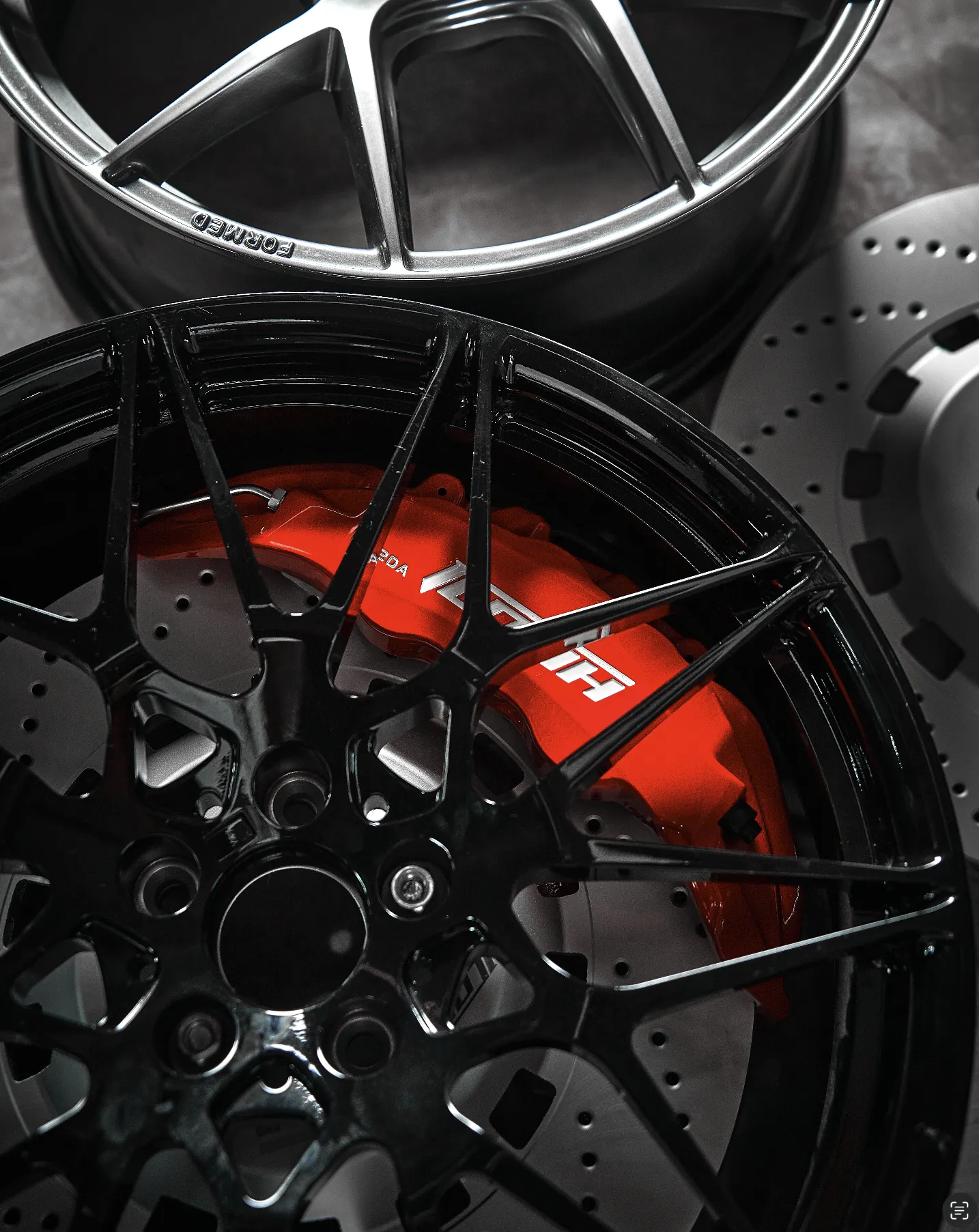
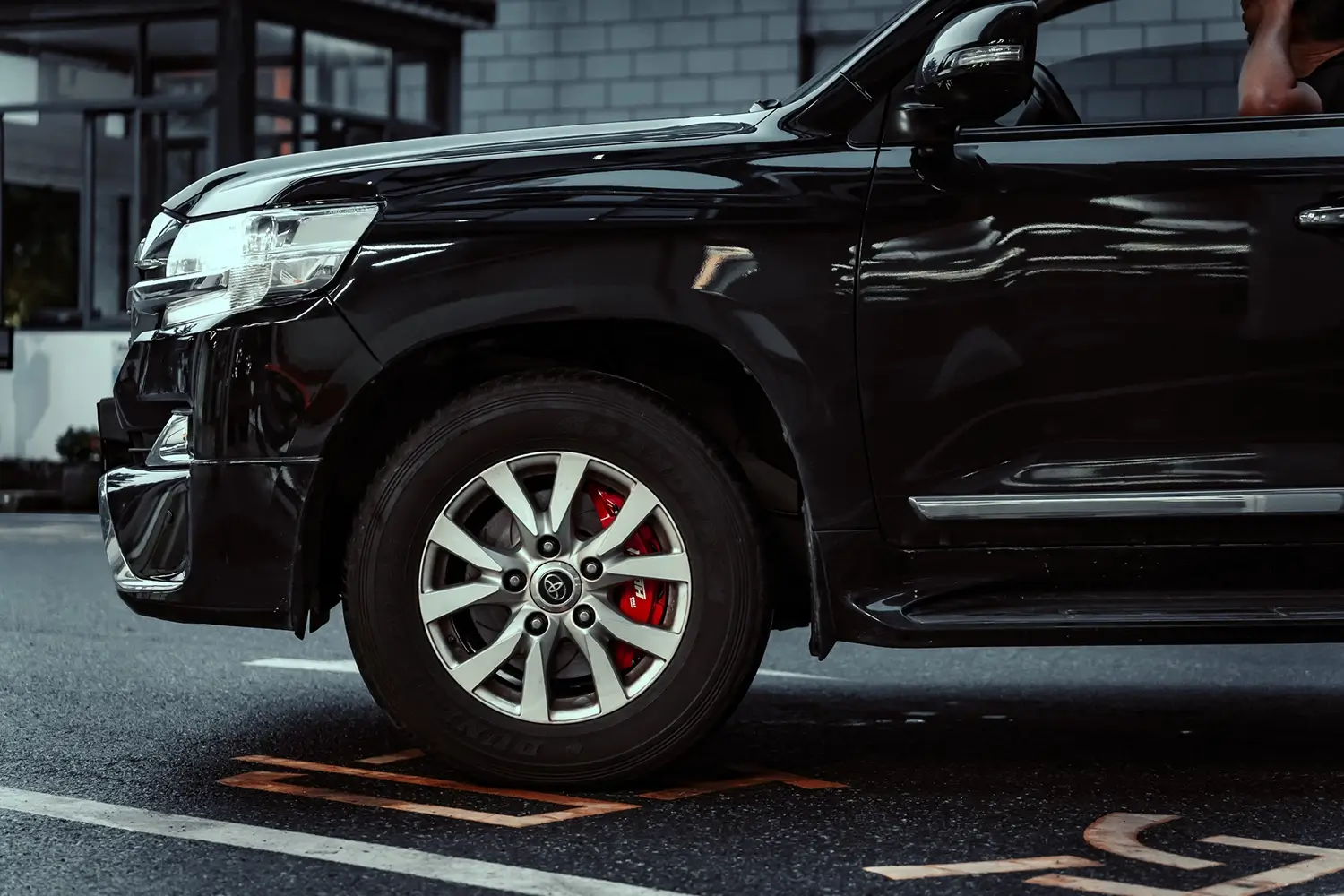
Calipers convert hydraulic pressure into mechanical clamping force on the brake pads. The caliper's stiffness, piston area, friction between moving parts, and how heat is moved away from the friction interface determine pedal feel, initial bite, susceptibility to fade, and braking torque consistency. This is why the choices of modern brake caliper manufacturers matter for both street and track use.
Key performance outcomes affected by caliper design
- Peak braking torque and modulation
- Thermal capacity and fade resistance
- Wear characteristics — pads and rotors
- Serviceability, weight, and fitment
How Caliper Manufacturing Impacts Stopping Performance
Material choice: cast iron vs aluminum vs forged alloys
Material selection is one of the first and most consequential decisions brake caliper manufacturers make. Cast iron is heavy but has high thermal mass and is tolerant to high temperatures; aluminum alloys offer significant weight savings and good thermal conductivity but require careful alloy selection and surface treatment to avoid creep and corrosion. Forged aluminum or billet (monoblock) designs provide superior grain structure and stiffness compared to typical castings.
For general material properties see: Cast iron — Wikipedia and Aluminium — Wikipedia.
Manufacturing method: casting, forging, or machining
Manufacturing method affects microstructure, mechanical strength, and thermal behavior. Typical routes used by brake caliper manufacturers:
- Casting (sand or gravity): cost-effective for complex shapes; must be engineered to minimize porosity and stress risers.
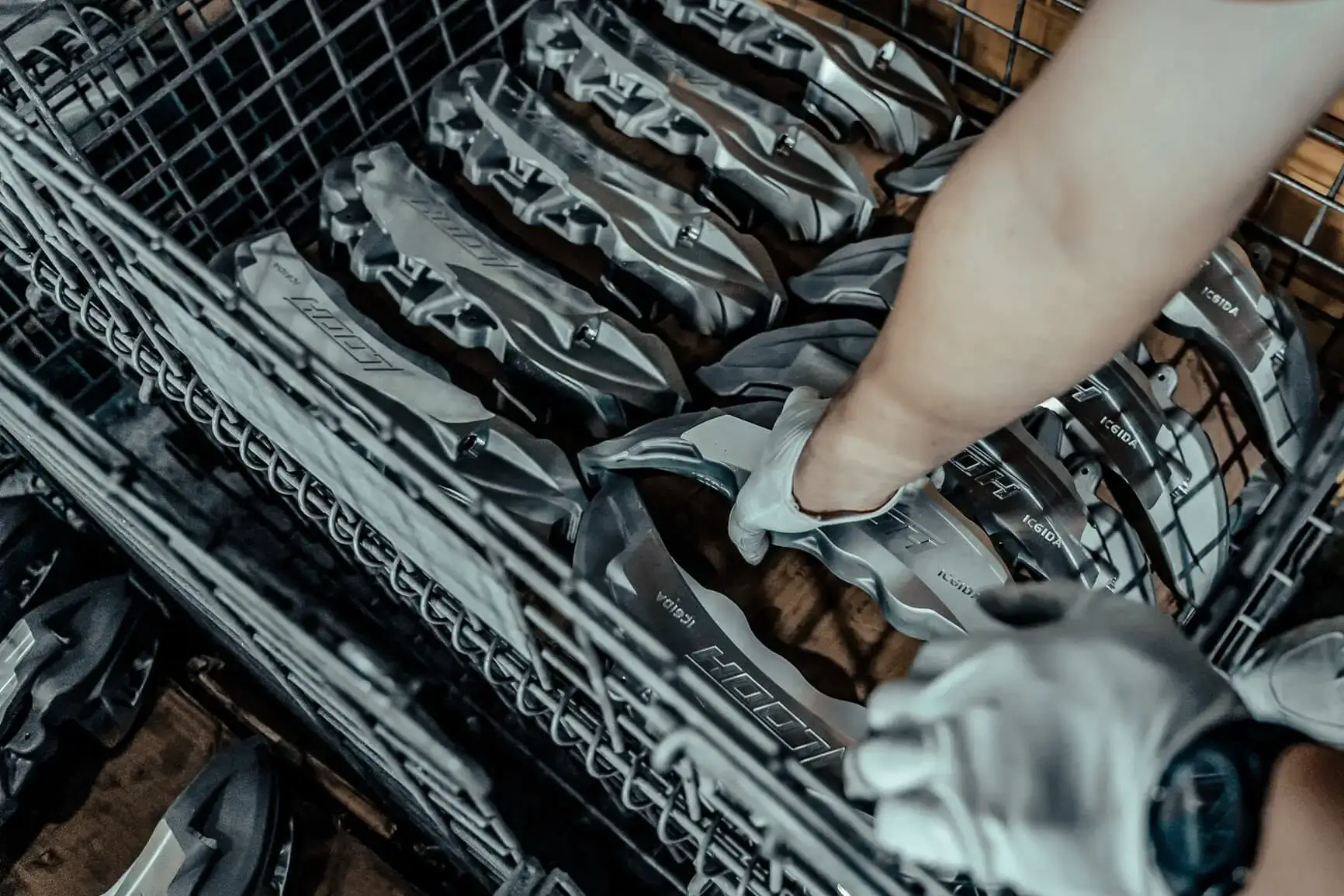
- Forging/billet machining: yields higher material density, improved grain flow, and greater stiffness — key for high-performance or racing calipers.
- Monoblock machining: one-piece calipers (monoblocks) eliminate fastener-induced flex and often outperform multi-piece cast calipers in stiffness-to-weight ratio.
Precision machining and tolerances
Hydraulic response and pad alignment depend on piston bores, sealing grooves, and mating surfaces being within tight tolerances. Excessive bore ovality or improper sealing groove geometry increases leakage risk, uneven piston travel, and inconsistent pad contact area—leading to uneven wear and variable stopping force. Top brake caliper manufacturers publish tolerance specs and use CNC machining, honing, and coordinate-measuring inspection to maintain these geometries.
Materials, Thermal Management and Durability
Heat generation and dissipation
During braking, kinetic energy converts to heat at the pad/rotor interface. The caliper must manage that heat to prevent fluid boil, seal degradation, and piston seizure. Material thermal conductivity, caliper mass (thermal capacity), and exposure to airflow (aided by caliper shape and venting) determine how much heat reaches the hydraulic fluid and seals. Brake fluid boiling reduces effective pressure and creates fade—so caliper thermal design has direct safety implications.
Surface treatments and corrosion protection
Aluminum requires anodizing, ceramic coating, or other surface treatments to improve corrosion resistance and reduce fretting. Cast iron often uses e-coating and paint. Corrosion can cause caliper slide seizure or piston sticking—both harmful to even braking and can increase stopping distance over time.
Seal systems, piston materials and friction behavior
Seal geometry, lip materials, and piston surface finish affect return speed and retraction, influencing pad drag and heat buildup. Manufacturers that invest in validated sealing systems (fluoroelastomer compounds, multi-lip seals) reduce pad drag and maintain consistent pedal feel across temperature cycles.
Testing, Standards, and Real-World Effects
Industry standards and validation
Leading brake caliper manufacturers follow industry standards and validation protocols from organizations such as SAE International (sae.org) and perform tests for strength, fatigue, hydraulic leakage, thermal endurance, and environmental corrosion. Conformance to standards ensures predictable behavior across operating conditions.
Laboratory vs. field testing
Lab tests (hydraulic pressure cycles, thermal soak, durability rigs) are necessary but insufficient alone. Real-world testing — repeated high-energy stops, track sessions, and fleet trials — reveals secondary effects: pad transfer layer behavior, rotor surface changes, and long-term wear patterns. Top brake caliper manufacturers combine both.
How manufacturing choices show up in stopping data
While stopping distance also depends on tires and vehicle speed, caliper stiffness and thermal management directly affect repeatability of stopping times and required pedal effort. The Insurance Institute for Highway Safety (IIHS) explains how speed and braking performance influence stopping distances and crash risk (IIHS: How speed affects stopping distance).
Practical Comparison of Caliper Types
The following table summarizes typical trade-offs between common caliper designs that brake caliper manufacturers offer. Values are qualitative to reflect typical industry behavior across applications.
| Caliper Type | Stiffness & Modulation | Thermal Performance | Weight | Typical Use |
|---|---|---|---|---|
| Single-piston floating | Moderate; some flex | Moderate; depends on rotor | Lower | Economy and OEM street |
| Opposed multi-piston (cast) | Good; better pad contact | Good; lower thermal mass than iron | Moderate | Sport and light performance |
| Monoblock forged/billet | Excellent; very stiff | Excellent; engineered vents and high conductivity | Lowest for given stiffness | Track, high-performance street, racing |
| Cast iron multi-piece | Good; heavier but stable | High thermal mass; slower to heat soak | Highest | Heavy-duty, towing, commercial |
Sources for caliper type characteristics: industry summaries and technical references such as Disc brake — Wikipedia and engineering materials references.
Choosing a Brake Caliper Manufacturer
What to verify in supplier capabilities
When selecting among brake caliper manufacturers, evaluate:
- Material and process capabilities (casting, forging, CNC machining)
- R&D and testing facilities — capability for 3D simulation, thermal analysis, and endurance testing
- Quality systems and traceability (ISO 9001/TS certifications)
- Fitment coverage and aftermarket support
ICOOH — example of capability (company profile)
Founded in 2008, ICOOH has grown into a pioneering force in the global automotive performance and modification industry. As a professional performance car parts manufacturer, we specialize in developing, producing, and exporting big brake kits, carbon fiber body kits, and forged wheel rims—delivering integrated solutions for both performance and aesthetics. ICOOH’s strength lies in complete vehicle compatibility and powerful in-house design and R&D capabilities. Our products cover more than 99% of vehicle models worldwide, providing precise fitment and exceptional performance. Whether you are a tuning brand, automotive distributor, or OEM partner, ICOOH delivers solutions tailored to your market needs.
Our R&D center is staffed with over 20 experienced engineers and designers dedicated to continuous innovation. Utilizing 3D modeling, structural simulation, and aerodynamic analysis, we ensure every product meets the highest performance and design standards. At ICOOH, our mission is to redefine automotive performance and aesthetics through precision engineering and creative innovation.
Where manufacturing differences give market advantage
Manufacturers that invest in monoblock tooling, in-house heat-treatment, and validated sealing systems will offer calipers with better stiffness-to-weight ratios, consistent hydraulic response, and longer service intervals. For tuners and OEMs, such capabilities reduce warranty risk and improve customer satisfaction.
Maintenance, Retrofit and Practical Recommendations
When to upgrade calipers
Consider caliper upgrades when you experience pedal fade under repeated high-energy stops, uneven pad wear, or when fitting larger rotors that require different caliper geometry. Also upgrade for weight reduction and improved modulation for spirited driving or track use.
Brake fluid, bedding, and service
Even the best caliper design is affected by fluid condition and bedding procedures. Use high boiling-point fluids appropriate for the intended use and follow pad bedding procedures recommended by pad manufacturers. Regular inspection of piston bores, seals, and guide hardware keeps calipers performing as designed.
Integration checklist for retrofit projects
- Verify piston area and resulting brake bias to preserve ABS/ESC operation.
- Ensure caliper-rotor clearance and wheel fitment.
- Confirm recommended pad compounds and bedding steps.
- Ask the manufacturer for test data and fitment templates.
FAQ
1. How do caliper manufacturers affect stopping distance?
Caliper stiffness, piston area, and thermal management affect the magnitude and consistency of braking torque. Poor stiffness or thermal transfer can increase fade and variability, which can lengthen stopping distance in repeated-stop scenarios. Tire grip and vehicle speed are still dominant factors, but caliper design governs repeatability and pedal feel.
2. Are forged monoblock calipers always better than cast calipers?
Not always. Monoblock forged calipers typically offer superior stiffness and weight advantages, which benefits high-performance applications. However, high-quality cast multi-piece calipers can be perfectly adequate for many street uses and can be more cost-effective. Choose based on application, budget, and validated testing data.
3. How important is caliper thermal design for street cars?
For everyday driving, thermal demands are modest, but for repeated heavy braking (mountain roads, towing, track days), caliper thermal behavior becomes critical to avoid fade and fluid boil. Upgraded calipers and higher boiling-point fluids are recommended where heavy use is anticipated.
4. Can changing calipers affect ABS and traction control behavior?
Yes. Caliper piston area and hydraulic ratios affect brake bias and the pressure response the ABS system expects. When swapping to a caliper with significantly different piston area, re-evaluate brake balance and consult the manufacturer or a calibration specialist to ensure ABS/ESC function remains correct.
5. How do I choose the right brake caliper manufacturer for a retrofit?
Prioritize manufacturers with documented testing protocols, clear fitment data, corrosion protection practices, and positive track record for support. Request dyno or vehicle test data, thermal and endurance test reports, and references from other customers. If possible, choose companies that provide installation templates and technical support.
Contact & Call to Action
If you are evaluating caliper options for a performance upgrade or OEM program, ICOOH offers end-to-end solutions including big brake kits, carbon fiber body kits, and forged wheel rims. With comprehensive model coverage, in-house 3D modeling, structural simulation and a dedicated R&D team, ICOOH can help you select or develop calipers that meet your stopping performance, fitment, and durability requirements. Contact ICOOH for technical consultation or to view product catalogs and fitment guides.
Get in touch: For product inquiries, technical data, or custom solutions, contact ICOOH’s sales & R&D team or visit our product pages to view big brake kits, carbon fiber body kits and forged wheel rims.
Further reading and references: Disc brake — https://en.wikipedia.org/wiki/Disc_brake; How speed affects stopping distance — IIHS; SAE International — https://www.sae.org/.
Big Brake Kits vs OEM Calipers: What Buyers Should Know
What is Big Brake Kits? | ICOOH Ultimate Insight
Top 10 custom carbon fiber parts for cars Manufacturers and Supplier Brands in Asia
Buyer's Guide: Choosing Brake Caliper Manufacturers
About Company
When is ICOOH founded?
ICOOH was established in 2008.
ICOOH IC6
Why choose us?
ICOOH delivers products that match the performance of international brands while being more competitively priced. It stands as a brand with robust R&D capabilities, reliable quality, and comprehensive support.
How do I choose the right product?
Please send us an inquiry or contact us through TradeManager and provide your vehicle model and year of production. We will provide you with the right product as soon as possible after receiving your information.
Daily Modified Vehicles
Are technical specifications or test reports available?
We can provide complete information, including friction coefficient curves, temperature resistance life tests, and braking distance data.
About Products
Are your products compliant with EU/US safety?
ICOOH’s products adhere to strict international safety standards.
IC5 Six-piston brake calipers suitable for 17-inch and 18-inch wheels
The new generation of IC5 series six-piston calipers are beautiful, while continuing the high performance and easy installation characteristics of the IC series. They are suitable for 17- and 18-inch wheels and provide a comfortable braking feel.
ICOOH X6 Six-piston brake caliper kits suitable for 18, 19 and 21-inch wheels
The X6 series of products—brake calipers, brake discs, brake pads, and brake hoses—are ideal for car enthusiasts who balance road and high-performance driving. Their stylish and robust appearance, powerful braking performance, and linear feel deliver a unique driving experience.
DM4 Four-piston brake calipers suitable for 18-19 inch wheels
The split forged four-piston caliper is full and beautiful, easy to install, and has high strength. It does not require any flanges or gaskets to be added, nor does it require the replacement of wheel hub screws. It does not vibrate, is safe and stable, and is very suitable for 18- and 19-inch SUVs.
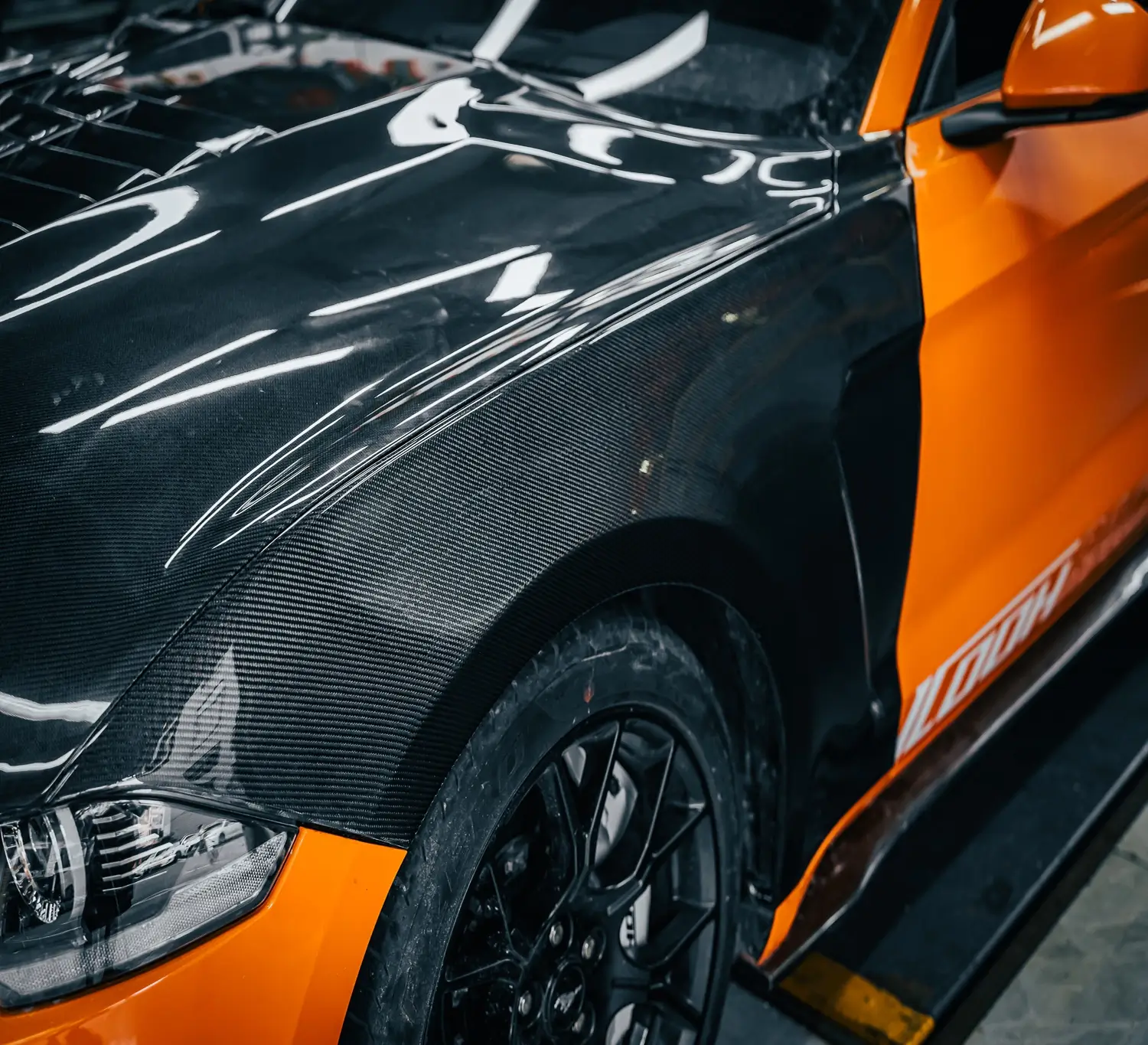
2024+ for Ford Mustang S650 GT Dark Horse 2024+ New Carbon Fiber Engine Hood Bonnet Air Outlet Vent Frame Side Mirror Custom
2024 Mustang original car 002 model with air vents, carbon fiber vents on the hood.made of durable carbon fiber material, precision-engineered for OEM-matched fitment. Lightweight and strong, enhances performance while maintaining a sporty aesthetic. Suitable for aftermarket replacement or performance upgrade with 100% tested quality assurance.
Facebook
Linkedin
Youtube
Instagram