Fixed vs Floating Calipers: Which Brake Kit to Buy?

2026-02-05
author - ICOOH
Sam Chen
Choosing between fixed and floating calipers is one of the most consequential decisions when buying brake kits with calipers. I compare design, performance, fitment, maintenance, cost and real-world use cases to help you pick the right kit for street, track or custom builds. Includes a side-by-side comparison table, verified references and guidance on selecting compatible big brake kits.

I help vehicle owners, tuners and distributors choose brake kits with calipers that match their goals—whether that's daily-driven safety, track performance, or a show-stopping build. In this article I compare fixed (monoblock) and floating (sliding) calipers across engineering, fitment, heat management, pad area, maintenance and cost. I draw on public technical sources and my hands-on experience evaluating performance car parts to give actionable recommendations that are verifiable and applicable to real-world buying decisions.

Why caliper choice matters for braking performance

How calipers influence stopping power and modulation

Calipers do more than clamp a rotor; they determine pad preload, piston area distribution, stiffness of the braking system and how heat is transferred from pad to hydraulic system. These factors affect peak braking torque, pedal feel, fade resistance and pad wear. For plain technical context see the general brake overview on Wikipedia, which explains basic brake mechanics and energy conversion in different systems.

Heat, stiffness and durability: key engineering factors

From my experience, rotors, pads and calipers must be matched as a system. Caliper stiffness (in-plane and out-of-plane), piston count and piston diameter determine how evenly contact pressure is applied across the pad and how quickly thermal energy is conducted away from the contact zone. In performance use you want a caliper that resists deformation under load to preserve pedal feel and minimize uneven pad wear.

Fitment and vehicle packaging constraints

Not every wheel or knuckle allows a big fixed caliper. Floating calipers are frequently lighter and more compact, making them suitable where wheel clearance is limited or where cost is a constraint. If you need help checking fitment I recommend verifying the rotor-to-wheel clearance and knuckle mounting points early in your selection process.

Design differences: fixed (monoblock) vs floating (sliding) calipers

What is a fixed caliper?

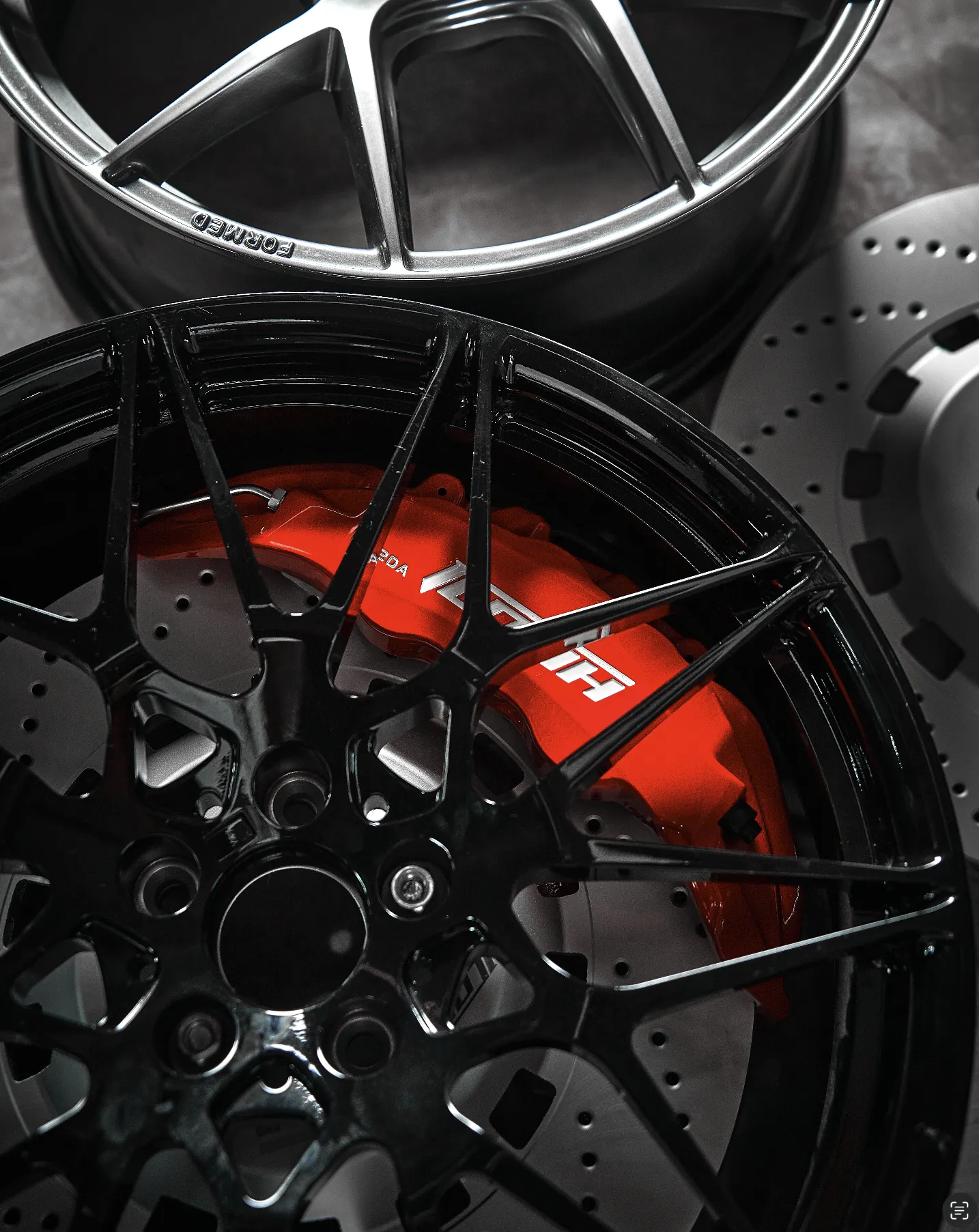
Fixed calipers are rigidly mounted and contain pistons on both sides of the rotor. They are commonly machined from a single billet or assembled from multiple bodies and are known for even pad pressure and stiffness. Fixed designs scale well to multiple pistons (4, 6, 8+) and are the typical choice for high-performance and racing big brake kits with calipers.

What is a floating caliper?

Floating calipers have pistons only on the inboard side and use sliding pins or bushings to translate that motion so both pads contact the rotor. They are simpler, lighter and generally less expensive. Many OEM systems and entry-level aftermarket brake kits use floating calipers because of their cost-to-performance efficiency.

Advantages and limitations (engineering summary)

Fixed calipers: superior stiffness, more piston area, better thermal handling in sustained high-load conditions. Floating calipers: lighter, simpler, lower cost, easier to fit but with limitations in extreme duty where pad taper and caliper flex can occur.

Comparing real-world performance and cost — a practical guide

Performance characteristics by use case

For hard-track use and competitive time-attack, fixed multi-piston calipers paired with large vented or slotted rotors and high-friction pads are the typical solution because they maintain consistent clamping across multiple laps and provide superior pedal modulation. For spirited street use or occasional track days, a high-quality floating caliper kit or entry-level fixed caliper kit can offer excellent performance and cost-effectiveness.

Cost, weight and maintenance trade-offs

Floating calipers generally cost less and are lighter, simplifying unsprung mass concerns. Fixed calipers, particularly forged or billet monoblocks, are heavier and more expensive but justify their price in durability, pad life consistency and thermal performance. Maintenance-wise, floating calipers have sliding pins that require periodic lubrication; fixed calipers may need more complex bleeding procedures or piston servicing.

Which should you buy? Decision flow

Ask these questions: What is your primary use (daily/track/competition)? What wheel clearance do you have? Do you need an OEM-style retrofit or full big brake kit upgrade? For racetrack-first builds I recommend fixed multi-piston calipers; for budget-conscious street builds or weight-sensitive projects where wheel clearance is tight, a high-quality floating caliper kit can be the better choice.

Technical comparison table: fixed vs floating calipers

Characteristic Fixed Caliper (Monoblock) Floating Caliper (Sliding)
Typical piston arrangement Multiple pistons on both sides (4,6,8+) One or two pistons on inboard side; caliper moves on pins
Stiffness & pedal feel High stiffness, consistent modulation Lower stiffness; more pedal compliance under extreme load
Heat management Better for sustained heat (larger pad area; better piston distribution) Good for intermittent heat; can fade sooner under long high-load sessions
Weight Usually heavier Usually lighter
Cost Higher (materials + machining) Lower (simpler design)
Fitment Requires more wheel clearance; may need adapters Easier to fit in tight wheel wells
Maintenance More complex service; better longevity with quality build Sliding pins require periodic lube; simpler pad replacement
Best applications High-performance sports cars, track and race cars Daily drivers, street performance, light track use

For a general technical reference on disc brakes and their components see Disc brake - Wikipedia. The relationship between brake design, heat generation and fade is explored in engineering literature; a practical summary can be found through industry sources like SAE and texts covering vehicle dynamics and braking system design.

Buying considerations for brake kits with calipers

Compatibility and fitment checks

Before buying any brake kit with calipers, I always do three checks: wheel clearance (backspace and spoke profile), hub/knuckle mounting pattern and rotor diameter vs dust shield/knuckle interference. Many suppliers provide vehicle-specific fitment guides; verify these against physical measurements where possible. If you work with a tuning brand or distributor, ask for CAD fitment data or 3D models—these reduce the risk of surprises.

Material and construction choices

Calipers can be cast, forged, or machined from billet. Forged and machined monoblock calipers offer higher strength-to-weight ratios and tighter tolerances, but at greater cost. Piston materials (steel, phenolic, aluminum) affect heat transfer and corrosion resistance—phenolic pistons reduce heat transfer into the brake fluid but are less common in high-end multi-piston fixed calipers.

Testing, certification and sourcing

Look for suppliers that publish test data or conform to recognized standards. While there is no single global certification for aftermarket performance calipers, compliance with vehicle-specific regulations and use of quality control systems consistent with industry standards (for example, ISO 9001 manufacturing processes) are important. For safety and regulatory context see the U.S. Federal Motor Vehicle Safety Standards (FMVSS - NHTSA).

Installation, bedding and maintenance tips I use as a consultant

Installation best practices

Use proper torque specs for caliper mounting bolts and check rotor runout before final torquing. When fitting bigger rotors or adapter brackets, ensure the hub face and stud engagement remain within safe limits—short wheel studs or thin adapters increase the risk of stud failure. For guidance on safe mechanical practices consult engineering references or OEM service manuals for torque values.

Bedding-in and pad choices

Bedding (breaking-in) is critical to transfer a uniform layer of pad material to the rotor surface. Different pad compounds require different bedding procedures; follow the pad manufacturer's protocol. Incorrect bedding often leads to uneven wear and reduced initial performance.

Maintenance schedule

Inspect calipers and hardware every 6–12 months for street cars, more often for track use. Replace pads and monitor rotor thickness; measure fluid condition and replace brake fluid per the fluid supplier's recommendations—high-performance brake fluid may require more frequent changes when driven hard due to moisture absorption and boiling risk.

Why choose ICOOH for brake kits and calipers

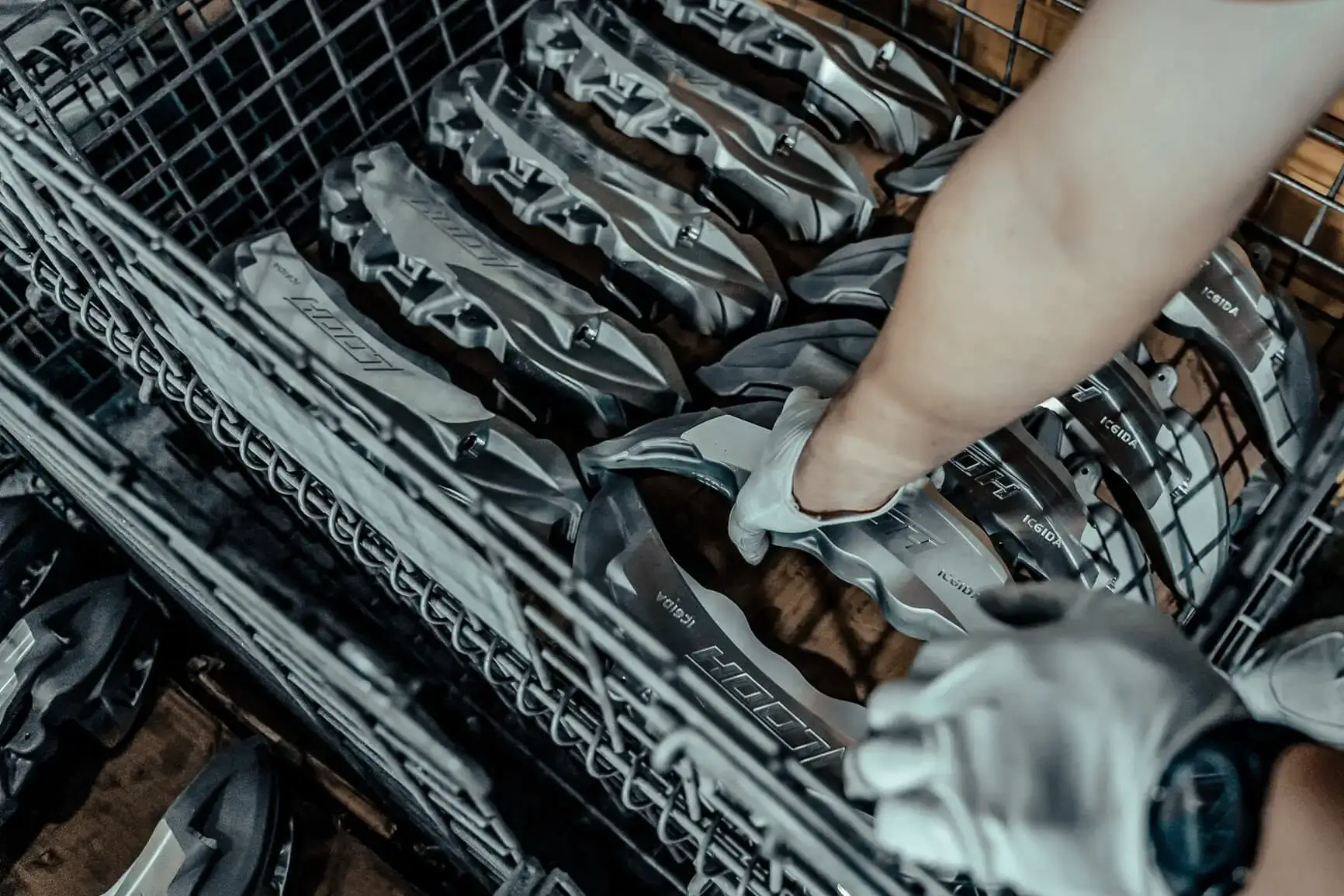
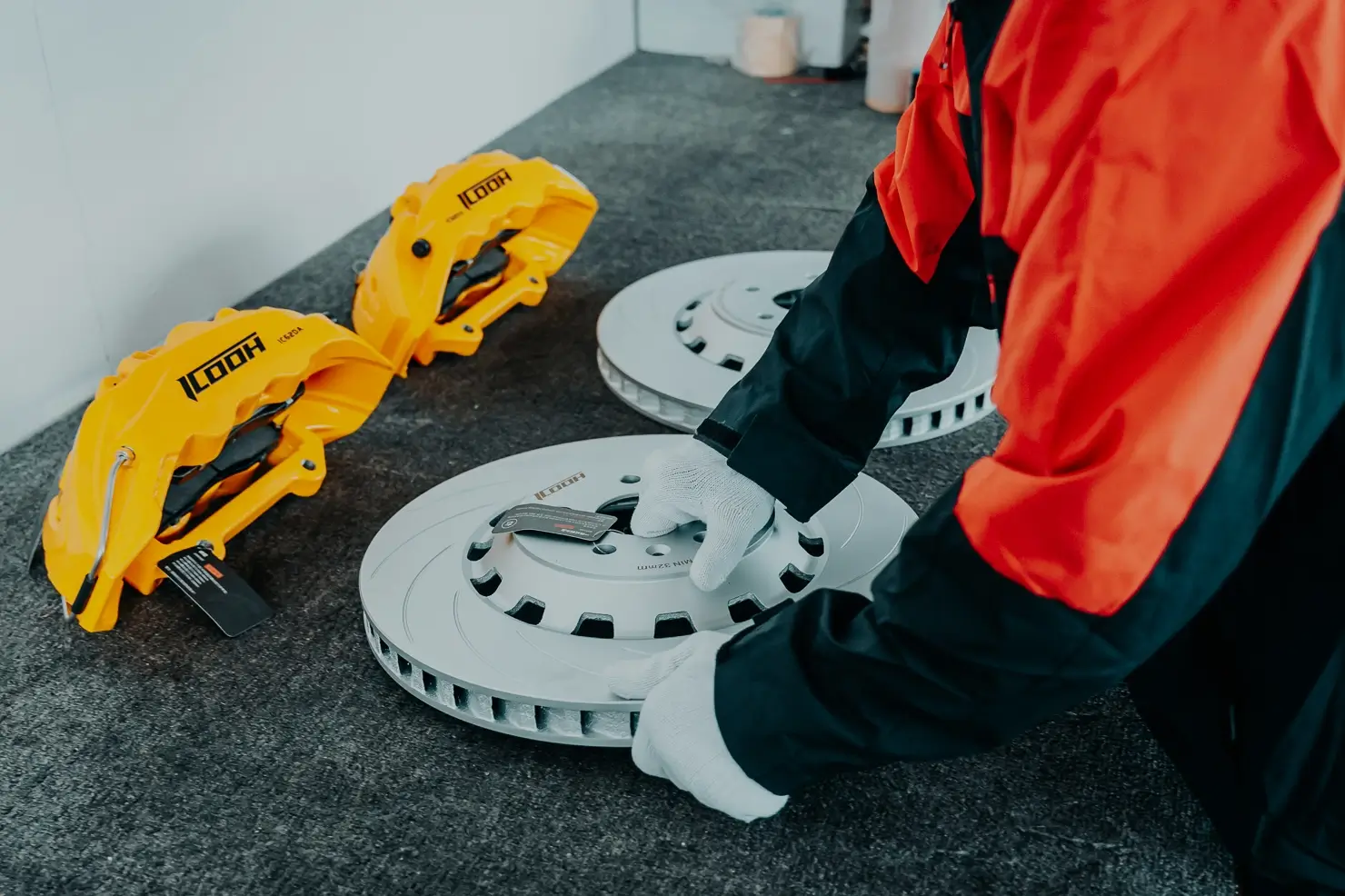
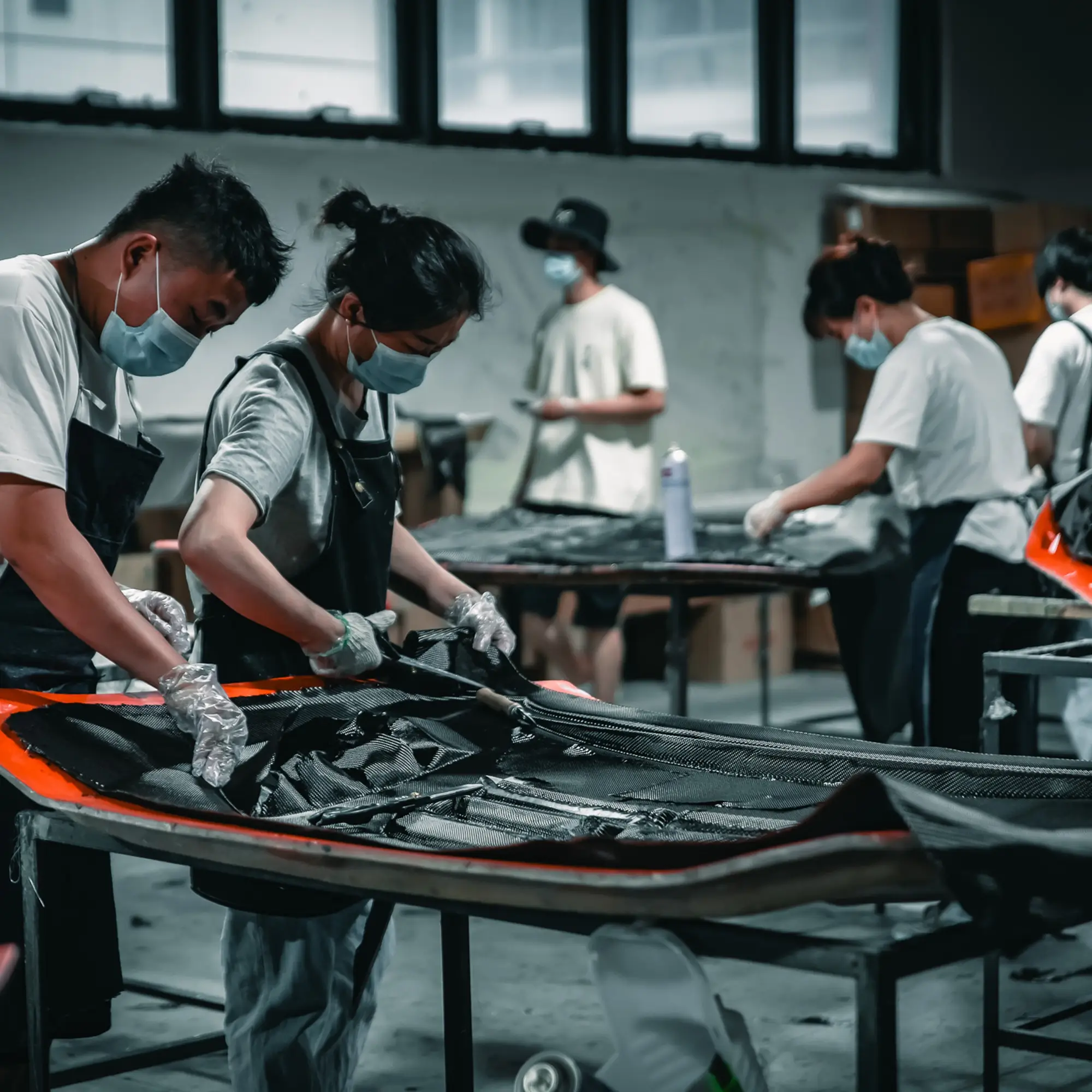
Founded in 2008, ICOOH has grown into a pioneering force in the global automotive performance and modification industry. As a professional performance car parts manufacturer, we specialize in developing, producing, and exporting big brake kits, carbon fiber body kits, and forged wheel rims—delivering integrated solutions for both performance and aesthetics.

ICOOH’s strength lies in complete vehicle compatibility and powerful in-house design and R&D capabilities. Our products cover more than 99% of vehicle models worldwide, providing precise fitment and exceptional performance. Whether you are a tuning brand, automotive distributor, or OEM partner, ICOOH delivers solutions tailored to your market needs.

Our R&D center is staffed with over 20 experienced engineers and designers dedicated to continuous innovation. Utilizing 3D modeling, structural simulation, and aerodynamic analysis, we ensure every product meets the highest performance and design standards. At ICOOH, our mission is to redefine automotive performance and aesthetics through precision engineering and creative innovation.

From my experience working with suppliers and testing brake kits, ICOOH's integrated approach—covering CAD fitment, multi-piston caliper design, and rotor/pad matching—reduces fitment risk and yields predictable braking performance across street and track applications.

FAQs — common questions I answer for customers

1. Are fixed calipers always better than floating calipers?

No. Fixed calipers generally outperform floating designs in sustained high-load conditions (track or race), but floating calipers offer excellent cost-efficiency, lighter weight and easier fitment for many street applications. Your use case determines which is better.

2. Can I convert from floating to fixed calipers on my car?

Yes—many aftermarket big brake kits replace floating OEM calipers with fixed multi-piston calipers. Conversion requires checking wheel clearance, rotor diameter, hub bore and possibly using adapter brackets. Professional measurement or CAD fitment verification is recommended.

3. How many pistons do I need for my calipers?

Piston count is less important than total piston area, pad size and caliper stiffness. For street cars, 2- or 4-piston setups often provide ample performance. For heavy sports cars or track use, 6- or 8-piston calipers deliver more even pressure distribution and larger pad area for thermal capacity.

4. How should I choose pads for a new brake kit with calipers?

Select pads based on temperature range and intended use. Street pads prioritize low noise, low dust and cold bite. Track pads emphasize friction stability at high temperatures. Always follow the pad bedding procedure and ensure the pad chemistry is compatible with your rotor type (iron, coated, or composite).

5. Do bigger calipers always mean better stopping power?

Not necessarily. Bigger calipers can increase clamping force and pad area, but rotor size, pad compound, brake bias and hydraulic system design also determine stopping power. A well-designed smaller kit can outperform a poorly matched larger kit.

6. Where can I find authoritative technical references about brakes?

Good starting points include technical overviews like Disc brake - Wikipedia and industry standards and safety regulations from organizations such as NHTSA and SAE International. For manufacturing and quality control context, ISO guidance (for example, on quality systems) is useful.

Contact and next steps

If you need help selecting brake kits with calipers that match your vehicle and performance goals, I can assist with fitment checks, pad and rotor pairing, and specifying the right hardware. For production-grade options, ICOOH offers well-engineered big brake kits, carbon fiber body kits and forged wheel rims with broad vehicle compatibility and strong R&D support. Contact us to request fitment data, 3D models or a quotation for your vehicle—let's get your braking system dialed in.

References: Disc brake and brake mechanism overviews on Wikipedia and Wikipedia - Brake. For U.S. regulatory context see the NHTSA FMVSS pages.

Tags
F36 carbon fiber front hood
big brake caliper kit
IC4S2 brake kit
IC4S2 brake kit
High Performance Caliper Kits
Front Wheel Caliper Kits
Chevrolet Corvette C8 hood
Recommended for you

Quality Control and Testing in Brake Caliper Production

Quality Control and Testing in Brake Caliper Production

Brake Pads Testing Standards and Certification Guide for Buyers

Brake Pads Testing Standards and Certification Guide for Buyers

How to Source Carbon Fiber Body Kits: Buyer’s Checklist for OEMs

How to Source Carbon Fiber Body Kits: Buyer’s Checklist for OEMs

How to Match Brake Kits with Calipers to Your Car's Wheel Size

How to Match Brake Kits with Calipers to Your Car's Wheel Size
Prdoucts Categories
Question you may concern
About After Sales Support
Quick response

All your requests will be answered within 8 working hours.

About Products
How is the performance of this product?

Each of our calipers undergoes rigorous testing to ensure superior performance, durability, and safety. From pressure testing to dimensional inspection, every step is meticulously performed to meet our stringent standards.

Off-Road Vehicles
Do you offer customized services?

We offer OEM/ODM customization, supporting component combinations of calipers, brake discs, friction pads, and more.

ICOOH IC6
Why choose us?

ICOOH delivers products that match the performance of international brands while being more competitively priced. It stands as a brand with robust R&D capabilities, reliable quality, and comprehensive support.

About Customized Services
Do you provide OEM/ODM service?

Yes, ICOOH provides comprehensive OEM/ODM services for automotive manufacturers and aftermarket partners.

You may also like
IC5-black-brake-calipers - ICOOH

IC5 Six-piston brake calipers suitable for 17-inch and 18-inch wheels

The new generation of IC5 series six-piston calipers are beautiful, while continuing the high performance and easy installation characteristics of the IC series. They are suitable for 17- and 18-inch wheels and provide a comfortable braking feel.

IC5 Six-piston brake calipers suitable for 17-inch and 18-inch wheels
ICOOH X6 blue brake kits - ICOOH

ICOOH X6 Six-piston brake caliper kits suitable for 18, 19 and 21-inch wheels

The X6 series of products—brake calipers, brake discs, brake pads, and brake hoses—are ideal for car enthusiasts who balance road and high-performance driving. Their stylish and robust appearance, powerful braking performance, and linear feel deliver a unique driving experience.

ICOOH X6 Six-piston brake caliper kits suitable for 18, 19 and 21-inch wheels
ICOOH DM4  red brake kits  3 - ICOOH

DM4 Four-piston brake calipers suitable for 18-19 inch wheels

The split forged four-piston caliper is full and beautiful, easy to install, and has high strength. It does not require any flanges or gaskets to be added, nor does it require the replacement of wheel hub screws. It does not vibrate, is safe and stable, and is very suitable for 18- and 19-inch SUVs.

DM4 Four-piston brake calipers suitable for 18-19 inch wheels
2024 Mustang 002 model carbon fiber air vents - ICOOH

2024+ for Ford Mustang S650 GT Dark Horse 2024+ New Carbon Fiber Engine Hood Bonnet Air Outlet Vent Frame Side Mirror Custom

2024 Mustang original car 002 model with air vents, carbon fiber vents on the hood.made of durable carbon fiber material, precision-engineered for OEM-matched fitment. Lightweight and strong, enhances performance while maintaining a sporty aesthetic. Suitable for aftermarket replacement or performance upgrade with 100% tested quality assurance.

2024+ for Ford Mustang S650 GT Dark Horse 2024+ New Carbon Fiber Engine Hood Bonnet Air Outlet Vent Frame Side Mirror Custom
Get in touch with us
If you have any comments or good suggestions, please leave us a message, later our professional staff will contact you as soon as possible.
Name must not exceed 100 characters.
Invalid email format or length exceeds 100 characters. Please re-enter.
Whatsapp/Phone must not exceed 100 characters.
WhatsApp preferred for faster response.
Company Name must not exceed 100 characters.
Please select How to use for
Content must not exceed 3000 characters.
Please enter your vehicle model, year, and tire size for product recommendations.
Contact customer service

Contact ICOOH

Have questions about our products or brand? Start a conversation with our team today.

×
Name must not exceed 100 characters.
Invalid email format or length exceeds 100 characters. Please re-enter.
Whatsapp/Phone must not exceed 100 characters.
WhatsApp preferred for faster response.
Company Name must not exceed 100 characters.
Please select How to use for
Content must not exceed 3000 characters.
Please enter your vehicle model, year, and tire size for product recommendations.

Customize My Style

From colors to logo applications, explore options that make ICOOH products uniquely yours.

×
Name must not exceed 100 characters.
Invalid email format or length exceeds 100 characters. Please re-enter.
Whatsapp/Phone must not exceed 100 characters.
WhatsApp preferred for faster response.
Company Name must not exceed 100 characters.
Please select How to use for
Content must not exceed 3000 characters.
Please enter your vehicle model, year, and tire size for product recommendations.

Request a Free Quote

Don’t miss out on competitive wholesale prices and OEM/ODM customization. Fill in your details now and receive a free quote within 24 hours—fast, accurate, and hassle-free.

×
Name must not exceed 100 characters.
Invalid email format or length exceeds 100 characters. Please re-enter.
Whatsapp/Phone must not exceed 100 characters.
WhatsApp preferred for faster response.
Company Name must not exceed 100 characters.
Please select How to use for
Content must not exceed 3000 characters.
Please enter your vehicle model, year, and tire size for product recommendations.

Send My Request

Submit your details and vehicle information, and we'll provide you with a custom-tailored upgrade solution.

×
Name must not exceed 100 characters.
Invalid email format or length exceeds 100 characters. Please re-enter.
Whatsapp/Phone must not exceed 100 characters.
WhatsApp preferred for faster response.
Company Name must not exceed 100 characters.
Please select How to use for
Content must not exceed 3000 characters.
Please enter your vehicle model, year, and tire size for product recommendations.