













Custom Carbon Fiber Body Kits: OEM Collaboration & Design Transfer

- Unlocking Automotive Performance & Aesthetics: The Power of Advanced Composites
- The Evolution of Automotive Aesthetics: Why Carbon Fiber Body Kits Dominate
- Beyond Off-the-Shelf: Navigating Custom Carbon Fiber Body Kits for Unique Demands
- From Concept to Reality: The Intricate Process of Design Transfer in Custom Composites
- Forging Partnerships: Successful OEM Collaboration for Carbon Fiber Components
- The Critical Role of R&D and Technology in Producing Superior Carbon Fiber Body Kits
- ICOOH: Pioneering Innovation in Performance Carbon Fiber Body Kits & Automotive Solutions
- Future Outlook: The Expanding Horizon for Carbon Fiber in Automotive Design
- Conclusion: Partnering for Performance and Aesthetic Excellence
- Frequently Asked Questions (FAQ) About Carbon Fiber Body Kits
- 1. What are the main benefits of carbon fiber body kits over traditional materials like fiberglass or plastic?
- 2. How does the design transfer process work for custom composite parts?
- 3. What should an OEM look for in a manufacturing partner for carbon fiber components?
- 4. Are custom carbon fiber body kits durable enough for daily driving?
- 5. What vehicles can be fitted with ICOOH's carbon fiber body kits and other performance parts?
- References:
Unlocking Automotive Performance & Aesthetics: The Power of Advanced Composites
The automotive industry is in a perpetual state of evolution, constantly seeking materials and designs that push the boundaries of performance, aesthetics, and efficiency. At the forefront of this innovation stands carbon fiber, a material synonymous with lightweight strength and exotic appeal. Its integration into vehicle design, particularly through custom carbon fiber body kits, represents a pinnacle of engineering and artistic expression. These aren't merely cosmetic additions; they are carefully engineered components that contribute significantly to a vehicle's aerodynamics, structural rigidity, and overall dynamic prowess. For tuning brands, automotive distributors, and OEM partners, understanding the intricacies of developing and manufacturing these advanced composite parts, along with the critical process of design transfer and OEM collaboration, is paramount to success in a highly competitive market. This article will explore the journey from concept to reality, detailing the sophisticated processes that bring bespoke carbon fiber body kits to life and highlighting the strategic partnerships that make it possible.
The Evolution of Automotive Aesthetics: Why Carbon Fiber Body Kits Dominate
Carbon fiber’s ascendance in the automotive world is no accident. Its exceptional properties – a remarkable strength-to-weight ratio, superior rigidity, and distinctive visual texture – make it an ideal material for high-performance and luxury vehicles. Traditional materials like steel or aluminum, while robust, often come with weight penalties that compromise performance and fuel efficiency. Carbon fiber, conversely, allows for significant weight reduction without sacrificing structural integrity, often enhancing it. This translates directly into improved acceleration, braking, and handling dynamics. Beyond the tangible performance benefits, the aesthetic appeal of carbon fiber is undeniable. Its woven pattern, often finished with a high-gloss clear coat, exudes a sense of exoticism, technology, and luxury that instantly elevates a vehicle's presence. From aggressive diffusers and spoilers that optimize airflow to sleek side skirts and wider fenders that redefine a car's stance, custom carbon fiber body kits offer unparalleled opportunities for vehicle personalization and performance enhancement.
To illustrate the material advantages, consider the following comparison:
| Material | Density (g/cm³) | Tensile Strength (MPa) | Stiffness (GPa) | Typical Automotive Application |
|---|---|---|---|---|
| Steel (High Strength Low Alloy) | 7.85 | 550-900 | 200 | Chassis, Frame, Body Panels |
| Aluminum Alloy (6061-T6) | 2.70 | 275-310 | 69 | Engine Blocks, Wheels, Some Body Panels |
| Carbon Fiber Composite (Typical Automotive Grade) | 1.55-1.75 | 3500-5000 | 200-250 | Body Kits, Structural Components, Interior Trim |
Data are approximate and vary based on specific alloy/fiber type and manufacturing process.
Beyond Off-the-Shelf: Navigating Custom Carbon Fiber Body Kits for Unique Demands
While mass-produced carbon fiber components exist, the true potential of this material is unleashed through custom carbon fiber body kits. Customization is not just about aesthetics; it's often a necessity driven by specific vehicle models, performance objectives, or a brand's unique design language. For specialist tuning companies or even smaller automotive manufacturers, off-the-shelf solutions simply won't suffice. They require components that perfectly integrate with unique vehicle geometries, meet specific aerodynamic requirements, or embody a distinct brand identity. The challenges in developing custom parts are significant, involving intricate design, precise engineering, and specialized manufacturing techniques. However, the opportunities are equally immense, allowing for truly differentiated products that command High Quality value and enhance brand reputation. The emphasis on precision is critical here; a custom carbon fiber body kit must fit flawlessly, integrate seamlessly with existing vehicle lines, and perform as intended, whether for track use or daily driving. This demands a manufacturing partner with profound expertise in both design and composite fabrication.
From Concept to Reality: The Intricate Process of Design Transfer in Custom Composites
The journey of a custom carbon fiber body kit from an abstract idea to a tangible, high-performance product is a complex multi-stage process, heavily reliant on sophisticated design transfer capabilities. This process ensures that the initial digital design or physical prototype is accurately replicated and optimized for carbon fiber manufacturing.
- Digital Design & 3D Scanning: The process typically begins with either a CAD (Computer-Aided Design) model provided by the client or through 3D scanning an existing vehicle or prototype. High-resolution 3D scanners capture precise geometric data, creating a digital blueprint of the desired component or the area it will attach to. This ensures perfect fitment and integration.
- Surface Modeling & Refinement: The scanned data or initial CAD model is then refined by expert designers. This stage involves creating smooth, aesthetically pleasing surfaces, incorporating mounting points, and optimizing for aerodynamics. Computational Fluid Dynamics (CFD) simulations are often used to predict and refine airflow over components like spoilers and diffusers, ensuring functional performance.
- Prototyping: Before committing to expensive tooling, physical prototypes are often created. This can involve 3D printing (SLA, FDM) for initial fitment checks and aesthetic evaluations, or CNC machining from softer materials like foam or wood for larger, more complex shapes. This iterative process allows for real-world verification of the design.
- Mold Creation (Tooling): Once the design is finalized and verified, durable molds are created. These molds are the inverse of the final part and are crucial for consistent production. They can be made from various materials, including composites (epoxy tooling boards, carbon fiber), aluminum, or steel, depending on the production volume and required precision. CNC machining is extensively used to create these molds with extreme accuracy.
- Carbon Fiber Layup: This is where the magic happens. Layers of carbon fiber fabric, often pre-impregnated with resin (pre-preg) for superior quality control, are carefully laid into the mold. The orientation of each layer is critical to achieve the desired strength and stiffness characteristics in different directions, a process known as 'ply orientation.' Experienced technicians meticulously place each layer by hand, ensuring no air bubbles or wrinkles.
- Curing: The laid-up carbon fiber and resin composite is then cured under heat and pressure. Autoclave curing is the gold standard for high-performance carbon fiber body kits, involving high temperatures and vacuum pressure to fully consolidate the laminate, remove voids, and achieve maximum strength and minimal weight.
- Finishing: After curing, the part is demolded, trimmed, and undergoes extensive finishing. This includes sanding, applying clear coats (often UV-resistant for longevity), and polishing to achieve a flawless, high-gloss finish that showcases the carbon fiber weave. Quality control checks are performed at every stage to ensure dimensional accuracy, structural integrity, and aesthetic perfection.
Forging Partnerships: Successful OEM Collaboration for Carbon Fiber Components
For original equipment manufacturers (OEMs) looking to integrate carbon fiber components, particularly custom carbon fiber body kits, strategic collaboration with a specialist manufacturer is essential. This partnership extends beyond mere component supply; it's a deep alliance focused on shared innovation, quality assurance, and market responsiveness. OEMs benefit immensely from a partner's specialized expertise in composite engineering, which can be prohibitively expensive to develop in-house.
Key considerations for OEMs when choosing a carbon fiber partner include:
- Technical Expertise & R&D Capabilities: A partner with robust R&D, advanced simulation tools (FEA, CFD), and deep material science knowledge is critical for innovative and reliable designs.
- Manufacturing Prowess: State-of-the-art facilities, advanced manufacturing techniques (e.g., autoclave curing, robotics), and stringent quality control processes are non-negotiable.
- Scalability: The ability to scale production from prototypes to high-volume manufacturing while maintaining consistent quality.
- Quality Assurance & Certifications: Adherence to automotive industry standards (e.g., IATF 16949), comprehensive testing protocols, and a commitment to defect-free products.
- Intellectual Property Protection: A clear understanding and strong safeguards for design IP and proprietary technologies.
- Supply Chain Management: Reliability in material sourcing, production scheduling, and logistics to ensure timely delivery.
Successful OEM collaboration builds on trust, transparency, and a shared vision for pushing automotive boundaries. It's about combining an OEM's brand identity and vehicle architecture with a specialist's mastery of advanced composites to create superior products that delight customers and enhance performance.
The Critical Role of R&D and Technology in Producing Superior Carbon Fiber Body Kits
The development and manufacturing of high-quality carbon fiber body kits, especially custom ones, hinges heavily on continuous research and development and the adoption of cutting-edge technology. This goes beyond just knowing how to lay carbon fiber; it encompasses a holistic approach to material science, engineering design, and manufacturing efficiency. Advanced R&D centers leverage tools like Finite Element Analysis (FEA) to simulate stress distribution and predict structural behavior under various loads, ensuring the parts are not only lightweight but also incredibly strong and safe. Computational Fluid Dynamics (CFD) is employed to optimize aerodynamic profiles, minimizing drag and maximizing downforce for performance applications. Material selection and rigorous testing of resin systems and fiber types are crucial to ensure durability, UV resistance, and long-term performance in diverse environmental conditions. Furthermore, investing in automation, such as robotic cutting and precision trimming, enhances manufacturing consistency and reduces human error, leading to a higher quality product and more efficient production cycles. This dedication to R&D and technological advancement is what differentiates leading manufacturers in the performance car parts industry.
ICOOH: Pioneering Innovation in Performance Carbon Fiber Body Kits & Automotive Solutions
Founded in 2008, ICOOH has grown into a pioneering force in the global automotive performance and modification industry. As a professional performance car parts manufacturer, we specialize in developing, producing, and exporting big brake kits, carbon fiber body kits, and forged wheel rims—delivering integrated solutions for both performance and aesthetics. Our journey has been defined by a relentless pursuit of excellence and innovation, making us a trusted partner for tuning brands, automotive distributors, and OEM partners worldwide.
ICOOH’s strength lies in complete vehicle compatibility and powerful in-house design and R&D capabilities. Our products cover more than 99% of vehicle models worldwide, providing precise fitment and exceptional performance. This broad coverage, combined with our expertise in custom solutions, positions us uniquely to address diverse market needs. Whether you are seeking bespoke carbon fiber body kits that redefine a vehicle's silhouette, high-performance big brake kits for superior stopping power, or lightweight forged wheel rims that enhance both handling and aesthetics, ICOOH delivers solutions tailored to your market demands.
Our R&D center is staffed with over 20 experienced engineers and designers dedicated to continuous innovation. Utilizing cutting-edge tools such as 3D modeling for intricate designs, structural simulation for verifying component integrity, and aerodynamic analysis for optimizing performance parts like custom carbon fiber body kits, we ensure every product meets the highest performance and design standards. This commitment to advanced engineering allows us to execute complex design transfer processes with unparalleled accuracy and efficiency, turning your concepts into reality with precision.
At ICOOH, our mission is to redefine automotive performance and aesthetics through precision engineering and creative innovation. Our competitive edge stems from our comprehensive product range, covering the critical aspects of performance modification – from aesthetic enhancements with carbon fiber body kits to critical safety and handling upgrades with big brake kits and forged wheel rims. Our differentiation lies in our deep engineering expertise, broad vehicle compatibility, and a proven track record of reliable OEM collaboration and bespoke solutions. We combine advanced material science with meticulous craftsmanship and rigorous quality control, cementing our reputation as an industry leader that automotive professionals can rely on.
Future Outlook: The Expanding Horizon for Carbon Fiber in Automotive Design
The future of carbon fiber in automotive design is bright and expansive. As the industry shifts towards electric vehicles (EVs) and autonomous driving, the demand for lightweighting will only intensify. Reducing vehicle mass directly translates to extended range for EVs and enhanced dynamic performance for all vehicle types. Carbon fiber, with its superior strength-to-weight ratio, is perfectly positioned to meet this demand, not just in external body kits but also in structural components, battery enclosures, and interior applications.
Advancements in material science are continuously making carbon fiber more cost-effective, sustainable, and versatile. New manufacturing processes, such as braided composites and automated fiber placement, promise even greater efficiency and design freedom. Furthermore, the focus on circular economy principles is driving research into recyclable carbon fiber and bio-based resins, aiming to reduce the environmental footprint of these advanced materials. The aesthetic appeal, combined with unwavering performance benefits and ongoing technological innovation, ensures that carbon fiber will remain a cornerstone of automotive design for decades to come, continuing to redefine what's possible in vehicle performance and aesthetics.
Conclusion: Partnering for Performance and Aesthetic Excellence
The world of custom carbon fiber body kits is a testament to the blend of art and science in automotive engineering. From the initial spark of a design concept to the complex processes of design transfer and precision manufacturing, every step demands expertise, technological prowess, and an unwavering commitment to quality. For brands and OEMs aiming to push the boundaries of vehicle performance and aesthetics, strategic collaboration with a specialist like ICOOH is not just beneficial—it's essential. Our integrated solutions, deep R&D capabilities, and global vehicle compatibility ensure that your vision for superior carbon fiber body kits, high-performance brake systems, and exquisite forged wheel rims is realized with unmatched precision and excellence. Embrace the future of automotive innovation by partnering with a leader dedicated to redefining performance and aesthetics.
Frequently Asked Questions (FAQ) About Carbon Fiber Body Kits
1. What are the main benefits of carbon fiber body kits over traditional materials like fiberglass or plastic?
Carbon fiber offers significantly superior strength-to-weight ratio, making components much lighter while often being stronger and more rigid. This translates to improved vehicle performance (acceleration, braking, handling) and potentially better fuel efficiency. Aesthetically, carbon fiber has a unique, high-tech woven pattern that is highly sought after and adds a High Quality look, unlike the typically uniform finish of fiberglass or plastic.
2. How does the design transfer process work for custom composite parts?
Design transfer for custom carbon fiber body kits typically begins with a client-provided CAD model or 3D scanning of an existing vehicle. This digital data is then refined and optimized by engineers using advanced software. Prototypes (often 3D printed) are created for fitment verification. Finally, precise molds are manufactured, into which carbon fiber fabric is carefully laid and cured under controlled conditions (e.g., autoclave) to produce the final, high-fidelity component.
3. What should an OEM look for in a manufacturing partner for carbon fiber components?
An OEM should seek a partner with strong in-house R&D capabilities, advanced manufacturing technology (e.g., autoclave curing, 3D modeling, simulation tools), extensive experience in composite engineering, and a proven track record of quality assurance and reliable delivery. Broad vehicle compatibility, intellectual property protection, and the ability to scale production are also critical factors for successful long-term collaboration.
4. Are custom carbon fiber body kits durable enough for daily driving?
Yes, properly manufactured custom carbon fiber body kits are highly durable and designed to withstand the rigors of daily driving. The material itself is resistant to impacts, fatigue, and environmental factors when correctly cured and finished. Many high-quality carbon fiber parts also receive UV-resistant clear coats to protect against sun damage and ensure longevity. However, like any exterior component, extreme impacts can cause damage.
5. What vehicles can be fitted with ICOOH's carbon fiber body kits and other performance parts?
ICOOH specializes in developing and manufacturing performance car parts, including carbon fiber body kits, big brake kits, and forged wheel rims, that cover more than 99% of vehicle models worldwide. Our in-house design and R&D capabilities ensure precise fitment and exceptional performance across a vast range of makes and models, catering to diverse market needs for tuning brands, distributors, and OEM partners.
Ready to elevate your vehicle's performance and aesthetics with custom carbon fiber solutions? Contact ICOOH today for a consultation or explore our product range.
References:
- Carbon Fiber Reinforced Polymer. Wikipedia, en.wikipedia.org/wiki/Carbon-fibre-reinforced_polymer. Accessed October 26, 2023.
- Automotive Composites Market Size, Share & Analysis Report, 2023-2030. Grand View Research, www.grandviewresearch.com/industry-analysis/automotive-composites-market. Accessed October 26, 2023.
- Campbell, F. C. (2010). *Structural Composite Materials*. ASM International. (General reference for composite materials science and manufacturing processes.)
- What is CFD? Ansys, www.ansys.com/solutions/solutions-by-role/design-engineer/fluid-dynamics-solutions/what-is-cfd. Accessed October 26, 2023.
- IATF 16949:2016 Certification. IATF Global Oversight, www.iatfglobaloversight.org/iatf-169492016. Accessed October 26, 2023. (For general understanding of automotive quality standards.)
The latest trends for wheel rims in 2026 | ICOOH Ultimate Insights
Evaluating Carbon Fiber Body Kit Suppliers: Quality & Certification
Top 10 big brake kits Manufacturers and Supplier Brands in 2026
Top Carbon Fiber Body Kit Manufacturers and Suppliers in China (2026)
Daily Modified Vehicles
Will thermal fade occur with continuous braking?
Our brake discs and friction pads are tested at high temperatures and maintain a stable friction coefficient over time, even on mountain roads, highways, or track days.
Racing Vehicles
How long can the product maintain stable performance at high temperatures?
Tests have shown that it can maintain a stable friction coefficient continuously at temperatures of 600–800°C, with no noticeable degradation.
Is replacement or maintenance easy?
The modular quick-release design allows for rapid on-track brake pad/disc replacement, minimizing downtime.
About Cooperation Process
What documents or information do I need to provide?
Business license, tax registration certificate, product specification sheet (including parameters like mounting hole positions); brand authorization certificate is required for OEM orders.
About Company
When is ICOOH founded?
ICOOH was established in 2008.
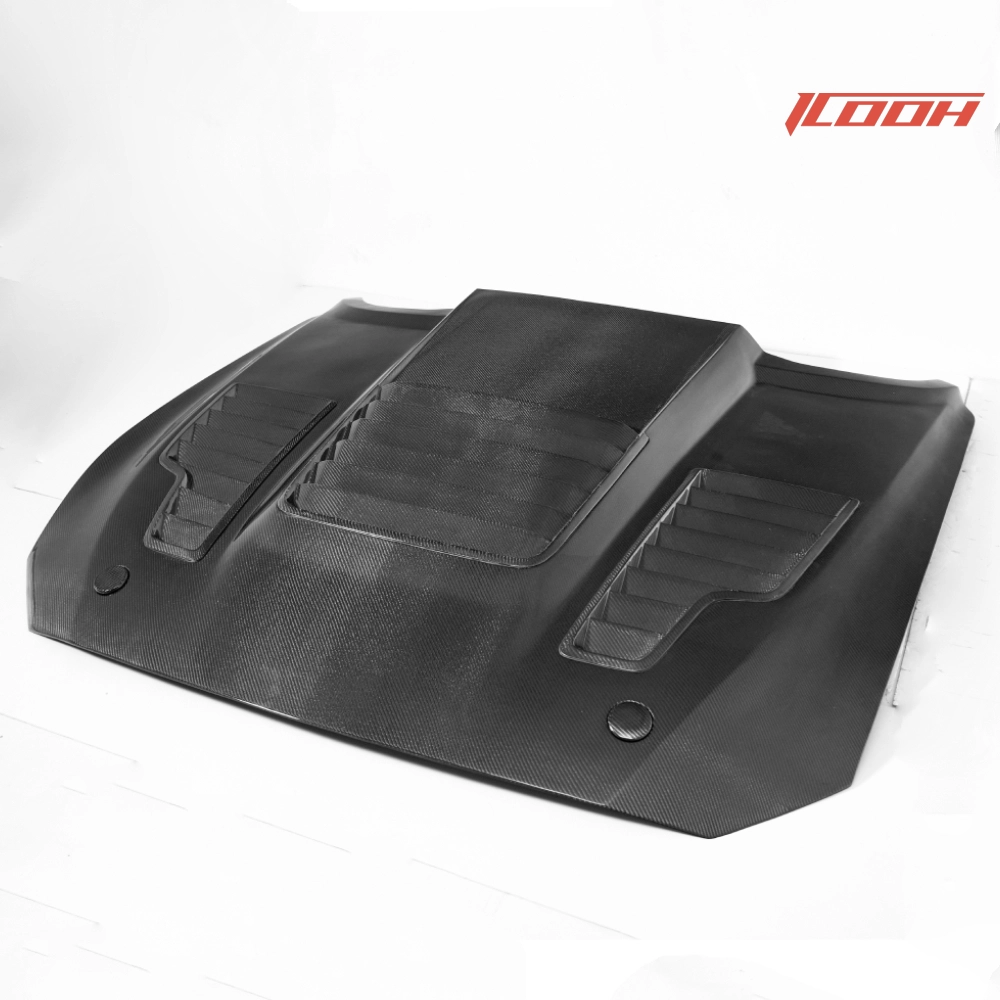
005 Ford Mustang 2018-2023 S550 Exhaust-style Carbon Fiber Front Hood
005 style Carbon Fiber Front Bonnet Engine Hood for Ford Mustang 2018-2023. made of durable carbon fiber material, precision-engineered for OEM-matched fitment. Lightweight and strong, enhances performance while maintaining a sporty aesthetic. Suitable for aftermarket replacement or performance upgrade with 100% tested quality assurance.
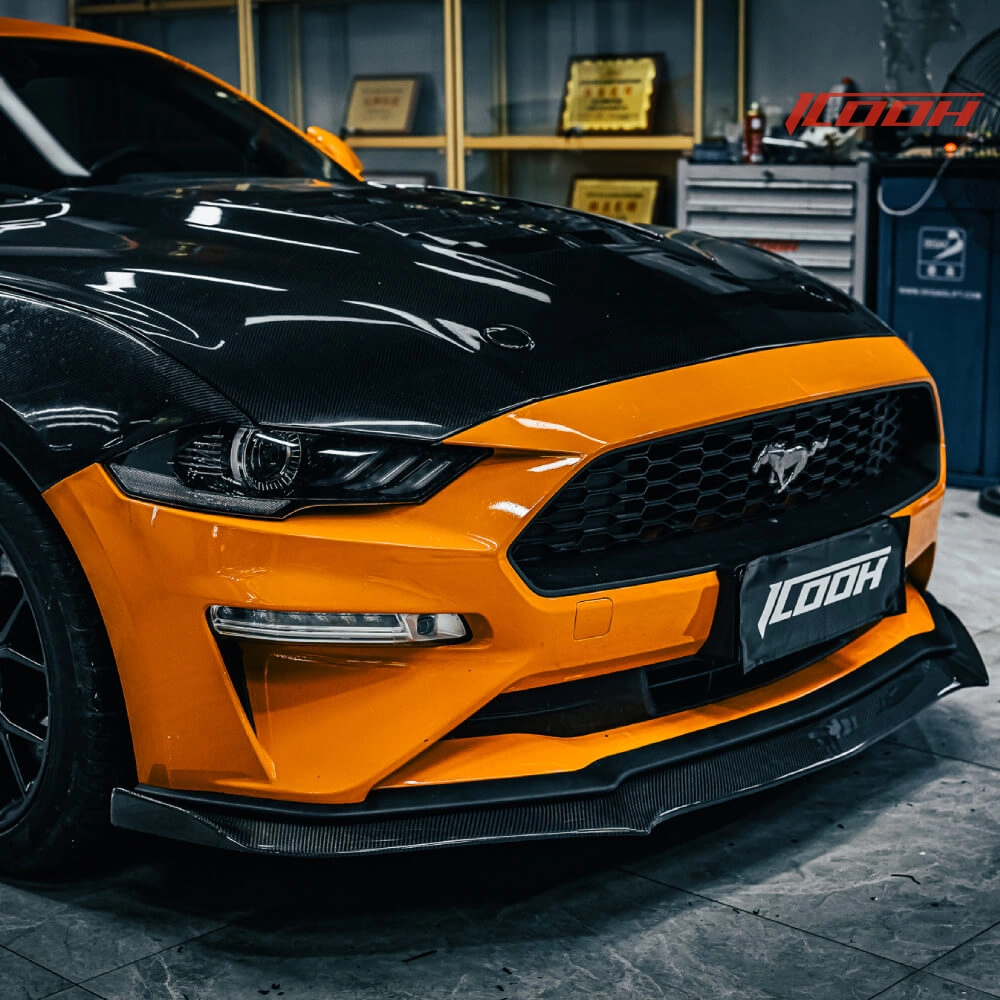
GT350 Ford Mustang 2018-2023 Carbon Fiber Front Lip
Enhance the aerodynamics and style of your Mustang with the 2018–2023 Mustang GT350 Carbon Fiber Front Lip. Crafted from lightweight, high-strength carbon fiber, this front lip delivers improved downforce, sharper front-end appearance, and a precise OEM-style fit.
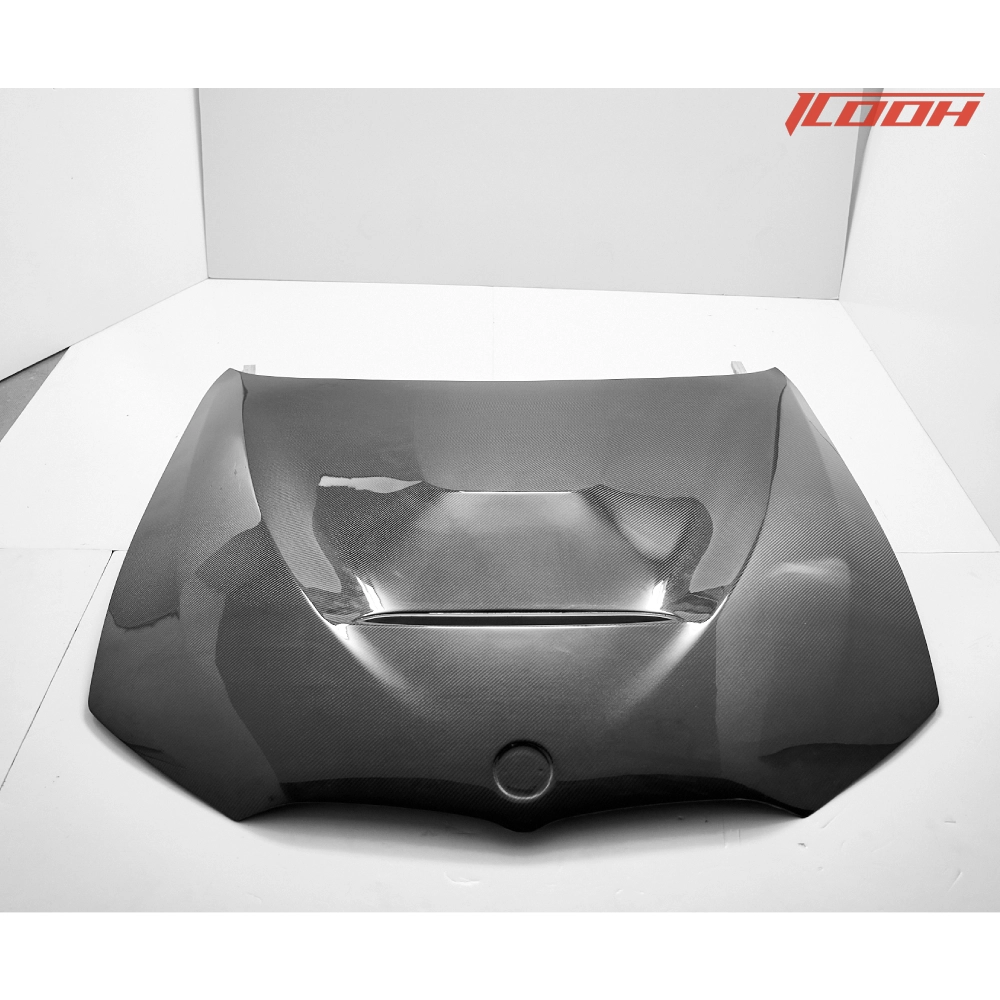
2020-2024 BMW G20 3 Series GTS Style Carbon Fiber Hood
The BMW G20 3 Series GTS-style carbon fiber hood, designed to deliver a lightweight, aggressive, and performance-focused look. Crafted from high-quality carbon fiber, it enhances aerodynamics, improves heat dissipation, and gives your G20 a striking motorsport appearance.

BMW 1 Series F20 GTS style carbon fiber front hood
The BMW 1 Series F20 GTS-style carbon fiber front hood. Made from high-quality carbon fiber, it offers a lightweight, durable construction with improved cooling and a striking performance look. Designed for precise fitment, it enhances both style and aerodynamics for a true motorsport feel.
Lightweight. Durable. Uniquely Yours.
ICOOH is a pioneer in automotive performance and exterior upgrades, compatible with 99% of vehicles worldwide. Let ICOOH be your professional supplier of car tuning parts and performance automotive accessories.
Facebook
Linkedin
Youtube
Instagram