













Compliance & Certifications for Big Brake Kits for BMW Suppliers
- Navigating Regulations for Big Brake Kits for BMW Suppliers
- Why compliance matters for Big Brake Kits for BMW
- Key global regulatory frameworks affecting Big Brake Kits for BMW
- Quality & production certifications for Big Brake Kits for BMW
- Performance and safety tests for Big Brake Kits for BMW
- Material & environmental standards for Big Brake Kits for BMW
- Comparison: what each certification or test means for Big Brake Kits for BMW suppliers
- Practical compliance roadmap for Big Brake Kits for BMW
- How ICOOH meets compliance demands for Big Brake Kits for BMW
- Technical differentiators and competitive advantages for ICOOH Big Brake Kits for BMW
- Common pitfalls suppliers encounter when certifying Big Brake Kits for BMW
- FAQ — Big Brake Kits for BMW Compliance
- Q1: Do aftermarket Big Brake Kits for BMW require UNECE approval?
- Q2: Is IATF 16949 mandatory to sell Big Brake Kits for BMW?
- Q3: What tests prove a Big Brake Kit for BMW is safe for track use?
- Q4: How should material compliance (e.g., REACH) be documented for Big Brake Kits for BMW?
- Q5: Can a supplier self-certify Big Brake Kits for BMW?
- Q6: How often should Big Brake Kits be re-tested?
- Contact & product inquiry
- References & authoritative sources
Navigating Regulations for Big Brake Kits for BMW Suppliers
Why compliance matters for Big Brake Kits for BMW
Supplying big brake kits for BMWs is both a technical and regulatory challenge. BMW owners expect OE-level fit, function and safety; regulators demand verifiable testing, traceability and consistent manufacturing processes. Non-compliant brake kits expose suppliers and distributors to safety risk, product liability, warranty claims, denied market access, customs holds, and reputational damage. For aftermarket and OEM channels alike, compliance signals reliability — helping products win distribution, OEM approval, and end-customer confidence.
Key global regulatory frameworks affecting Big Brake Kits for BMW
Suppliers must navigate multiple regional regimes. Typical frameworks relevant to Big Brake Kits for BMW include:
- European Union / UNECE: Regulations such as UNECE R13 (vehicle braking) and UNECE R90 (replacement brake discs and drums/pads) set safety and performance benchmarks for components in many markets. CE marking is relevant for certain product categories and components if applicable and must not be used to imply vehicle-level approval.
- United Kingdom: UK follows UNECE-derived rules post‑Brexit; suppliers must check UK approvals where required and the Vehicle Certification Agency (VCA) guidance for replacement parts.
- United States: Federal Motor Vehicle Safety Standards (FMVSS), notably FMVSS No. 135 for light vehicle brake systems, set vehicle-level safety requirements. Aftermarket components are often governed by state and federal tort law, industry standards, and OEM contractual requirements rather than a single aftermarket component approval regime.
- China & other regional markets: Local type approval and product inspection regimes may require specific testing and customs documentation. Countries often reference UNECE regulations or require national testing labs.
Because regulatory scope varies by market and distribution channel (OEM vs. aftermarket), suppliers should map requirements by territory early in product development.
Quality & production certifications for Big Brake Kits for BMW
Automotive grade quality systems and third-party certifications are baseline expectations for suppliers targeting BMW and similar OEMs. Key programs include:
- IATF 16949: The global automotive quality management standard that aligns supplier processes across the supply chain. Many OEMs make IATF 16949 mandatory for Tier‑1 and Tier‑2 suppliers.
- ISO 9001: Quality management system certification; commonly required for suppliers that do not yet hold IATF 16949 but still need audited QMS.
- Third‑party product testing and factory certification: TUV, SGS, and similar notified bodies provide product testing, factory audits and certification services that strengthen market acceptance.
Suppliers should also implement core automotive control methodologies (APQP, PPAP, FMEA, MSA, SPC) as defined by AIAG to satisfy both OEMs and major distributors.
Performance and safety tests for Big Brake Kits for BMW
Big brake kits must meet objective performance benchmarks. Typical tests and evaluations include:
- Thermal performance and fade testing — measuring friction retention and temperature stability under repeated high-energy stops.
- Wear and mileage testing — pad and rotor wear rates and expected service life.
- Friction coefficient characterization — cold and hot mu (μ) values to ensure predictable pedal feel and stopping distances.
- Mechanical strength — caliper, bracket and rotor structural tests including fatigue and burst tests for pressure-containing components.
- NVH assessments — noise, vibration, and harshness testing to avoid squeal and resonance issues that can lead to warranty returns.
- Corrosion & coating durability — salt spray (e.g., ISO 9227) and adhesion testing for coated rotors and hardware.
- Dimensional and fitment validation — 3D scanning, tooling checks and fitment on representative BMW models to confirm clearance with wheels, suspension and ABS sensors.
Many of these tests are performed by accredited third‑party labs to provide defensible, auditable test reports for customers and authorities.
Material & environmental standards for Big Brake Kits for BMW
Material selection and environmental compliance are central to product acceptance and long‑term performance:
- Friction material safety: Suppliers must manage hazardous substance content (e.g., heavy metals, asbestos — though asbestos is banned) and provide declarations per regional regulations such as REACH (EU).
- Coatings and metallurgy: Standards for cast iron rotors, aluminum calipers and surface treatments impact durability — adherence to recognized metallurgy specs and salt spray/adhesion tests reduces corrosion-related failures.
- Packaging and labeling: Conform to local language, safety information and traceability labeling requirements. Maintain material batch traceability for recall readiness.
Comparison: what each certification or test means for Big Brake Kits for BMW suppliers
| Certification / Test | Issuer | What it demonstrates | Why BMW suppliers need it |
|---|---|---|---|
| IATF 16949 | IATF / accredited bodies | Automotive-specific QMS covering continual improvement and defect prevention | Often mandatory for OEM contracts; improves process control and risk management |
| ISO 9001 | ISO / national bodies | General QMS demonstrating consistent processes | Baseline requirement for many distributors and some OEM suppliers |
| UNECE R90 / R13 conformity | UNECE / national regulators | Performance and interchangeability standards for braking components | Enables aftermarket replacement acceptance in many international markets |
| Product testing (thermal, NVH, corrosion) | Accredited labs (TÜV, SGS, Intertek) | Quantitative performance data and test reports | Required for technical validation, OE audits and marketing claims |
| REACH / RoHS / Environmental declarations | Regulatory authorities / self-declaration | Proof of limited hazardous substances in materials | Mandatory for sale in EU and other regulated markets |
Practical compliance roadmap for Big Brake Kits for BMW
How to turn requirements into an actionable plan:
- Requirement mapping: List all target markets (EU, US, UK, China, etc.) and channel targets (OEM, Tier‑1, aftermarket) and document applicable regulations and standards.
- Design for compliance: From day one incorporate measurement tolerances, thermal capacity, NVH controls and material specifications that align with BMW fitment and quality expectations.
- Quality system build-up: Implement ISO 9001 and plan transition to IATF 16949 if pursuing OEM contracts; adopt APQP and PPAP processes for sample approvals.
- Third‑party testing & validation: Contract accredited labs for thermal, wear, corrosion and NVH testing; retain full test reports for customer audits.
- Traceability & documentation: Maintain BOM traceability, heat treatment records, material certificates and batch numbers to enable recalls if needed.
- Labeling & packaging compliance: Ensure labels meet local language and safety marking requirements and include unique identifiers for traceability.
- Market entry & ongoing surveillance: Use initial certifications and test reports to obtain distributor/OEM approvals; maintain surveillance audits and periodic re‑testing after design changes.
How ICOOH meets compliance demands for Big Brake Kits for BMW
Founded in 2008, ICOOH has grown into a pioneering force in the global automotive performance and modification industry. As a professional performance car parts manufacturer, we specialize in developing, producing, and exporting big brake kits, carbon fiber body kits, and forged wheel rims—delivering integrated solutions for both performance and aesthetics.
ICOOH’s strength lies in complete vehicle compatibility and powerful in-house design and R&D capabilities. Our products cover more than 99% of vehicle models worldwide, providing precise fitment and exceptional performance. Whether you are a tuning brand, automotive distributor, or OEM partner, ICOOH delivers solutions tailored to your market needs.
Our R&D center is staffed with over 20 experienced engineers and designers dedicated to continuous innovation. Utilizing 3D modeling, structural simulation, and aerodynamic analysis, we ensure every product meets the highest performance and design standards. ICOOH maintains rigorous quality controls, material traceability, and partners with accredited testing labs to produce validated test reports — aligning our Big Brake Kits for BMW with market and OEM expectations for safety and durability.
Technical differentiators and competitive advantages for ICOOH Big Brake Kits for BMW
- Comprehensive fitment database: engineered for precise clearance with BMW wheel families and suspension geometries.
- In‑house design and simulation: 3D modeling and finite element analysis reduce development cycles and improve validation confidence.
- End-to-end traceability: material certificates, heat treatment logs and batch-level documentation support warranty and recall readiness.
- OEM collaboration capability: structured PPAP-ready documentation and sample provision for Tier‑1/OEM customers.
Common pitfalls suppliers encounter when certifying Big Brake Kits for BMW
Avoidable mistakes include underestimating NVH tuning needs, inadequate thermal testing under BMW vehicle loads, poor packaging/labeling leading to customs delays, and weak traceability that complicates corrective actions. Early engagement with accredited labs and adopting a formal APQP/PPAP workflow significantly reduces rework and time-to-market risks.
FAQ — Big Brake Kits for BMW Compliance
Q1: Do aftermarket Big Brake Kits for BMW require UNECE approval?
A1: It depends on the market. Many European jurisdictions and countries that apply UNECE regulations accept components validated to UNECE R90 (where applicable). Suppliers should verify national acceptance; aftermarket parts may still be sold without R90 in some markets but will face distributor and OEM scrutiny without objective test reports.
Q2: Is IATF 16949 mandatory to sell Big Brake Kits for BMW?
A2: IATF 16949 is often mandatory for direct OEM and Tier‑1 relationships. For aftermarket channels, ISO 9001 plus robust product testing may suffice, but IATF certification gives a meaningful advantage for higher-value contracts and OEM approvals.
Q3: What tests prove a Big Brake Kit for BMW is safe for track use?
A3: Track use emphasizes thermal capacity and fade resistance testing alongside pad/rotor wear rates at elevated temperatures. Real-world track validation on the specific BMW model (instrumented tests measuring temperatures, deceleration and fade over repeated laps) provides the strongest evidence.
Q4: How should material compliance (e.g., REACH) be documented for Big Brake Kits for BMW?
A4: Maintain supplier material declarations, lab test reports for restricted substances, and include REACH/SVHC declarations in your technical file. This documentation must be available for customer audits and regulatory checks.
Q5: Can a supplier self-certify Big Brake Kits for BMW?
A5: Suppliers can perform internal testing and issue declarations, but independent, accredited laboratory reports and third‑party certifications carry far more weight for OEMs, distributors, and regulatory bodies — and are often required in contracts.
Q6: How often should Big Brake Kits be re-tested?
A6: Re-test frequency depends on design changes, material source changes, and regulatory requirements. Best practice: re-test after significant design or material changes and conduct periodic surveillance testing (e.g., every 2–3 years) or per customer contract.
Contact & product inquiry
If you are sourcing compliant Big Brake Kits for BMW — whether as an aftermarket distributor, tuning brand or OEM partner — ICOOH can provide validated solutions, full technical documentation packages, and PPAP-ready samples. Contact our sales & technical team to discuss fitment, certification package, and testing data, or view our Big Brake Kits for BMW product range on our website.
References & authoritative sources
- IATF 16949 overview — IATF Global Oversight. https://www.iatfglobaloversight.org/ (accessed 2025-12-20)
- ISO 9001 — Quality management. ISO. https://www.iso.org/iso-9001-quality-management. (accessed 2025-12-20)
- UNECE Vehicle Regulations — including R13 & R90. UNECE Transport Division. https://unece.org/transport (accessed 2025-12-20)
- Federal Motor Vehicle Safety Standards (FMVSS) — NHTSA. https://www.nhtsa.gov/laws-regulations/fmvss (accessed 2025-12-20)
- AIAG core tools (APQP, PPAP, FMEA, MSA, SPC) — Automotive Industry Action Group. https://www.aiag.org/ (accessed 2025-12-20)
- Salt spray testing standard (overview) — ISO 9227. https://www.iso.org/standard/ (search ISO 9227) (accessed 2025-12-20)
- Product certification & testing services — TÜV SÜD. https://www.tuvsud.com/ (accessed 2025-12-20)
For direct inquiries about validated Big Brake Kits for BMW, technical datasheets, testing reports and partnership opportunities, contact ICOOH sales: sales@icooh.com or visit our product pages.
Top 10 big brake kits Manufacturers and Supplier Brands in Asia
The latest trends for wheel rims in 2026 | ICOOH Ultimate Insights
Top 10 wheel rims Manufacturers and Supplier Brands in 2026
Installation Training Guide for Dealers: Big Brake Kits
About After Sales Support
Quick response
All your requests will be answered within 8 working hours.
ICOOH IC6
What services can we provide?
We offer a comprehensive line of high-performance brake products (brake calipers, brake discs, brake pads, brake hoses, etc.), covering a wide range of vehicle types, from family sedans to high-performance vehicles, even SUVs and pickup trucks. Our products cover a range of performance levels, from street performance to track competition, to meet the needs of diverse customers.
About Customized Services
Can the brake kits be sold under our own brand?
Absolutely. We support full OEM and private label branding, including logo engraving, packaging, and documentation.
Off-Road Vehicles
Which off-road vehicles are suitable?
It is compatible with SUVs, pickup trucks, and various off-road adventure-adapted vehicles, and customization is available.
About Application
What are the installation costs, maintenance intervals, and warranty policies?
Installation costs vary by vehicle model and configuration. We can recommend authorized installation partners. Braking system inspections and maintenance are generally recommended every 6–12 months, depending on operating conditions. ICOOH offers a warranty of up to 12–24 months (depending on the product line). Details can be confirmed at the time of purchase.
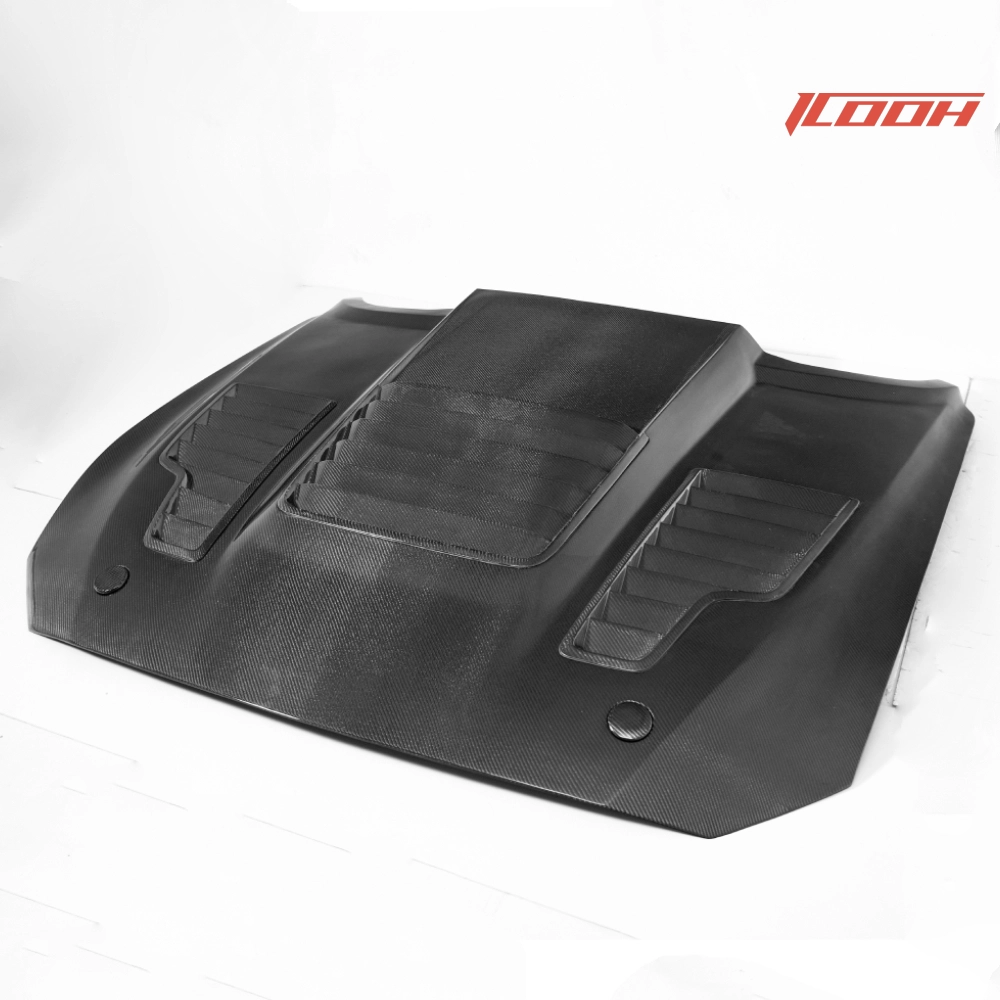
005 Ford Mustang 2018-2023 S550 Exhaust-style Carbon Fiber Front Hood
005 style Carbon Fiber Front Bonnet Engine Hood for Ford Mustang 2018-2023. made of durable carbon fiber material, precision-engineered for OEM-matched fitment. Lightweight and strong, enhances performance while maintaining a sporty aesthetic. Suitable for aftermarket replacement or performance upgrade with 100% tested quality assurance.
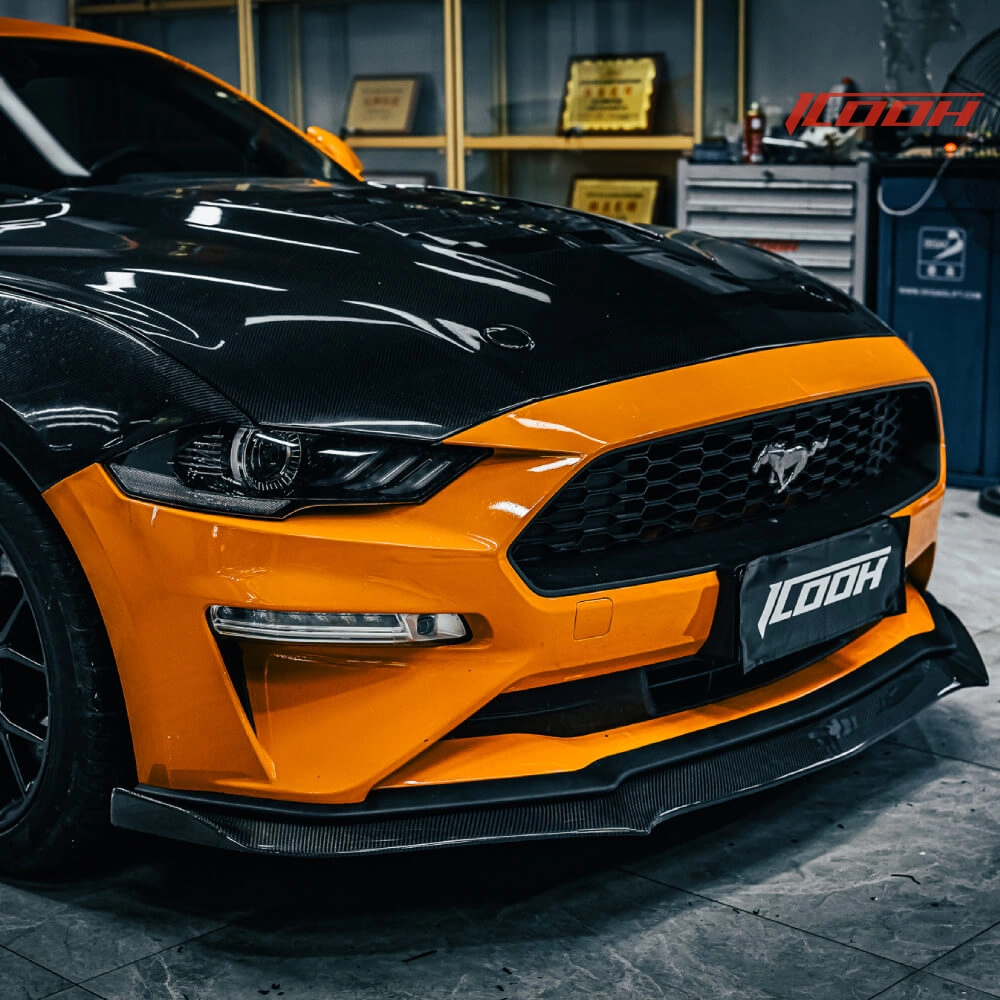
GT350 Ford Mustang 2018-2023 Carbon Fiber Front Lip
Enhance the aerodynamics and style of your Mustang with the 2018–2023 Mustang GT350 Carbon Fiber Front Lip. Crafted from lightweight, high-strength carbon fiber, this front lip delivers improved downforce, sharper front-end appearance, and a precise OEM-style fit.
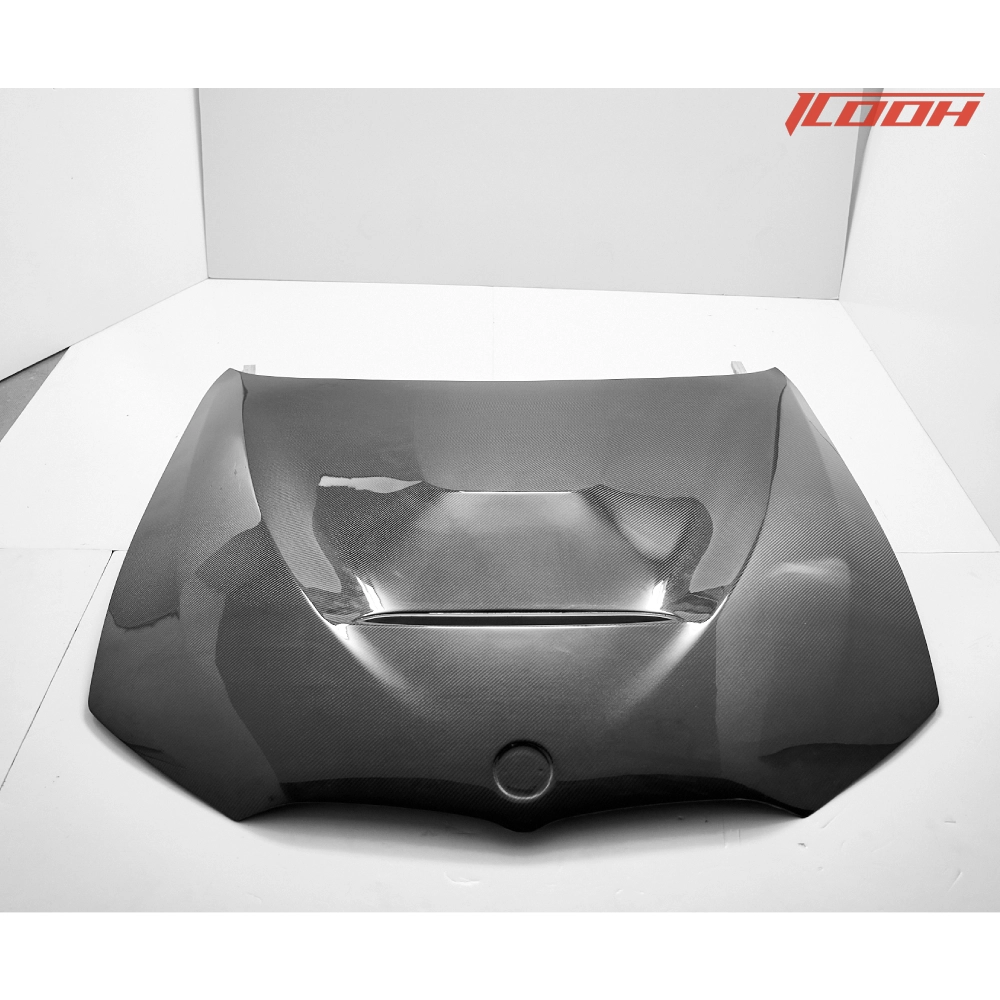
2020-2024 BMW G20 3 Series GTS Style Carbon Fiber Hood
The BMW G20 3 Series GTS-style carbon fiber hood, designed to deliver a lightweight, aggressive, and performance-focused look. Crafted from high-quality carbon fiber, it enhances aerodynamics, improves heat dissipation, and gives your G20 a striking motorsport appearance.

BMW 1 Series F20 GTS style carbon fiber front hood
The BMW 1 Series F20 GTS-style carbon fiber front hood. Made from high-quality carbon fiber, it offers a lightweight, durable construction with improved cooling and a striking performance look. Designed for precise fitment, it enhances both style and aerodynamics for a true motorsport feel.
Lightweight. Durable. Uniquely Yours.
ICOOH is a pioneer in automotive performance and exterior upgrades, compatible with 99% of vehicles worldwide. Let ICOOH be your professional supplier of car tuning parts and performance automotive accessories.
Facebook
Linkedin
Youtube
Instagram