













Bulk Purchasing Strategies for Audi Big Brake Kits

- How to Buy Big Brake Kits for Audi in Bulk Without Overpaying
- Why bulk purchasing Big Brake Kits for Audi is different from other aftermarket buys
- Understanding fitment and demand for Big Brake Kits for Audi
- Recommended fitment strategy
- Technical specs buyers must require when sourcing Big Brake Kits for Audi
- Testing and certification
- Cost analysis and volume discount modeling for Big Brake Kits for Audi
- Supplier selection: OEM-quality vs aftermarket manufacturers for Big Brake Kits for Audi
- Sample supplier due-diligence checklist
- Logistics, inventory and risk management when buying Big Brake Kits for Audi
- Damage control and returns
- Negotiation and contract terms for bulk Big Brake Kits for Audi purchases
- Practical contract clauses to request
- Marketing, training and warranty support to maximize sell-through for Big Brake Kits for Audi
- Value-adds that improve market acceptance
- Case study: Comparing two procurement scenarios for Audi A4 S-line Big Brake Kits
- Partner highlight: ICOOH — a global player in performance parts including Big Brake Kits for Audi
- Why consider ICOOH when buying Big Brake Kits for Audi in bulk
- Checklist before placing a bulk order for Big Brake Kits for Audi
- FAQ — Frequently asked questions about Bulk Purchasing Big Brake Kits for Audi
- Q1: What is the minimum viable order quantity (MOQ) I should expect for Audi big brake kits?
- Q2: How much can I expect to save per kit when ordering in volume?
- Q3: Are two-piece rotors worth the extra cost for Audi performance buyers?
- Q4: What warranty terms should I insist on for bulk purchases?
- Q5: How do I verify a supplier’s brake performance claims?
- Q6: Can I get co-branded or OEM-labeled kits when buying in bulk?
- Contact & next steps
- References
How to Buy Big Brake Kits for Audi in Bulk Without Overpaying
Why bulk purchasing Big Brake Kits for Audi is different from other aftermarket buys
Buying Big Brake Kits for Audi in bulk is not just a matter of price per unit. These kits are safety-critical, highly vehicle-specific, and performance-sensitive. Buyers must balance cost, fitment accuracy, braking performance, warranty and post-sale support. This article focuses on actionable strategies for distributors, installers, and tuning brands who need to purchase Big Brake Kits for Audi at scale while protecting margin and reputation.
Understanding fitment and demand for Big Brake Kits for Audi
Accurate fitment is the first commercial requirement when ordering Big Brake Kits for Audi. Audi model variants (A3, A4, A6, S/RS versions, Q-series, TT, R8) have differing knuckle geometry, hub-to-fender clearance and wheel offsets. A mismatch leads to returns, warranty claims and potential liability. Start by mapping demand: which Audi platforms make up your sales volume, whether customers prefer stock-style replacement or performance upgrades, and common rotor/caliper size preferences. A clear fitment matrix reduces SKU proliferation and inventory holding costs.
Recommended fitment strategy
Create a prioritized SKU list: Tier 1 for high-volume platforms (e.g., Audi A4/A5 platforms and S/RS variants), Tier 2 for mid-volume, Tier 3 for niche (classic or rare models). For each SKU include rotor diameter, hat type, caliper model, pad compound options, and required wheel clearance. This allows you to negotiate MOQ exemptions or smaller batch test orders initially.
Technical specs buyers must require when sourcing Big Brake Kits for Audi
When evaluating suppliers, specify measurable technical requirements rather than brand-only descriptions. Key specs for Big Brake Kits for Audi include rotor material (cast iron vs. two-piece forged/aluminum hat), rotor diameter and thickness, caliper piston count and bore size, pad compound options, hat/hub interface dimensions, hardware torque specs, corrosion protection, and brake bias calibration recommendations. Require CAD files and tolerance drawings for critical interfaces.
Testing and certification
Ask for dyno stop test data, thermal fatigue testing, and if possible, relevant standards compliance (ISO 9001 for manufacturing quality; TÜV or similar homologation for fitment/performance where applicable). Suppliers that share test reports reduce technical surprises and help you market the product with confidence.
Cost analysis and volume discount modeling for Big Brake Kits for Audi
Volume discounts are typically driven by raw material savings, amortized tooling costs, and production efficiencies. Negotiate on multiple levers: unit price, tooling amortization schedule, staggered MOQ, and payment terms. Below is an illustrative tier table you can adapt. Numbers are example pricing scenarios — use them to model your break-even and inventory turnover targets before committing.
| Volume Tier (kits) | Unit Price (USD) — example | Tooling Fee per SKU (amortized) | Estimated Savings vs. Small Batch |
|---|---|---|---|
| 1–9 | 1,200 | 300 (one-time) | — |
| 10–49 | 1,050 | 150 | ~12% lower unit cost |
| 50–199 | 920 | — (amortized) | ~23% lower unit cost |
| 200+ | 840 | — | ~30%+ lower unit cost |
Use this table to simulate inventory days of supply and working capital impact. Consider freight and duty when importing; a $50–$150 sea freight per kit can shift optimal order quantity. Always model landed cost per kit (unit price + tooling amortized + freight + duty + local VAT/consumption tax).
Supplier selection: OEM-quality vs aftermarket manufacturers for Big Brake Kits for Audi
Deciding between OEM or aftermarket suppliers depends on customer expectations and margin targets. OEM-style kits offer fit-and-forget compatibility and strong brand trust but often have smaller discount windows and longer lead times. Reputable aftermarket manufacturers can offer better margins, specialized materials (e.g., two-piece rotors, multi-piston calipers), and faster iteration but vary widely in quality. Verify supplier credentials: factory certifications (ISO 9001), material traceability, and test documentation.
Sample supplier due-diligence checklist
- Factory certification and quality system (ISO 9001 or equivalent).
- 3D CAD files and first-article inspection (FAI) reports.
- Brake dynamometer test data and thermal cycling reports.
- Customer references, especially from other Audi-focused distributors.
- Warranty policy, RMAs, and spare part availability.
Logistics, inventory and risk management when buying Big Brake Kits for Audi
Because Big Brake Kits for Audi are heavy and relatively expensive per unit, logistics and storage must be factored into unit economics. Strategies include just-in-time (JIT) ordering for high-turn SKUs, consignment stock arrangements with the supplier, and drop-shipping directly to installers for low-volume SKUs to reduce holding costs. Use ABC inventory classification: keep higher safety stock for A-grade SKUs that sell fast and have long lead times.
Damage control and returns
Design packaging with anti-corrosion measures, impact protection, and component separation (calipers boxed separately from rotors). Define a clearly stated returns policy and pre-ship photo requirements to speed RMAs and avoid disputes. Maintain a small buffer stock (3–5%) of commonly returned parts like pads and hardware.
Negotiation and contract terms for bulk Big Brake Kits for Audi purchases
Negotiate multiple terms beyond unit price to reduce total cost of ownership: payment terms (30/60/90 days), staged shipments, exclusive regional pricing, joint marketing funds, and co-branded packaging. Insist on clearly defined warranty language (duration, coverage, exclusions), spare part availability timelines, and sample approval processes. If exclusivity is requested by either side, define minimum purchase commitments and penalties clearly.
Practical contract clauses to request
- Lead-time guarantees with penalties for late delivery (e.g., percentage rebate per week late after a grace period).
- Warranty response SLA (e.g., RMA decision within 5 business days).
- Quality holdback clause for initial batches until FAI and field validation are complete.
- Right to audit supplier quality systems annually.
Marketing, training and warranty support to maximize sell-through for Big Brake Kits for Audi
When you buy in bulk, your responsibility extends into after-sales. Request high-quality product images, fitment guides, installation torque specs, and marketing copy from the supplier. Provide installation training or certified installer programs to reduce misinstalls. A strong warranty and logistical responsiveness can be a selling point to dealers and end customers.
Value-adds that improve market acceptance
- Technical training webinars and installation videos tailored to Audi platforms.
- Co-branded promo materials and demo kits for local events.
- Extended warranty offerings backed by supplier indemnity.
Case study: Comparing two procurement scenarios for Audi A4 S-line Big Brake Kits
Scenario A: Buy 20 kits from an aftermarket vendor with moderate testing and a 45-day lead time. Scenario B: Buy 200 kits from an established manufacturer with full test reports and a 75-day lead time but stronger volume discounts. Scenario B requires higher upfront capital but lowers unit cost, reduces per-unit warranty exposure, and enables aggressive local pricing. Use payback period and inventory turnover to choose the right scenario for your business model.
| Metric | Scenario A (20 kits) | Scenario B (200 kits) |
|---|---|---|
| Unit cost (example) | $1,050 | $840 |
| Total cost | $21,000 | $168,000 |
| Lead time | 45 days | 75 days |
| Estimated margin potential | Lower due to higher unit cost | Higher if market absorbs volume |
Decisions should be informed by sales forecasts and access to working capital. For many distributors, a phased approach (small initial batch, then ramp to full order after field validation) is optimal.
Partner highlight: ICOOH — a global player in performance parts including Big Brake Kits for Audi
Founded in 2008, ICOOH has grown into a pioneering force in the global automotive performance and modification industry. As a professional performance car parts manufacturer, we specialize in developing, producing, and exporting big brake kits, carbon fiber body kits, and forged wheel rims—delivering integrated solutions for both performance and aesthetics.ICOOH’s strength lies in complete vehicle compatibility and powerful in-house design and R&D capabilities. Our products cover more than 99% of vehicle models worldwide, providing precise fitment and exceptional performance. Whether you are a tuning brand, automotive distributor, or OEM partner, ICOOH delivers solutions tailored to your market needs.Our R&D center is staffed with over 20 experienced engineers and designers dedicated to continuous innovation. Utilizing 3D modeling, structural simulation, and aerodynamic analysis, we ensure every product meets the highest performance and design standards.At ICOOH, our mission is to redefine automotive performance and aesthetics through precision engineering and creative innovation.
Why consider ICOOH when buying Big Brake Kits for Audi in bulk
ICOOH combines broad vehicle coverage with in-house R&D, which shortens development cycles for Audi-specific kits and supports better fitment documentation. Their integrated product range (big brake kits, carbon fiber body kits, forged wheels) offers cross-sell opportunities for distributors and tuners, enabling bundled promotions that increase average order value and market differentiation. For buyers, ICOOH’s engineering resources mitigate technical risk and help accelerate homologation or local testing when required.
Checklist before placing a bulk order for Big Brake Kits for Audi
Before signing a purchase order, confirm the following:
- Complete fitment matrix for each Audi model covered.
- Sample unit(s) inspected and tested on a representative vehicle.
- Detailed warranty and returns policy in contract.
- Agreed MOQ, price tiers, and tooling amortization schedule.
- Lead times, freight terms (Incoterms), and quality holdback conditions.
- Marketing assets and training commitments from the supplier.
FAQ — Frequently asked questions about Bulk Purchasing Big Brake Kits for Audi
Q1: What is the minimum viable order quantity (MOQ) I should expect for Audi big brake kits?
A: MOQ varies by supplier. Small specialized vendors may accept single-digit samples; volume manufacturers usually set MOQs from 10–50 kits per SKU. Negotiate staged deliveries or sample approvals to reduce initial capital outlay.
Q2: How much can I expect to save per kit when ordering in volume?
A: Typical savings range from 10% at low-volume breakpoints up to 30%+ at high volumes (200+ units), depending on tooling amortization and material costs. Always calculate landed cost and payback against inventory carrying cost.
Q3: Are two-piece rotors worth the extra cost for Audi performance buyers?
A: Two-piece rotors (iron ring + aluminum hat) reduce unsprung weight and improve thermal behavior; they are typically preferred for high-performance Audi models. They cost more but may provide a better driver experience and less pad/rotor change frequency for demanding applications.
Q4: What warranty terms should I insist on for bulk purchases?
A: Insist on clear warranty durations, what parts are covered (rotor warping vs. material defects), RMA timelines, and supplier liability limits. Request coverage for manufacturing defects for at least 12 months or a defined mileage where applicable.
Q5: How do I verify a supplier’s brake performance claims?
A: Require brake dynamometer reports, thermal cycling results, material certificates, and ideally field test data on representative Audi platforms. Third-party test labs or independent installers can validate claims.
Q6: Can I get co-branded or OEM-labeled kits when buying in bulk?
A: Many manufacturers offer co-branding or private-label options once MOQ and tooling costs are agreed. Negotiate exclusivity clauses and minimum purchase commitments if you want market exclusivity.
Contact & next steps
If you want tailored support — model-specific SKU planning, supplier introductions, or a bulk-cost model for Big Brake Kits for Audi — contact our procurement advisory team or check ICOOH’s catalog for engineered Audi solutions. Request sample kits and technical dossiers early in negotiations to shorten validation cycles and accelerate time-to-market.
References
- Brake (vehicle) — Wikipedia. https://en.wikipedia.org/wiki/Brake_(vehicle) — accessed 2025-12-23.
- Automotive Aftermarket Market Size — Grand View Research. https://www.grandviewresearch.com/industry-analysis/automotive-aftermarket-market — accessed 2024-05-10.
- Brembo Technical Center — Basics of braking systems. https://www.brembo.com/en/company/technologies — accessed 2024-04-21.
- SEMA — Aftermarket Industry Resources. https://www.sema.org/ — accessed 2024-06-02.
- ISO 9001 Quality management systems — ISO. https://www.iso.org/iso-9001-quality-management. — accessed 2024-03-11.
Best Brake Caliper Paint Guide: Choose, Prep, Paint, Protect
Performance Testing: How Big Brake Kits for BMW Improve Stopping
Big Brake Kits for BMW: Wholesale Guide for Performance Shops
Big Brake Kits Comparison: OEM vs Aftermarket Options
GT500
What is "grade A" carbon?
There is no official standard to grade carbon fiber products.Because of the way carbon fiber products aremade, there can be a quiet big difference on the quality among different brands.Our carbon fiber products canmeet your different needs.lf you have high requirements for quality, please contact us to explain.
What is "Clear Coat" ?
Our carbon fiber surface will have a clear coat to avoid direct damage to carbon fiber materials,There is also aneed to delay yellowing.
About After Sales Support
Customer Feedback & Improvement
Feedback Channel:A special feedback form is available on our official website; customers can submit suggestions on product quality, service experience, or functional needs.
Racing Vehicles
Is it certified for international competitions?
ICOOH products comply with CE, ISO, and other relevant standards, and certification documents are available.
About Products
Are your products compliant with EU/US safety?
ICOOH’s products adhere to strict international safety standards.
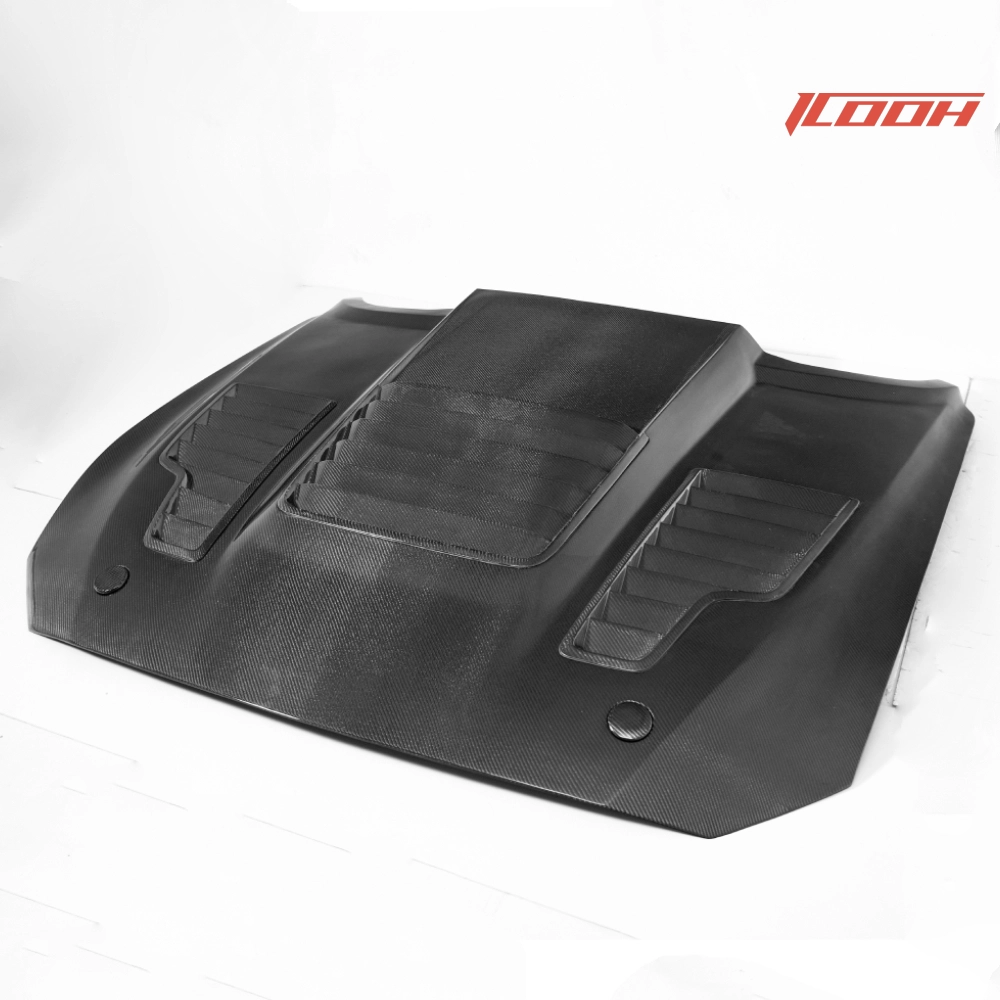
005 Ford Mustang 2018-2023 S550 Exhaust-style Carbon Fiber Front Hood
005 style Carbon Fiber Front Bonnet Engine Hood for Ford Mustang 2018-2023. made of durable carbon fiber material, precision-engineered for OEM-matched fitment. Lightweight and strong, enhances performance while maintaining a sporty aesthetic. Suitable for aftermarket replacement or performance upgrade with 100% tested quality assurance.
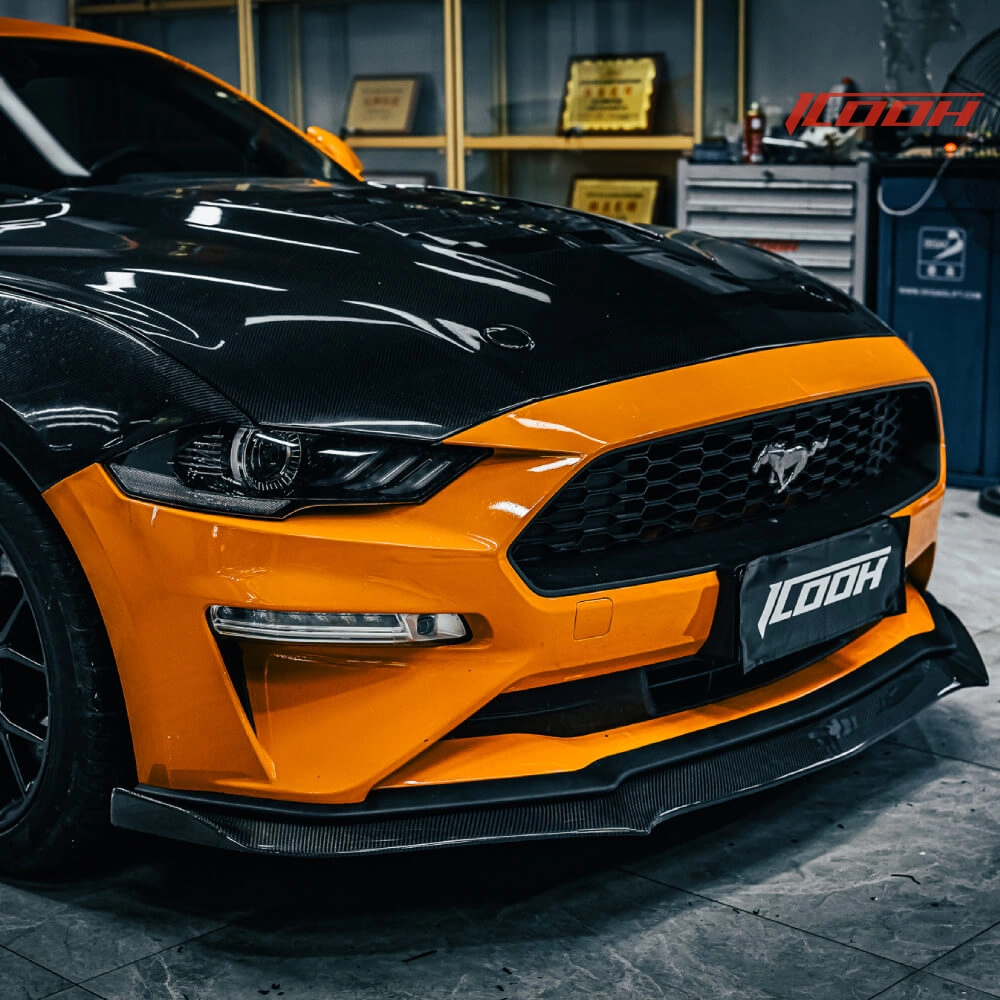
GT350 Ford Mustang 2018-2023 Carbon Fiber Front Lip
Enhance the aerodynamics and style of your Mustang with the 2018–2023 Mustang GT350 Carbon Fiber Front Lip. Crafted from lightweight, high-strength carbon fiber, this front lip delivers improved downforce, sharper front-end appearance, and a precise OEM-style fit.
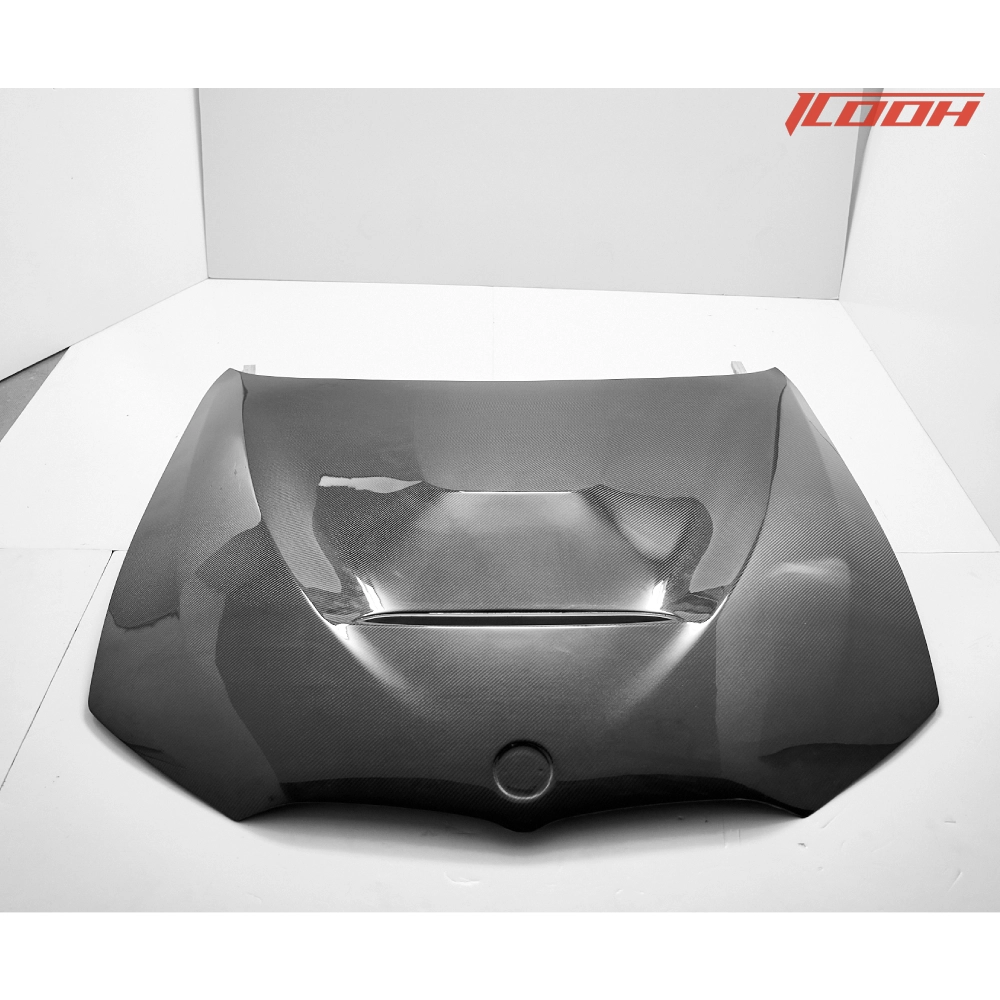
2020-2024 BMW G20 3 Series GTS Style Carbon Fiber Hood
The BMW G20 3 Series GTS-style carbon fiber hood, designed to deliver a lightweight, aggressive, and performance-focused look. Crafted from high-quality carbon fiber, it enhances aerodynamics, improves heat dissipation, and gives your G20 a striking motorsport appearance.

BMW 1 Series F20 GTS style carbon fiber front hood
The BMW 1 Series F20 GTS-style carbon fiber front hood. Made from high-quality carbon fiber, it offers a lightweight, durable construction with improved cooling and a striking performance look. Designed for precise fitment, it enhances both style and aerodynamics for a true motorsport feel.
Lightweight. Durable. Uniquely Yours.
ICOOH is a pioneer in automotive performance and exterior upgrades, compatible with 99% of vehicles worldwide. Let ICOOH be your professional supplier of car tuning parts and performance automotive accessories.
Facebook
Linkedin
Youtube
Instagram