Quality Control and Testing in Brake Caliper Production
- Why rigorous quality control matters for brake components
- Safety-critical nature of calipers
- Regulatory and industry expectations
- Material selection, casting and initial inspections
- Choosing the right material and process
- Casting controls and defect mitigation
- Incoming and first article inspection
- Machining, sealing systems and assembly controls
- Precision machining and tolerance control
- Sealing systems: pistons, dust boots and seals
- Controlled assembly and torque verification
- Testing: nondestructive methods, hydraulic and thermal validation
- Nondestructive testing (NDT) strategies
- Hydraulic leak and pressure testing
- Thermal cycling and fade testing
- Validation, durability testing and final verification
- Bench validation and dynamometer testing
- Corrosion and environmental testing
- Production acceptance criteria and traceability
- ICOOH capabilities: how we apply rigorous QC to performance calipers
- Company overview and engineering depth
- Design, simulation and test integration
- Production scale and quality systems
- Measuring success: KPIs and continuous improvement
- Key performance indicators I track
- Root-cause analysis and corrective actions
- Supplier control and material traceability
- Practical guidance: what to ask your caliper supplier
- Questions that reveal process maturity
- Red flags and positive indicators
- FAQ
- 1. How are brake calipers manufactured in a typical production line?
- 2. What tests ensure a caliper will not leak under pressure?
- 3. Can you use aluminum calipers for track use?
- 4. How does nondestructive testing reduce field failures?
- 5. What documentation should I request when sourcing calipers?
- Contact and product inquiry
I often get asked how are brake calipers manufactured and, more importantly, what steps ensure they meet the safety and performance standards required on the road. In this article I summarize the end-to-end quality control and testing practices that separate reliable calipers from those that risk failure: from material and casting controls to machining tolerances, nondestructive testing, hydraulic and thermal validation, and final assembly checks. I draw on manufacturing standards and proven inspection methods to give engineers, purchasers, and tuners a practical, verifiable guide.
Why rigorous quality control matters for brake components
Safety-critical nature of calipers
Brake calipers are safety-critical components that directly modulate stopping force. Any defect — porosity in the casting, incomplete piston sealing, or incorrect machining — can lead to loss of braking performance or fluid leakage. That's why I treat caliper production as not just a manufacturing problem but a systems engineering task that must guarantee reliability under a wide range of thermal and mechanical loads.
Regulatory and industry expectations
Manufacturers must align processes with automotive quality systems (e.g., IATF 16949) and organizational quality frameworks such as ISO 9001. Component-level material and test standards (for example, ductile iron specifications like ASTM A536) are commonly referenced across the industry. Compliance to these expectations is foundational, and I always recommend clear traceability throughout production.
Material selection, casting and initial inspections
Choosing the right material and process
The first answer to how are brake calipers manufactured begins with material choice. Common caliper materials include ductile iron, cast iron, and aluminum alloys. Each choice balances stiffness, thermal conductivity, corrosion resistance, and weight. For high-performance brakes (big brake kits), lightweight aluminum alloys are often used with specific heat treatments to maintain structural integrity at elevated temperatures.
Casting controls and defect mitigation
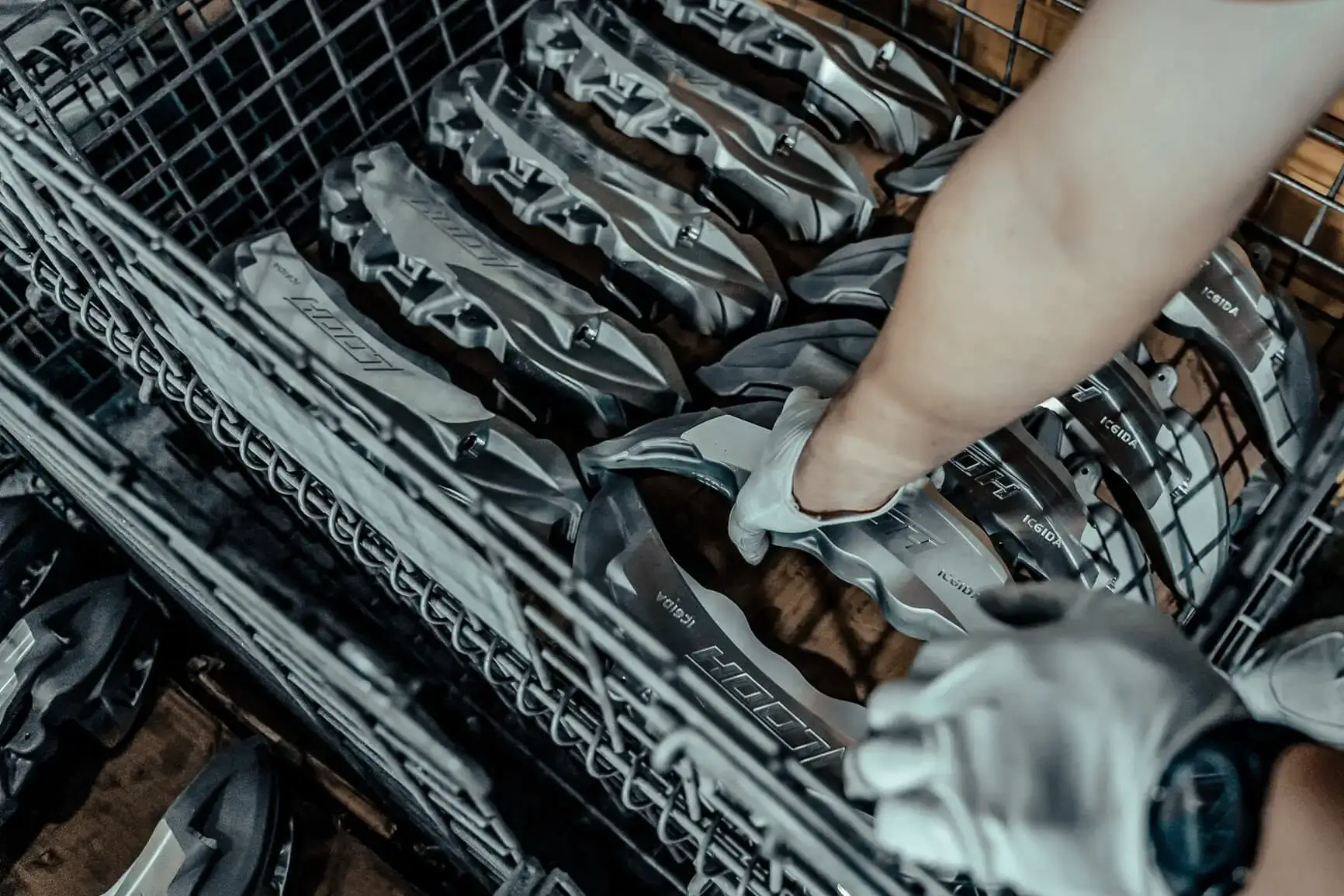
Most calipers are cast (sand casting or gravity die casting) before machining. Key controls at this stage include melt chemistry checks, controlled pouring temperatures, mold design to avoid shrinkage porosity, and gating/riser optimization. I insist on in-process sampling and metallographic checks to verify microstructure—this confirms control of graphite morphology in ductile iron or porosity levels in aluminum.
Incoming and first article inspection
Once castings arrive at the machine shop, first article inspection (FAI) measures critical dimensions against design drawings. Dimensional checks use CMM (coordinate measuring machines) for bore geometries, mounting face flatness, and alignment features. I require documented FAI reports tied to casting lot numbers for traceability.
Machining, sealing systems and assembly controls
Precision machining and tolerance control
After casting, machining defines piston bores, mounting ears, and bleeder ports. Tight bore roundness and surface finish reduce sealing wear and ensure piston mobility. I apply SPC (statistical process control) to key dimensions, using control charts to detect drift before parts go out of tolerance. Typical machined tolerances for piston bores are in the low micrometer range depending on material and design; these are validated on the shop floor.
Sealing systems: pistons, dust boots and seals
Seals are the second defense against leakage. Proper groove geometry, compatible elastomer selection (e.g., EPDM for brake fluid compatibility), and correct installation tooling are critical. I verify each caliper with a seal inspection routine to ensure no extrusion or installation damage that would compromise hydraulic sealing.
Controlled assembly and torque verification
Assembly must be a controlled operation: torque-controlled fasteners, calibrated press-fits for guide pins, and documented lubrication points. I implement poka-yoke fixtures to prevent incorrect component orientation. Final torque audits ensure clamp loads remain within specified ranges—critical because uneven clamping can distort the caliper and affect performance.
Testing: nondestructive methods, hydraulic and thermal validation
Nondestructive testing (NDT) strategies
NDT verifies structural integrity without damaging parts. Common methods I use include:
| Method | Purpose | Typical use |
|---|---|---|
| Visual inspection | Detect surface defects, casting blow-holes, machining damage | 100% of castings before machining |
| Magnetic particle inspection (MPI) | Surface/near-surface crack detection (ferrous materials) | Random sampling or on suspected lots |
| Ultrasonic testing (UT) | Internal porosity, inclusions | Critical castings, in-line checks |
| Industrial CT / X-ray | 3D visualization of internal defects | Failure analysis and high-end validation |
References on NDT methods include the general overviews such as Ultrasonic testing and industrial CT scanning, which are valuable starting points for specifying procedures.
Hydraulic leak and pressure testing
Hydraulic integrity is verified using pressure-hold and burst tests. Typical production flow includes a pressure-hold at a specified pressure (for example, a multiple of expected system pressure) for a defined duration to check for leaks. I specify leak rates in mL/min and use automated test rigs with flow sensors and automatic record-keeping for traceability.
Thermal cycling and fade testing
Calipers must operate under thermal stress. I run thermal cycling and fade simulation tests where calipers are subjected to elevated temperatures and repeated actuation to reproduce real-world conditions. Thermal endurance tests are supported by data from brake dynamometer testing. Industry guidance and research on brake fade (see brake system literature) justify test conditions and acceptance criteria.
Validation, durability testing and final verification
Bench validation and dynamometer testing
On-bench dynamometer tests replicate vehicle braking cycles to validate friction performance, pedal feel, thermal response, and component wear. These tests generate repeatable results that I use to tune piston sizes, pad contact, and caliper stiffness. Published braking studies and SAE papers often inform test cycle definitions.
Corrosion and environmental testing
Calipers face corrosion from road salt and moisture, so salt-spray testing (e.g., ASTM B117) and cyclic corrosion tests are part of qualification. We also run humidity and UV resistance tests for rubber components and coatings verification.
Production acceptance criteria and traceability
Production parts are released only after meeting acceptance criteria across mechanical, hydraulic, and visual inspections. Batch records include casting lot, heat treatment ID, operator, toolset ID, and test results—ensuring full traceability if a field issue arises. This practice aligns with automotive recall mitigation best practices and quality standards.
ICOOH capabilities: how we apply rigorous QC to performance calipers
Company overview and engineering depth
Founded in 2008, ICOOH has grown into a pioneering force in the global automotive performance and modification industry. As a professional performance car parts manufacturer, we specialize in developing, producing, and exporting big brake kits, carbon fiber body kits, and forged wheel rims—delivering integrated solutions for both performance and aesthetics. ICOOH’s strength lies in complete vehicle compatibility and powerful in-house design and R&D capabilities.
Design, simulation and test integration
Our R&D center is staffed with over 20 experienced engineers and designers dedicated to continuous innovation. Utilizing 3D modeling, structural simulation, and aerodynamic analysis, we ensure every product meets the highest performance and design standards. When I assess a caliper program, I prioritize component-level simulation (FEA for stress and thermal mapping) and couple that with physical validation on dynamometers and vehicle tests.
Production scale and quality systems
ICOOH products cover more than 99% of vehicle models worldwide, providing precise fitment and exceptional performance. Whether you are a tuning brand, automotive distributor, or OEM partner, ICOOH delivers solutions tailored to your market needs. Our internal quality processes mirror automotive QMS expectations, including lot-level traceability, calibrated inspection equipment, and documented testing protocols—this is how we consistently deliver safe, high-performing calipers for aftermarket and OEM collaborations.
Measuring success: KPIs and continuous improvement
Key performance indicators I track
To ensure quality I monitor production KPIs such as first-pass yield (FPY), escape rate (parts found defective after leaving production), field complaint rate (per million units), and mean-time-between-failure (MTBF) in field conditions. These metrics drive corrective actions and periodic audits.
Root-cause analysis and corrective actions
When defects occur, we perform structured root-cause analysis (5-Why, fishbone diagrams), and implement corrective action plans (CAPA) with measurable effectiveness checks. Lessons learned feed back into design changes, tooling updates, or supplier controls. For example, a recurring porosity issue may lead us to revise gating design or change sand binder parameters.
Supplier control and material traceability
Many failures originate upstream. I enforce supplier qualifications, material certificates of conformity, and incoming inspection protocols. For critical materials like ductile iron or aerospace-grade aluminum, material certification (chemical and mechanical test reports) accompanies each batch and is archived for audits.
Practical guidance: what to ask your caliper supplier
Questions that reveal process maturity
- Can you provide FAI reports, material certificates, and heat-treatment records for my part numbers?
- Do you use SPC and what control limits apply to piston bores and mounting faces?
- Which NDT methods are used on castings, and what is the sampling plan?
Red flags and positive indicators
Red flags include lack of traceability, no documented testing, or refusal to provide process data. Positive indicators are calibrated inspection equipment, published test results (dynamometer curves, leakage data), and third-party audit evidence (IATF/ISO compliance).
FAQ
1. How are brake calipers manufactured in a typical production line?
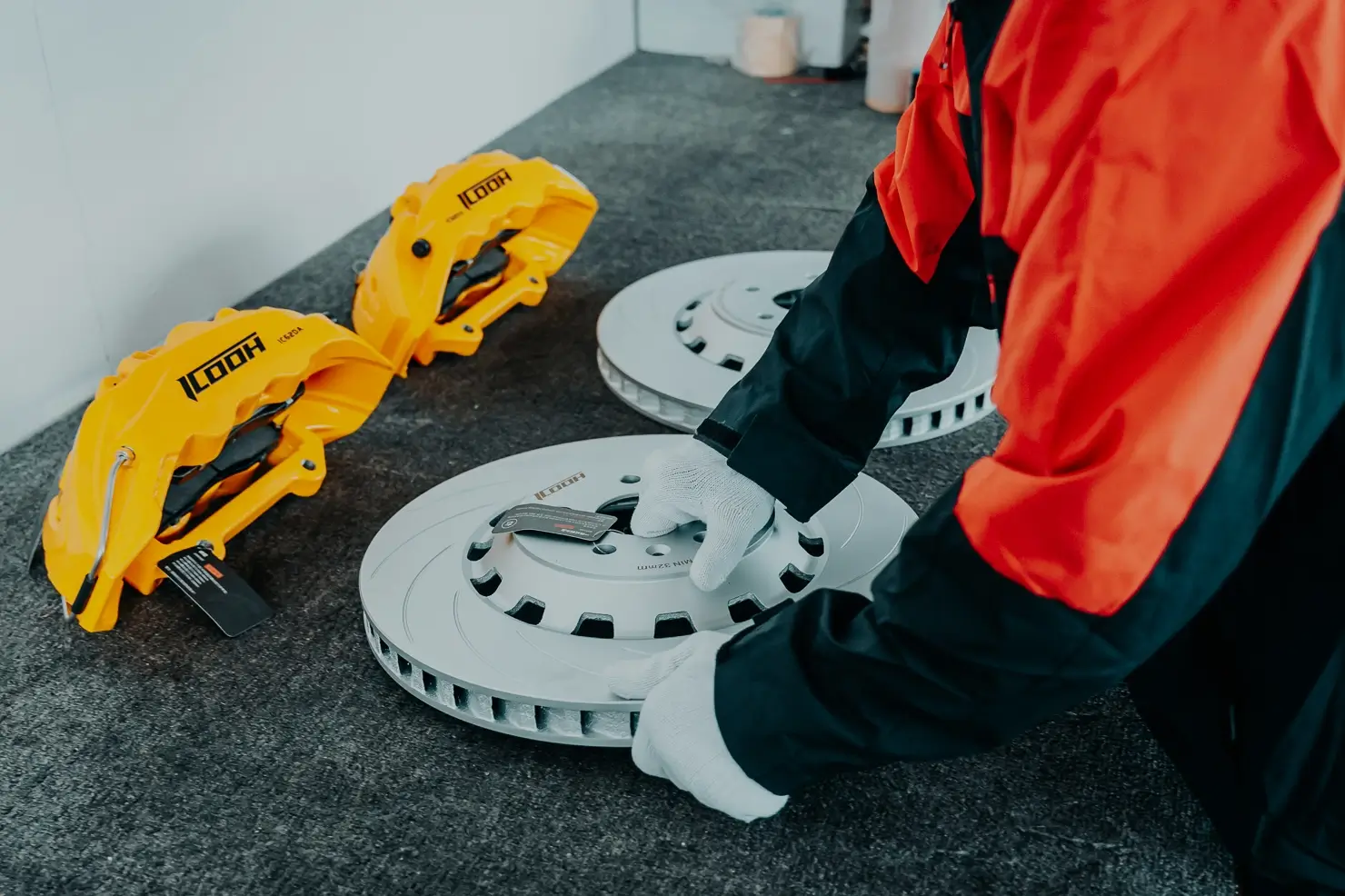
Typical production begins with material selection and casting (sand or die casting), followed by heat treatment if required. Castings undergo machining to form pistons bores and mounting features, surface treatment/coating, seal and piston installation, and final assembly. Quality checkpoints include FAI, NDT, pressure/leak tests, and dynamometer validation.
2. What tests ensure a caliper will not leak under pressure?
Pressure-hold tests, burst pressure tests, and cyclic pressure tests are standard. Automated rigs pressurize the caliper with brake fluid or an inert medium and monitor for leakage over a defined hold time. Acceptance criteria are defined in production control plans.
3. Can you use aluminum calipers for track use?
Yes, aluminum calipers are common in high-performance applications for their lower weight and thermal conductivity. However, alloy selection, heat treatments, and design must ensure the caliper resists thermal distortion and wear under repeated track cycles. Validation through thermal cycling and dynamometer testing is essential.
4. How does nondestructive testing reduce field failures?
NDT (UT, MPI, CT) detects internal and surface defects before parts are assembled and shipped. Identifying porosity or cracks early prevents structural failures that could lead to in-service brake problems. A robust NDT program reduces escape rates and warranty costs.
5. What documentation should I request when sourcing calipers?
Ask for material certificates, FAI reports, NDT reports, pressure test records, dynamometer test summaries, and the supplier's quality certifications (IATF 16949 / ISO 9001). These documents show process control and verification practices.
Contact and product inquiry
If you need professional-grade big brake kits, carbon fiber body kits, or forged wheel rims with proven quality and full vehicle compatibility, contact ICOOH for product details, sample testing, and OEM/tuner partnership. Visit our product pages or reach out to our sales and engineering team to discuss customization and testing requirements. I can arrange technical datasheets, test reports, and fitment matrices on request.
Additional references and resources:
Cost-Benefit Analysis: Upgrading Fleet Brakes to Big Kits
Brake Pad Types Explained: Ceramic vs Semi-Metallic for Performance
Tips to Reduce Brake Caliper Cost Without Sacrificing Safety
Rotor Compatibility with Brake Kits with Calipers Explained
GT500
My product was shipped to me damaged. What should l do?
We examine and double-pack every item before shipping. However, due to the sizes of most items, handling canbe awkward, and sometimes trucking staff do not handle them carefully. We must count on the consianee toexamine the product's condition upon receipt. if you notated all damages on the delivery receipt (which youshould), then you can file a claim with the trucking company.
Daily Modified Vehicles
What is the warranty policy?
We offer a 12–24 month warranty (depending on the product series) and dedicated technical support.
Racing Vehicles
Can you provide test data or performance curves?
We can provide friction coefficient curves, heat resistance life test reports, braking distance data, and more.
Is replacement or maintenance easy?
The modular quick-release design allows for rapid on-track brake pad/disc replacement, minimizing downtime.
About Customized Services
Can the brake kits be sold under our own brand?
Absolutely. We support full OEM and private label branding, including logo engraving, packaging, and documentation.
IC5 Six-piston brake calipers suitable for 17-inch and 18-inch wheels
The new generation of IC5 series six-piston calipers are beautiful, while continuing the high performance and easy installation characteristics of the IC series. They are suitable for 17- and 18-inch wheels and provide a comfortable braking feel.
ICOOH X6 Six-piston brake caliper kits suitable for 18, 19 and 21-inch wheels
The X6 series of products—brake calipers, brake discs, brake pads, and brake hoses—are ideal for car enthusiasts who balance road and high-performance driving. Their stylish and robust appearance, powerful braking performance, and linear feel deliver a unique driving experience.
DM4 Four-piston brake calipers suitable for 18-19 inch wheels
The split forged four-piston caliper is full and beautiful, easy to install, and has high strength. It does not require any flanges or gaskets to be added, nor does it require the replacement of wheel hub screws. It does not vibrate, is safe and stable, and is very suitable for 18- and 19-inch SUVs.
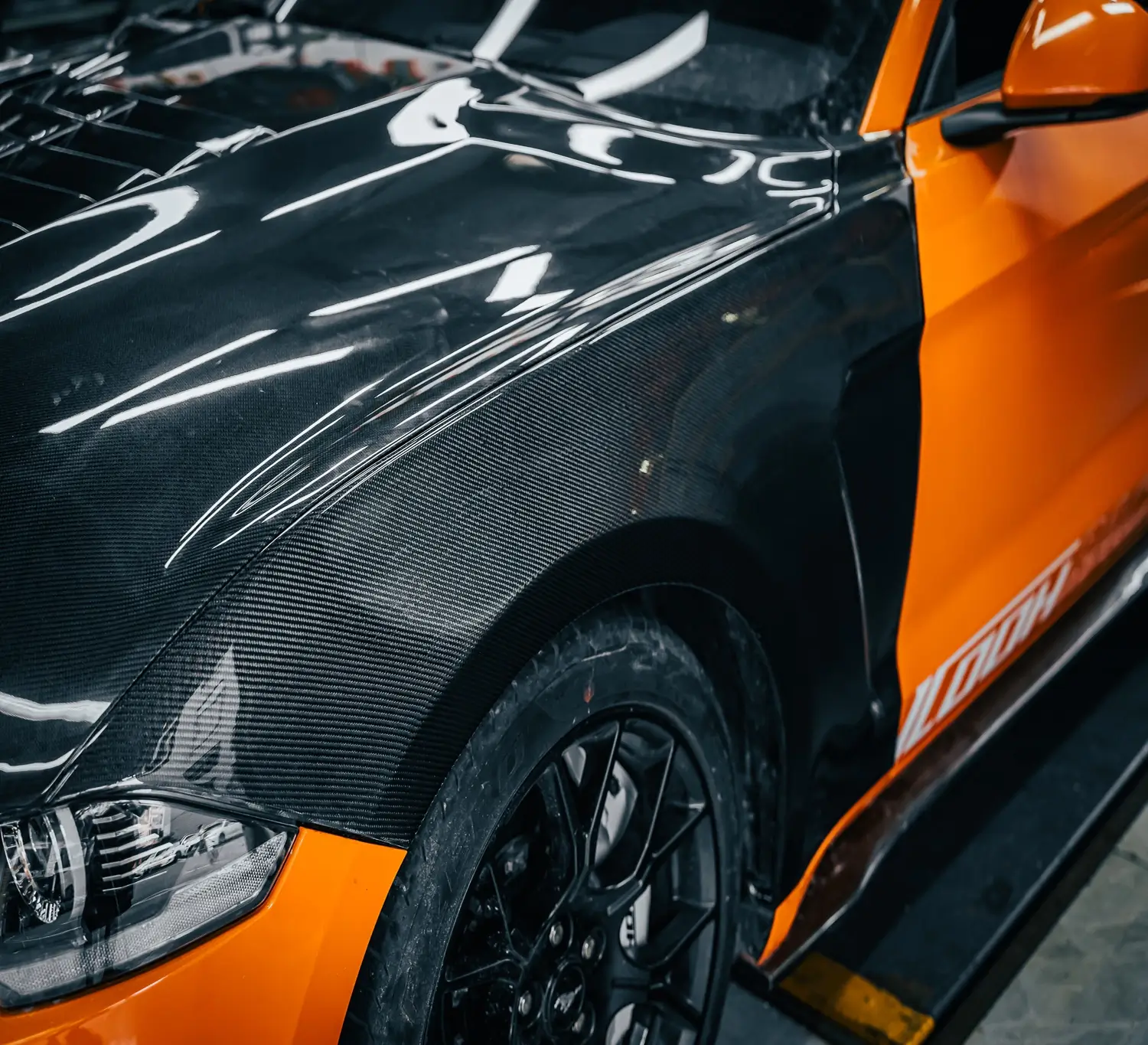
2024+ for Ford Mustang S650 GT Dark Horse 2024+ New Carbon Fiber Engine Hood Bonnet Air Outlet Vent Frame Side Mirror Custom
2024 Mustang original car 002 model with air vents, carbon fiber vents on the hood.made of durable carbon fiber material, precision-engineered for OEM-matched fitment. Lightweight and strong, enhances performance while maintaining a sporty aesthetic. Suitable for aftermarket replacement or performance upgrade with 100% tested quality assurance.
Facebook
Linkedin
Youtube
Instagram