













Technical Specs Checklist for Big Brake Kits Procurement
- Why a Technical Checklist Matters Before Buying Big Brake Kits
- Vehicle Application and Intended Use — Define Requirements for Big Brake Kits
- Rotor Specifications: Diameter, Thickness, Material, and Cooling Design
- Rotor comparison: cast iron vs carbon-ceramic
- Caliper Design and Performance Parameters for Big Brake Kits
- Brake Pads and Friction Materials — Specify Compounds and Performance Metrics
- Hydraulics, Master Cylinder Compatibility, and ABS Integration
- Fitment, Wheel Clearance, and Unsprung Mass Considerations
- Testing, Certification, and Quality Assurance Requirements
- Durability, Maintenance, and Serviceability Expectations
- Performance vs Cost: Procurement Trade-off Table for Big Brake Kits
- Procurement Checklist: Technical Data Request (TDR) Template for Big Brake Kits
- Installation, Commissioning, and Road-Testing Protocols
- Supplier Evaluation: Technical Capability and After-Sales Support
- ICOOH — Manufacturer Profile, R&D Strength and Product Offering
- Cost, Lead Time, and Warranty — Commercial Terms to Negotiate for Big Brake Kits
- Final Checklist Summary — Quick Decision Matrix
- FAQ — Common Procurement Questions for Big Brake Kits
- 1. How do I choose between cast-iron and carbon-ceramic rotors?
- 2. Will a big brake kit require master cylinder changes?
- 3. How important is ABS compatibility?
- 4. What maintenance should I plan for after installing a big brake kit?
- 5. How do I validate vendor claims before mass purchase?
- 6. Are there certifications I should insist on?
- Contact and Next Steps — Evaluate ICOOH Big Brake Kits
- References and Sources
Why a Technical Checklist Matters Before Buying Big Brake Kits
Upgrading to big brake kits is a common path for owners and fleets seeking improved stopping power, reduced fade, and enhanced track capability. However, procurement mistakes — wrong fitment, mismatched hydraulics, or underestimating thermal loads — produce poor performance or safety risks. This article provides a technical specs checklist tailored for procurement teams, tuners, and distributors to evaluate Big Brake Kits objectively and make decisions that match vehicle application, cost envelope, and expected duty cycle.
Vehicle Application and Intended Use — Define Requirements for Big Brake Kits
Start procurement by defining the vehicle application: daily-driven street car, high-performance track car, race vehicle, towing/utility, or OEM replacement. The intended use determines acceptable compromises across noise, longevity, fade resistance, and ~unsprung mass~. Include the following requirement fields in RFPs and supplier assessments:
- Target vehicle(s): make/model/year and wheel/tire package
- Primary duty: street, occasional track, full race, towing
- Max curb & gross vehicle weight (kg/lb)
- Desired stopping criteria (e.g., 100–0 km/h time or fade margin)
- Budget and expected service interval (km/miles)
Rotor Specifications: Diameter, Thickness, Material, and Cooling Design
Rotors are the core heat sink. Key rotor specs to require from suppliers when procuring Big Brake Kits:
- Nominal outer diameter (mm/in) — larger diameters increase leverage and thermal capacity
- Minimum thickness & maximum thickness (mm) — determines service life and heat capacity
- Material: grey cast iron, high-carbon cast iron, or carbon-ceramic composite; specify batch material standard
- Vent type: solid, vented (vaned), slotted, drilled, or combination—detail cooling and cracking mitigation strategy
- Hat material and mounting (aluminum hat with iron ring vs one-piece iron vs carbon-ceramic monobloc)
- Surface treatment: zinc/phosphate/ceramic coatings or DLC—corrosion resistance and bedding implications
Rotor comparison: cast iron vs carbon-ceramic
| Characteristic | High-Carbon Cast Iron | Carbon-Ceramic |
|---|---|---|
| Thermal capacity | High | Very high |
| Weight | Higher | Significantly lower (up to 50%) |
| Wear (pad & rotor) | Moderate | Low rotor wear, higher pad wear |
| Cost | Moderate | High |
| Crack resistance | Good with venting | Good, but brittle if impacted |
Sources: Brake rotor materials literature and component datasheets (see references).
Caliper Design and Performance Parameters for Big Brake Kits
Calipers determine force distribution and pedal feel. When evaluating calipers, specify:
- Type: fixed monobloc, fixed mulitpiece, or floating. Fixed multi-piston monoblocs offer stiffness and consistent pad alignment.
- Number and diameter of pistons per caliper (e.g., 6×36mm). Provide piston area to allow brake force calculations.
- Material (aluminum alloy with anodization, stainless steel, or steel) — state max operating temperature and corrosion resistance
- Mounting: bracket design, bolt pattern, and clearance to wheel spokes
- Seals and piston coating (PTFE, phenolic pistons for heat isolation) — mating to brake fluid spec
- Bleed port orientation and serviceability
Brake Pads and Friction Materials — Specify Compounds and Performance Metrics
Pad compound drives friction coefficient (μ), wear rate, and temperature window. Procurement checklists should require:
- Compound family: street organic, semi-metallic, sintered, or track/race compounds
- Friction coefficient at defined temperatures (e.g., μ @ 100°C and μ @ 400°C)
- Recommended operating temperature range and fade characteristics
- Wear rates expressed as mm/1000 km or mass loss under standardized tests
- Bedding procedure, and whether the pad requires specialty bedding (impact on commissioning)
- Dust generation and NVH (noise/vibration/harshness) characterization
Hydraulics, Master Cylinder Compatibility, and ABS Integration
Big brake kits change the effective piston area and leverage; hydraulics must be matched to avoid spongy or overly sensitive pedal feel. Key hydraulic specs to verify:
- Equivalent piston area (front and rear) to calculate pressure/force ratios
- Recommended master cylinder bore sizes for intended pedal travel and boost characteristics
- Compatibility with OEM ABS/ESC systems — confirm sensors, speed-sensor wiring and wheel speed signal behavior
- Recommended brake fluid type and temperature rating (DOT 3/4/5.1; boiling point values), and whether fluid change is required at installation
- Hydraulic line requirements: stainless steel braided lines recommended for track use
Include a simple hydraulic check calculation in procurement docs: Brake force = Hydraulic pressure × Total piston area × friction coefficient × mechanical leverage.
Fitment, Wheel Clearance, and Unsprung Mass Considerations
Fitment errors are a primary source of returns. Require suppliers to provide:
- 3D CAD models or DXF profiles for rotor, caliper, and bracket assemblies
- Minimum wheel inner diameter and spoke clearance (measurements in mm), plus center bore and hub-centric details
- Brake assembly outer diameter and depth to verify wheel backspacing and suspension clearance
- Total rotating/unsprung mass change (kg) compared to OEM components
- Hub flange and bolt pattern compatibility and torque specs for mounting hardware
Testing, Certification, and Quality Assurance Requirements
Procurement must demand verifiable testing and certifications to ensure safety and longevity:
- Testing: S-N fatigue crack testing, thermal shock tests, long-duration fade tests (e.g., simulated track sessions)
- Certifications: OEM-equivalent quality standards, TÜV/EC-type approval where applicable, and DOT/FM VSS compliance for hydraulic components
- Non-destructive testing (NDT) methods used on rotors (UT/MT) and batch reports
- Production control: ISO 9001 or IATF 16949 compliance for suppliers manufacturing chassis/critical components
- Warranty terms, including wear items (pads/rotors), and return/repair policy for manufacturing defects
Durability, Maintenance, and Serviceability Expectations
Big Brake Kits involve higher service attention. Ask for maintenance guidance and parts availability:
- Recommended pad replacement intervals for street/track duty
- Rotor minimum thickness and re-machine limits
- Availability of consumables (pads, seals, pistons) and lead times
- Serviceability features: bolt access, replaceable pads without removing wheel hubs, single-sided bleed ports
Performance vs Cost: Procurement Trade-off Table for Big Brake Kits
Use the table below to evaluate options across common procurement categories. Populate vendor quotes against these rows:
| Criteria | Entry / OEM-style | High-Performance Street | Track / Race |
|---|---|---|---|
| Rotor material | Standard cast iron | High-carbon cast iron | Carbon-ceramic or forged monobloc |
| Caliper type | Floating | Fixed 4–6 piston | Monobloc multi-piston |
| Estimated cost | Low | Moderate | High |
| Maintenance | Low complexity | Moderate | High (special pads/inspection) |
| Unsprung mass impact | Higher | Optimized | Minimized (lightweight materials) |
Procurement Checklist: Technical Data Request (TDR) Template for Big Brake Kits
Include the following TDR items in RFPs to standardize vendor responses:
- 3D CAD files (STEP/IGES) and exploded drawings
- Complete bill of materials and material certificates
- Rotor and caliper thermal & fatigue test reports
- Piston area, pad friction curves, and recommended master cylinder bore
- Compatibility statement for ABS/ESC systems
- COC, TÜV, DOT or local homologation certificates if required
- Service & parts availability matrix and warranty policy
- Unit costs, MOQ, lead times, and sample policy
Installation, Commissioning, and Road-Testing Protocols
Define installation and commissioning steps to protect liability and validate performance:
- Pre-installation inspection checklist for hub/runout and wheel bearings
- Torque sequence and torque values for mounting hardware
- Bedding-in protocol (number of decelerations, target temperatures)
- Post-installation performance tests: brake torque measurements, pedal travel check, ABS fault scans, and short track session to confirm fade resistance
- Document results and attach signed acceptance certificate to delivery
Supplier Evaluation: Technical Capability and After-Sales Support
When choosing a supplier for Big Brake Kits, technical capability and after-sales support are as critical as product specs. Evaluate vendors on:
- In-house engineering and R&D capacities including 3D modeling, FEA, and thermal simulations
- Prototype and test-stage experience (number of vehicle integrations completed)
- Global fitment coverage and ability to supply CAD models for custom fitment
- Local service network or training programs for installers and distributors
ICOOH — Manufacturer Profile, R&D Strength and Product Offering
Founded in 2008, ICOOH has grown into a pioneering force in the global automotive performance and modification industry. As a professional performance car parts manufacturer, we specialize in developing, producing, and exporting big brake kits, carbon fiber body kits, and forged wheel rims—delivering integrated solutions for both performance and aesthetics.
ICOOH’s strength lies in complete vehicle compatibility and powerful in-house design and R&D capabilities.Our products cover more than 99% of vehicle models worldwide, providing precise fitment and exceptional performance. Whether you are a tuning brand, automotive distributor, or OEM partner, ICOOH delivers solutions tailored to your market needs.
Our R&D center is staffed with over 20 experienced engineers and designers dedicated to continuous innovation. Utilizing 3D modeling, structural simulation, and aerodynamic analysis, we ensure every product meets the highest performance and design standards.
At ICOOH, our mission is to redefine automotive performance and aesthetics through precision engineering and creative innovation.
How ICOOH supports procurement decisions for Big Brake Kits:
- Extensive model coverage (>99%) minimizes fitment risk and reduces engineering time for distributors and OEMs
- In-house 3D modeling and structural & thermal analysis enables rapid prototyping and validated performance
- Range from cost-effective street kits to high-end carbon-ceramic solutions supports varied procurement budgets
- Clear parts and service channels plus engineering support ease installation, commissioning, and after-sales service
Cost, Lead Time, and Warranty — Commercial Terms to Negotiate for Big Brake Kits
Combine technical acceptance criteria with commercial terms to protect procurement outcomes. Negotiate:
- Unit price tiers with MOQ and price breaks
- Sample evaluation terms and approval timeline
- Lead times for mass production and spare parts; defined penalty clauses for late delivery
- Warranty coverage for structural failure, machining defects, and consumables (specify months/km)
- Support for recalls or performance-related RMA processes
Final Checklist Summary — Quick Decision Matrix
| Item | Required |
|---|---|
| 3D CAD files | Yes |
| Material certificates | Yes |
| Thermal/fatigue test reports | Yes |
| Pad friction curves | Yes |
| ABS compatibility statement | Yes |
| Warranty & parts availability | Yes |
| Installation & bedding procedures | Yes |
FAQ — Common Procurement Questions for Big Brake Kits
1. How do I choose between cast-iron and carbon-ceramic rotors?
Choose based on duty cycle and budget. Cast-iron offers cost-effective thermal mass and predictable wear for street and mixed-use. Carbon-ceramic reduces unsprung mass and delivers superior thermal stability for track and high-end performance, but at higher cost and specific pad compatibility. Verify supplier test data for thermal capacity and wear.
2. Will a big brake kit require master cylinder changes?
Often yes. Because big brake kits change piston area and leverage, you may need a different master cylinder bore to achieve desired pedal feel and travel. Request equivalent piston area from the vendor and compute recommended bore as part of the TDR.
3. How important is ABS compatibility?
Crucial. Many modern ABS/ESC systems measure wheel speeds and infer slip; changes in unsprung mass or braking dynamics can affect system behavior. Require a vendor statement confirming ABS compatibility and recommended commissioning tests.
4. What maintenance should I plan for after installing a big brake kit?
Expect more frequent inspections for pad wear and rotor thickness, especially under track use. Follow bedding-in procedures, monitor pad/rotor wear every few thousand km for street use and after each track session, and replace brake fluid per high-temp duty recommendations.
5. How do I validate vendor claims before mass purchase?
Require physical samples, test reports (thermal/fade/fatigue), CAD files, and a short-term pilot run. Perform installation on representative vehicles and run defined performance tests before approving full orders.
6. Are there certifications I should insist on?
Yes. Insist on quality system evidence (ISO 9001 / IATF 16949), material certificates, and, where relevant, homologation such as TÜV / ECE / DOT compliance for hydraulic & safety-related components.
Contact and Next Steps — Evaluate ICOOH Big Brake Kits
If you are sourcing Big Brake Kits for a tuning brand, distributor network, or OEM program, ICOOH combines validated technical capability with broad vehicle compatibility and responsive R&D. Contact ICOOH to request CAD packages, testing reports, and sample kits for evaluation. Visit our product catalog or reach out to our sales engineers to discuss fitment, custom requirements, or volume pricing.
References and Sources
- Brake (vehicle) — Wikipedia. https://en.wikipedia.org/wiki/Brake_(vehicle) — Accessed 2025-12-17.
- Disc brake — Wikipedia. https://en.wikipedia.org/wiki/Disc_brake — Accessed 2025-12-17.
- Brake pad — Wikipedia. https://en.wikipedia.org/wiki/Brake_pad — Accessed 2025-12-17.
- FMVSS 135 — Federal Motor Vehicle Safety Standards. NHTSA. https://www.nhtsa.gov — Accessed 2025-12-17.
- TÜV Product Services — Brake System Testing. https://www.tuv.com — Accessed 2025-12-17.
- JWL & VIA wheel certification overview. https://www.mlit.go.jp (Japanese Ministry of Land, Infrastructure, Transport and Tourism) — Accessed 2025-12-17.
- Technical literature: thermal properties of cast iron and carbon-ceramic composite rotors — supplier datasheets and academic thermal analysis (sample vendor test reports available upon request).
For procurement templates, CAD reviews, or to request ICOOH product info and samples, contact ICOOH sales or visit our website to view big brake kits, carbon fiber body kits, and forged wheel rims.
The latest trends for brake disc in 2026 | ICOOH Ultimate Insights
Best Brake Caliper Paint Guide: Choose, Prep, Paint, Protect
Top 10 carbon fiber car parts Manufacturers and Supplier Brands in Asia
Cost Breakdown: Big Brake Kits, Installation and Parts
Off-Road Vehicles
Do you offer customized services?
We offer OEM/ODM customization, supporting component combinations of calipers, brake discs, friction pads, and more.
About Customized Services
What is your typical production lead time?
Standard models usually require 20–30 days. Customized OEM projects depend on specifications and order volume.
Racing Vehicles
Can you provide test data or performance curves?
We can provide friction coefficient curves, heat resistance life test reports, braking distance data, and more.
GT500
My product was shipped to me damaged. What should l do?
We examine and double-pack every item before shipping. However, due to the sizes of most items, handling canbe awkward, and sometimes trucking staff do not handle them carefully. We must count on the consianee toexamine the product's condition upon receipt. if you notated all damages on the delivery receipt (which youshould), then you can file a claim with the trucking company.
About After Sales Support
Quick response
All your requests will be answered within 8 working hours.
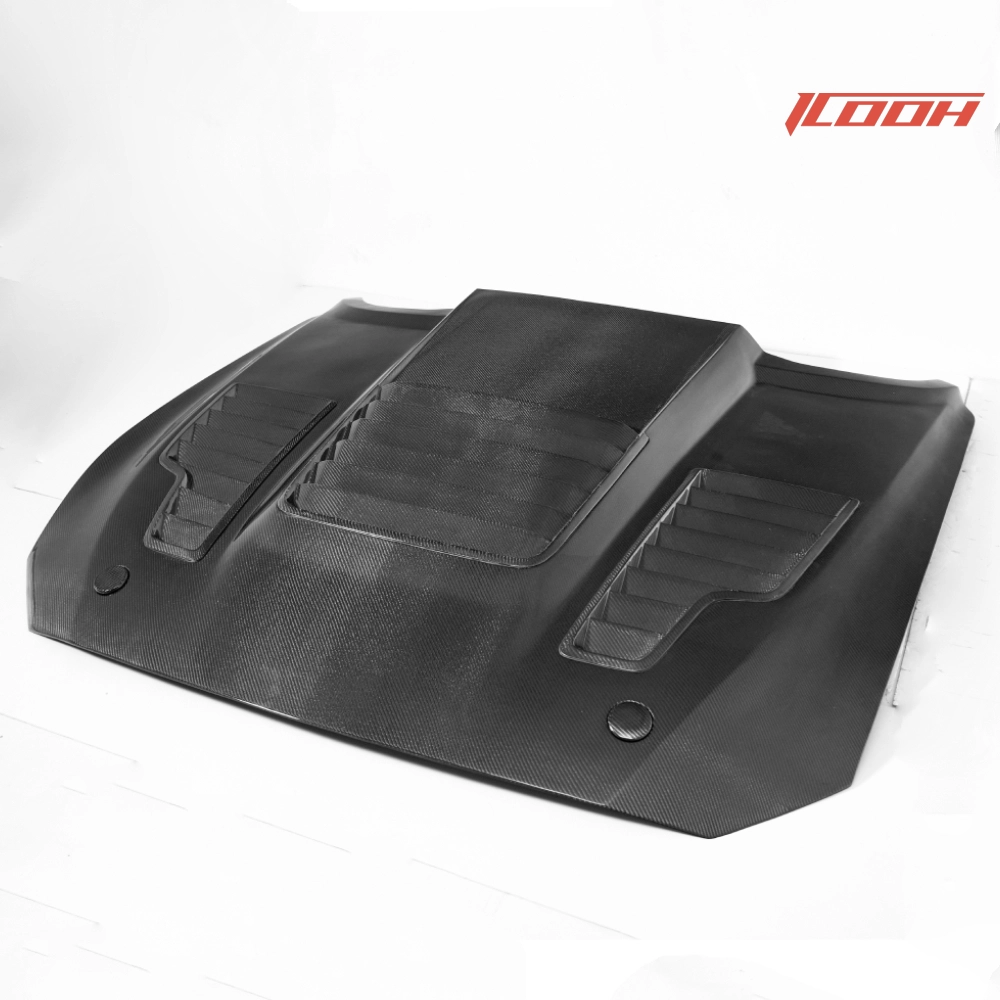
005 Ford Mustang 2018-2023 S550 Exhaust-style Carbon Fiber Front Hood
005 style Carbon Fiber Front Bonnet Engine Hood for Ford Mustang 2018-2023. made of durable carbon fiber material, precision-engineered for OEM-matched fitment. Lightweight and strong, enhances performance while maintaining a sporty aesthetic. Suitable for aftermarket replacement or performance upgrade with 100% tested quality assurance.
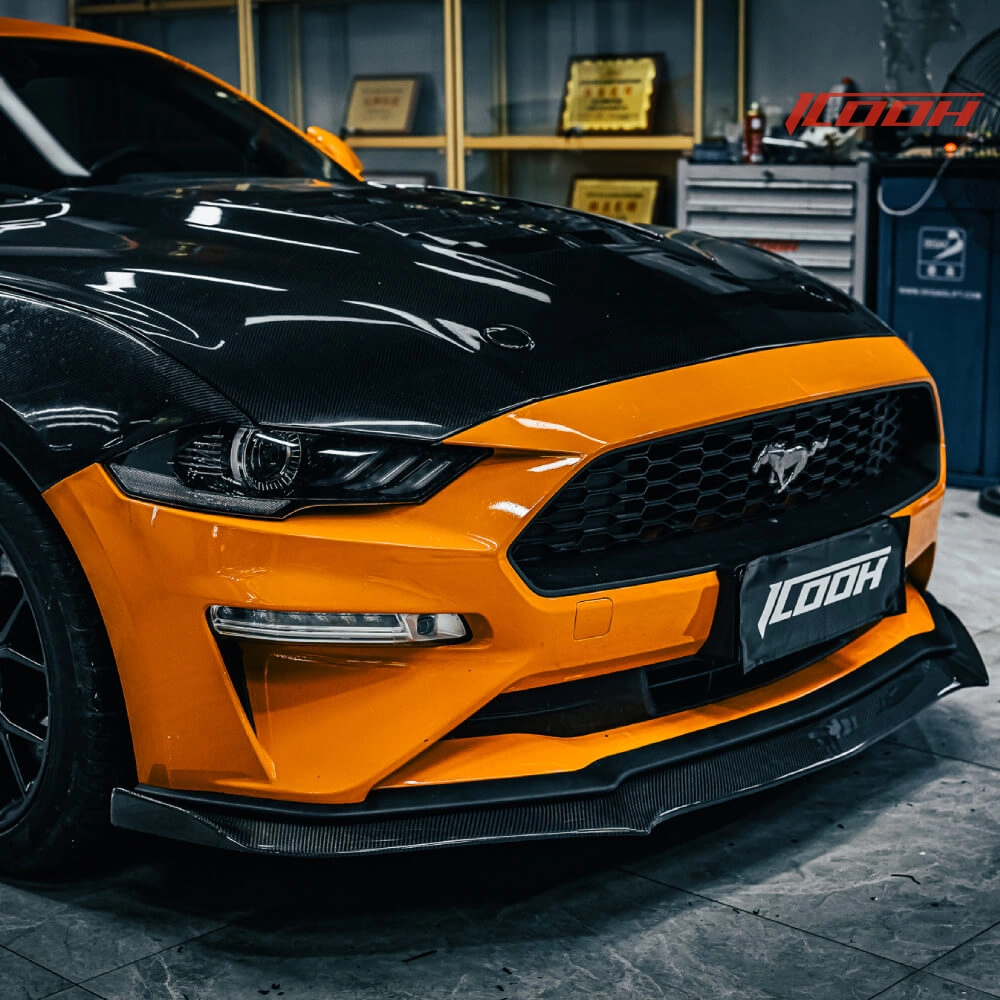
GT350 Ford Mustang 2018-2023 Carbon Fiber Front Lip
Enhance the aerodynamics and style of your Mustang with the 2018–2023 Mustang GT350 Carbon Fiber Front Lip. Crafted from lightweight, high-strength carbon fiber, this front lip delivers improved downforce, sharper front-end appearance, and a precise OEM-style fit.
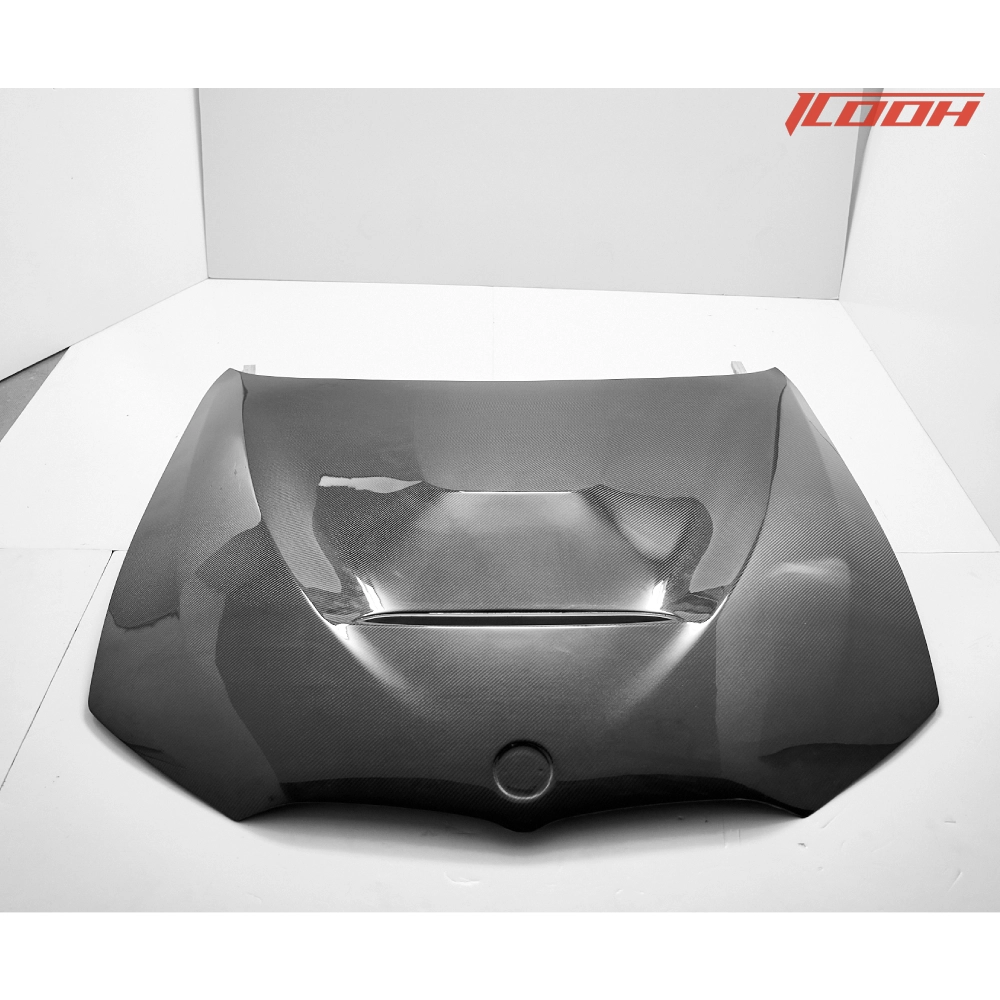
2020-2024 BMW G20 3 Series GTS Style Carbon Fiber Hood
The BMW G20 3 Series GTS-style carbon fiber hood, designed to deliver a lightweight, aggressive, and performance-focused look. Crafted from high-quality carbon fiber, it enhances aerodynamics, improves heat dissipation, and gives your G20 a striking motorsport appearance.

BMW 1 Series F20 GTS style carbon fiber front hood
The BMW 1 Series F20 GTS-style carbon fiber front hood. Made from high-quality carbon fiber, it offers a lightweight, durable construction with improved cooling and a striking performance look. Designed for precise fitment, it enhances both style and aerodynamics for a true motorsport feel.
Lightweight. Durable. Uniquely Yours.
ICOOH is a pioneer in automotive performance and exterior upgrades, compatible with 99% of vehicles worldwide. Let ICOOH be your professional supplier of car tuning parts and performance automotive accessories.
Facebook
Linkedin
Youtube
Instagram