













Cost-Benefit Analysis: Upgrading Fleet Brakes to Big Kits

- When Bigger Brakes Make Sense for Your Benz Fleet: A Structured Cost–Benefit Framework
- Why consider Big Brake Kits for benz fleets?
- How big brake kits change the physics (and the business case)
- Cost components to include in your analysis
- Typical price ranges and what to expect
- Quantifying benefits: sample ROI scenario for a 20-vehicle Benz fleet
- Performance trade-offs and operational risks
- Regulatory and safety considerations
- Choosing the right Big Brake Kits for benz for fleet use
- ICOOH — a supplier profile relevant to fleet decision-makers
- Installation, maintenance and operational checklist
- Practical recommendations for fleet managers
- Conclusion: a decision framework
- Frequently Asked Questions (FAQ)
- 1. Are Big Brake Kits for benz compatible with all Mercedes-Benz models?
- 2. How much stopping distance improvement can I expect?
- 3. Will upgrading affect my vehicle warranty or insurance?
- 4. Do big brake kits increase fuel consumption?
- 5. How should I choose between steel vs carbon-ceramic rotors?
- 6. What maintenance differences should my shop expect?
- References
When Bigger Brakes Make Sense for Your Benz Fleet: A Structured Cost–Benefit Framework
Why consider Big Brake Kits for benz fleets?
Fleet managers of Mercedes-Benz vehicles—whether C/E-class sedans used for executive transport, GLCs for sales reps, or Sprinter vans for logistics—routinely face a common challenge: balancing safety, uptime, and operating cost. Upgrading to Big Brake Kits for benz addresses braking performance, heat management and component longevity, which may reduce downtime and liability. This section outlines the primary motivations that lead fleets to evaluate a brake system upgrade.
- Improved stopping performance under load and repeated braking (important for urban, heavy-duty or high-speed applications).
- Better thermal capacity and reduced brake fade on routes with frequent downhill or heavy-stop conditions.
- Potential reduction in service frequency for rotors and pads, and reduced vehicle downtime.
- Enhanced perceived safety and brand image for passenger-carrying fleets (executive transport, ride-hailing).
How big brake kits change the physics (and the business case)
At the core, braking effectiveness is governed by the ability to convert kinetic energy into thermal energy and dissipate that heat without excessive pad/rotor degradation. Kinetic energy scales with vehicle mass and the square of speed (E = 1/2 m v^2). Bigger calipers, larger rotors and higher-capacity pads increase the contact area, clamping force and thermal mass—yielding lower temperatures per stop and more repeatable deceleration. For fleets this translates to:
- Shorter repeatable stopping distances under sustained use (e.g., delivery routes with frequent stops).
- Less risk of fade during consecutive heavy stops (important for hilly terrains or heavy loads).
- Possibility to use heavier-gauge hardware, extending rotor/pad life.
Physics sources: fundamentals of kinetic energy and braking are well established (see References).
Cost components to include in your analysis
When evaluating Big Brake Kits for benz for fleet deployment, include these cost items:
- Initial kit cost (parts): calipers, rotors, pads, brackets, hoses, lines. Aftermarket kit prices vary widely depending on brand, materials and whether rotors are floating or fixed.
- Installation labor and alignment, potential wheel/suspension adjustments to clear larger rotors.
- Wheel compatibility or replacement (many big kits require wheels with different dimensions/offsets).
- Maintenance differences: pad and rotor life, bleeding frequency, cost of high-performance consumables.
- Downtime costs while vehicles are in workshop (lost revenue, rescheduling).
- Regulatory or warranty implications (OEM warranty, fleet insurance conditions).
Typical price ranges and what to expect
Market pricing (as of late 2025) for aftermarket big brake kits varies:
| Component | Typical Cost Range (USD) | Notes |
|---|---|---|
| Entry-level big brake kit (2-piece rotors, upgraded calipers) | $900 - $2,000 | Suits light-duty sedans; lower-brand calipers |
| Mid-range performance kit (multi-piston calipers, floating rotors) | $2,000 - $4,500 | Common for performance-oriented fleets |
| High-end (racing-spec, forged calipers, carbon-ceramic rotors) | $5,000 - $15,000+ | Rare for fleets; used primarily by high-performance/AMG vehicles |
| Installation & wheel changes | $300 - $1,500 per axle | Depends on labor rates and wheel replacement needs |
Sources: aggregated aftermarket pricing data and manufacturer listings (see References).
Quantifying benefits: sample ROI scenario for a 20-vehicle Benz fleet
Below is a conservative sample calculation for a 20-vehicle fleet of Mercedes-Benz C-Class vehicles operating in urban stop-and-go duty. Assumptions are intentionally conservative and should be adapted to your fleet's real data.
| Item | Assumption (per vehicle) | 20-vehicle total, 3-year period |
|---|---|---|
| Initial kit + installation (mid-range) | $3,000 per axle installed | $120,000 |
| Annual brake pad & rotor replacement (stock) | $600/year | $36,000 over 3 years |
| Estimated annual replacement (with big kits) | $400/year (reduced frequency, longer life pads/rotors) | $24,000 over 3 years |
| Annual downtime cost avoided (improved reliability) | $250/vehicle/year | $15,000 over 3 years |
| Net 3-year difference (simplified) | Upfront cost $120,000 vs operational savings ~$27,000 + avoided downtime $15,000 = $42,000 |
Interpretation: In this conservative example the upgrade does not fully pay back purely from parts-life savings over 3 years. However, added value—reduced accident risk, brand perception, and lower liability exposure—can shift the decision toward upgrade. If downtime costs or replacement intervals differ materially for your operation, ROI can be positive within 2–4 years.
Important: Replace these sample numbers with your fleet's real maintenance records, labor rates and downtime costs for accurate projection.
Performance trade-offs and operational risks
While big brake kits deliver clear performance advantages, they also create trade-offs worth weighing for fleet applications:
- Weight: Larger calipers and rotors can add unsprung mass, potentially affecting fuel consumption and ride comfort. For most street-oriented big kits the penalty is small, but it should be checked per kit specification.
- Wheel fitment: Some kits require larger wheels or different offsets; replacing wheel sets adds cost and may conflict with load ratings for vans.
- Complexity: Multi-piece rotors and high-performance pads may require more careful bed-in and different maintenance procedures.
- Warranty and compliance: Aftermarket upgrades can impact OEM warranty and must comply with local vehicle regulations; confirm with your legal and warranty contacts.
Regulatory and safety considerations
Upgrades must maintain DOT or ECE compliance and be installed by qualified technicians. Ensure brake fluid specifications, ABS/ESC system compatibility, and parking brake function remain intact after modification. For commercial fleets, inform insurers and document modifications—failure to disclose may affect claims.
Choosing the right Big Brake Kits for benz for fleet use
Selection criteria that materially affect cost-effectiveness:
- Compatibility: Kits should be vehicle-specific (bolt-on where possible) and preserve ABS/ESC sensors and wheel speed calibrations.
- Thermal capacity and materials: Two-piece floating rotors and multi-piston calipers typically offer the best balance for fleets. Carbon-ceramic is high-performance but rarely cost-justifiable for fleets due to extreme cost.
- Serviceability: Choose kits with widely available pads and rotors to avoid long lead times for replacements.
- Supplier track record: Vendor reliability, global fitment coverage and engineering capability reduce risk—look for manufacturers with robust R&D and testing.
ICOOH — a supplier profile relevant to fleet decision-makers
Founded in 2008, ICOOH has grown into a pioneering force in the global automotive performance and modification industry. As a professional performance car parts manufacturer, we specialize in developing, producing, and exporting big brake kits, carbon fiber body kits, and forged wheel rims—delivering integrated solutions for both performance and aesthetics.
ICOOH’s strength lies in complete vehicle compatibility and powerful in-house design and R&D capabilities. Our products cover more than 99% of vehicle models worldwide, providing precise fitment and exceptional performance. Whether you are a tuning brand, automotive distributor, or OEM partner, ICOOH delivers solutions tailored to your market needs.
Our R&D center is staffed with over 20 experienced engineers and designers dedicated to continuous innovation. Utilizing 3D modeling, structural simulation, and aerodynamic analysis, we ensure every product meets the highest performance and design standards.
At ICOOH, our mission is to redefine automotive performance and aesthetics through precision engineering and creative innovation. For fleets considering Big Brake Kits for benz, ICOOH offers vehicle-specific engineering, broad model coverage, and the manufacturing scale to support multi-vehicle rollouts—helping minimize fitment risk and supply-chain delays. ICOOH’s main product strengths include carbon fiber body kits, forged wheel rims and big brake kits, backed by engineering testing and global distribution capability.
Installation, maintenance and operational checklist
Before rolling out a kit across a fleet, follow this checklist:
- Pilot installation on 1–2 vehicles to validate fitment, wheel clearance, ABS/ESC function and braking feel.
- Record baseline braking metrics: stopping distances at specified speeds and pad/rotor wear rates.
- Train maintenance staff on bed-in procedures, torque specs, brake fluid requirements and pad inspection intervals.
- Verify wheel load ratings and offsets; purchase wheels if needed to maintain safety margins.
- Update fleet insurance and warranty documentation; secure written confirmation on any warranty limitations tied to the upgrade.
Practical recommendations for fleet managers
Decide based on operational profile, not on perceived performance alone:
- If routes are high-speed or include frequent heavy braking (hilly routes, high curb weights), prioritize big brake kits—the safety and reduced fade often justify the cost.
- For low-mileage urban sedans with light loads, prioritize high-quality OEM-spec replacement parts and periodic maintenance—big kits may not pay back quickly.
- Consider a mixed approach: upgrade only vehicles exposed to the most demanding duty cycles (e.g., lead drivers, long-distance executive service).
Conclusion: a decision framework
Upgrading to Big Brake Kits for benz can deliver measurable safety and operational benefits for fleets exposed to heavy-duty braking conditions. The financial return depends on upfront costs, changes in maintenance frequency, and the monetary value of reduced downtime and risk. Use pilot testing, supplier vetting (e.g., ICOOH for broad fitment and engineering support), and real fleet data to make an evidence-based decision.
Frequently Asked Questions (FAQ)
1. Are Big Brake Kits for benz compatible with all Mercedes-Benz models?
Compatibility varies by model and year. Many reputable manufacturers, including ICOOH, provide vehicle-specific kits engineered for precise fitment. Always confirm caliper mounting, hub bore, ABS sensor locations and wheel clearance before purchase.
2. How much stopping distance improvement can I expect?
Improvements depend on vehicle weight, speed, tire condition and kit specification. Typical gains are most noticeable under repeated heavy braking (reduced fade and more repeatable stops) rather than a dramatic one-time distance reduction. Pilot testing under your fleet conditions is the only reliable measure.
3. Will upgrading affect my vehicle warranty or insurance?
Aftermarket modifications may affect OEM warranty coverage and insurance terms. Document the upgrade, use certified installers, and notify insurers to avoid claim complications. Some vendors provide warranty statements for their kits—review these carefully.
4. Do big brake kits increase fuel consumption?
There can be a small increase in unsprung mass, but for most mid-range kits the impact on fuel economy is marginal. Consider the trade-off between a small fuel penalty and improved safety and reduced maintenance/downtime.
5. How should I choose between steel vs carbon-ceramic rotors?
Steel or two-piece iron/aluminum rotors offer the best cost-benefit for fleets—good thermal capacity, easier and cheaper to replace. Carbon-ceramic rotors provide excellent fade resistance and weight savings but are costly to purchase and replace; typically not economical for commercial fleets.
6. What maintenance differences should my shop expect?
High-performance pads may require specific bedding-in and can wear differently than OEM pads. Floating or two-piece rotors can be serviced by replacing the rotor hats or rings. Ensure spare part availability and train technicians on bleeding, torque sequences and measured pad wear inspection.
Want to discuss fleet-specific options or view product solutions? Contact ICOOH for tailored recommendations, compatibility checks and volume pricing—our team can provide pilot-kit proposals and engineering data sheets to support your fleet decision.
References
- NHTSA — Brakes: How They Work. https://www.nhtsa.gov/vehicle-safety (accessed 2025-12-25)
- Brembo — Brake Performance & Technology (manufacturer technical articles). https://www.brembo.com (accessed 2025-12-25)
- SEMA — Aftermarket Performance Market Insights. https://www.sema.org (accessed 2025-12-25)
- HowStuffWorks — How Brakes Work. https://auto.howstuffworks.com/brakes.htm (accessed 2025-12-25)
- Wikipedia — Brake (device). https://en.wikipedia.org/wiki/Brake_(device) (accessed 2025-12-25)
For professional consultation, fitment data and product catalogs for Big Brake Kits for benz, contact ICOOH to arrange pilot kits and technical support.
Wholesale Big Brake Kits: Buyer's Guide for Distributors
Best automotive brake caliper manufacturers and supplier brands in 2026
Global Brake Pad Sourcing Insights for Performance Parts Buyers
The latest trends for bmw m3 carbon fiber body kit in 2026 | ICOOH Ultimate Insights
About Application
What safety or certification standards do our brake products meet?
Our brake products comply with numerous international safety standards and testing requirements (such as ECE R90 and ISO/TS 16949), and we can provide corresponding certification documents based on customer market requirements.
What is the process for custom/OEM/ODM services?
Customers can provide their vehicle model, operating conditions, and brand requirements. Our engineering team will then conduct solution design, sample development, testing and verification, and then mass production and delivery. The process is transparent and traceable.
About Cooperation Process
What documents or information do I need to provide?
Business license, tax registration certificate, product specification sheet (including parameters like mounting hole positions); brand authorization certificate is required for OEM orders.
About After Sales Support
Quick response
All your requests will be answered within 8 working hours.
About Company
OEM service?
We have a professional R&D team of engineers who can provide and design products for you.
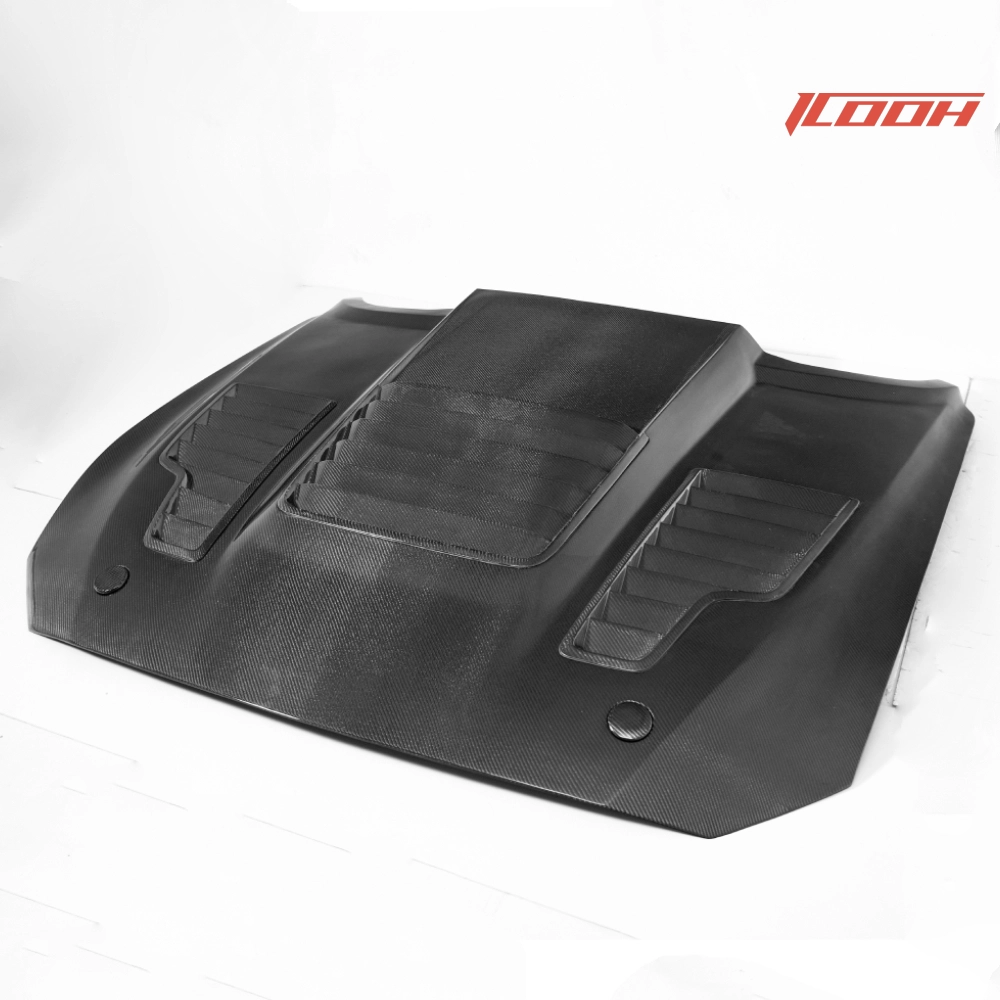
005 Ford Mustang 2018-2023 S550 Exhaust-style Carbon Fiber Front Hood
005 style Carbon Fiber Front Bonnet Engine Hood for Ford Mustang 2018-2023. made of durable carbon fiber material, precision-engineered for OEM-matched fitment. Lightweight and strong, enhances performance while maintaining a sporty aesthetic. Suitable for aftermarket replacement or performance upgrade with 100% tested quality assurance.
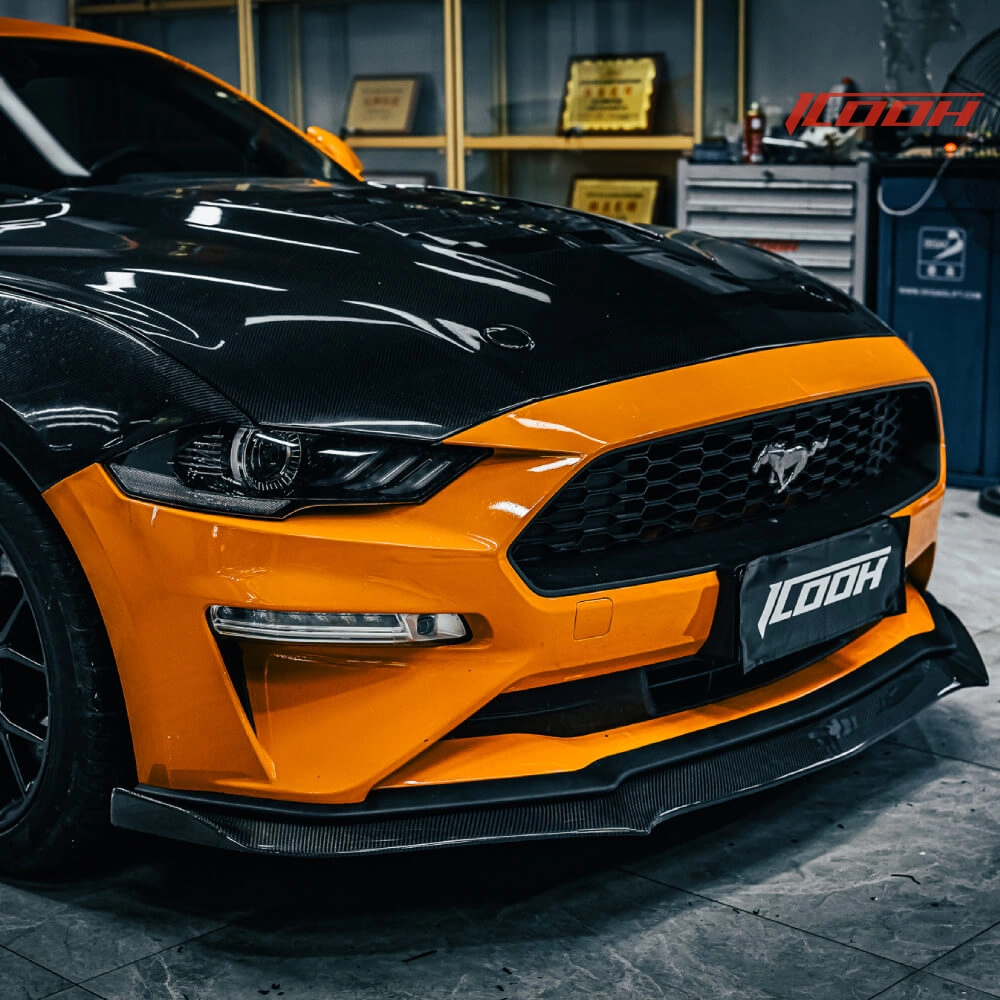
GT350 Ford Mustang 2018-2023 Carbon Fiber Front Lip
Enhance the aerodynamics and style of your Mustang with the 2018–2023 Mustang GT350 Carbon Fiber Front Lip. Crafted from lightweight, high-strength carbon fiber, this front lip delivers improved downforce, sharper front-end appearance, and a precise OEM-style fit.
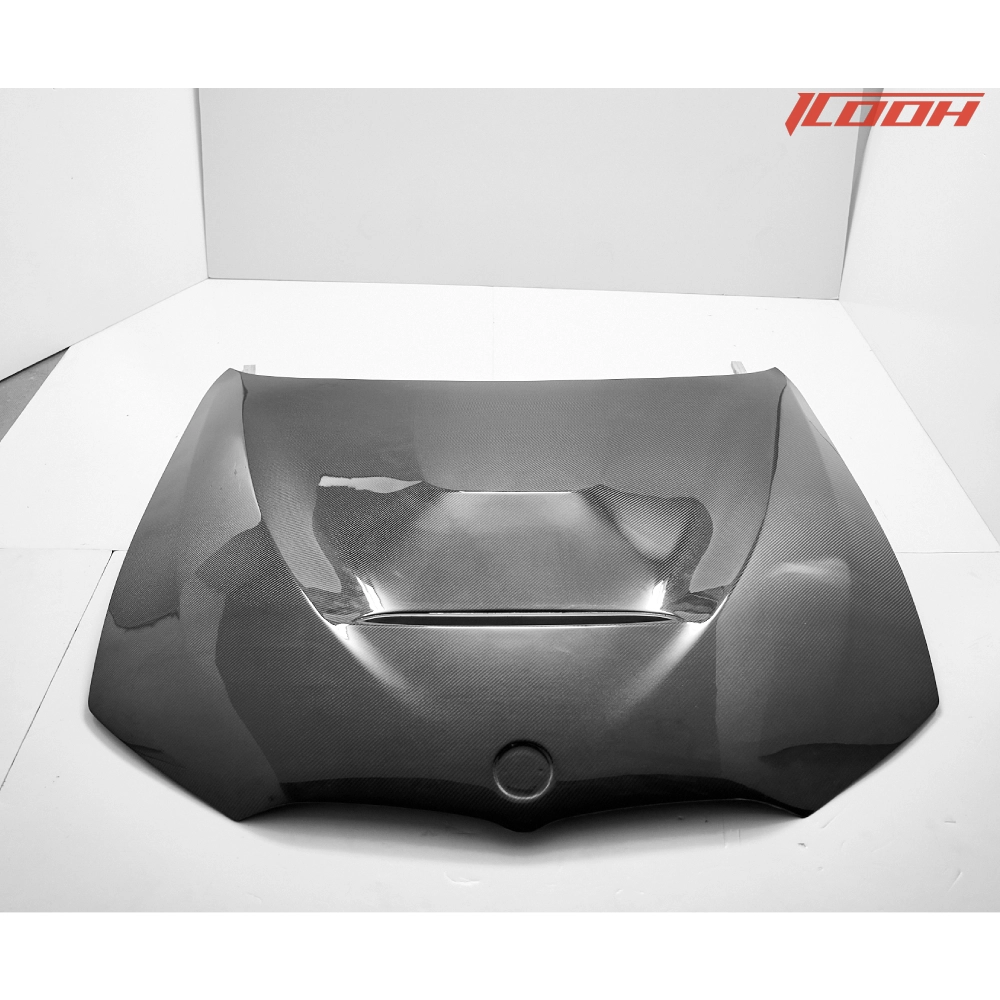
2020-2024 BMW G20 3 Series GTS Style Carbon Fiber Hood
The BMW G20 3 Series GTS-style carbon fiber hood, designed to deliver a lightweight, aggressive, and performance-focused look. Crafted from high-quality carbon fiber, it enhances aerodynamics, improves heat dissipation, and gives your G20 a striking motorsport appearance.

BMW 1 Series F20 GTS style carbon fiber front hood
The BMW 1 Series F20 GTS-style carbon fiber front hood. Made from high-quality carbon fiber, it offers a lightweight, durable construction with improved cooling and a striking performance look. Designed for precise fitment, it enhances both style and aerodynamics for a true motorsport feel.
Lightweight. Durable. Uniquely Yours.
ICOOH is a pioneer in automotive performance and exterior upgrades, compatible with 99% of vehicles worldwide. Let ICOOH be your professional supplier of car tuning parts and performance automotive accessories.
Facebook
Linkedin
Youtube
Instagram