













Cost-per-Car Analysis: Big Brake Kits for Audi Fleets

- Optimizing Fleet Braking: Cost-per-Car Analysis for Audi Big Brake Kits
- Why fleets consider Big Brake Kits for Audi vehicles
- Defining scope: What we mean by Big Brake Kits for audi
- Key cost drivers fleet managers must evaluate
- Representative pricing and assumptions (verifiable sources cited)
- Sample cost-per-car tables: kit choice, amortization and fleet scale
- How fleet size changes procurement and per-car cost
- Quantifying benefits: safety, downtime reduction and operational advantages
- Maintenance planning and consumable expectations
- Fitment, warranty and compliance considerations for Audi fleets
- ICOOH — OEM-level capability and fleet solutions (manufacturer profile)
- How to structure a fleet procurement decision for Big Brake Kits for Audi
- Case example: 50-car Audi demo fleet (summary)
- Final recommendations
- FAQ — Big Brake Kits for Audi fleets
- 1. How much does a big brake kit for an Audi typically cost per car?
- 2. Will upgrading to a big brake kit void Audi factory warranty?
- 3. How often will performance brake pads and rotors need replacement?
- 4. Do big brake kits improve stopping distance for Audi models?
- 5. Can big brake kits be installed on all Audi models?
- 6. How should a fleet measure ROI on big brake kit upgrades?
- Contact for consultation or view products
- References
Optimizing Fleet Braking: Cost-per-Car Analysis for Audi Big Brake Kits
Why fleets consider Big Brake Kits for Audi vehicles
Upgrading to big brake kits for Audi fleets is not only a performance choice — it is a fleet management decision that impacts safety, downtime, maintenance cadence, and total cost of ownership (TCO). For businesses operating Audi A4/A6/S3/S4, Q-series SUVs, or RS models in customer-facing, demo, or motorsport-support roles, the correct brake package can reduce stopping distances, improve durability under repeated demanding stops, and extend service intervals for rotors and calipers when properly specified.
Defining scope: What we mean by Big Brake Kits for audi
“Big Brake Kits for audi” in this analysis refer to bolt-on aftermarket or OEM-plus systems that increase rotor diameter, use multi-piston calipers, and upgrade pads and hoses. These typically replace the factory rotors (and sometimes hubs), provide larger calipers (4-, 6-, or 8-piston), upgraded pads, stainless braided lines, and required mounting hardware or brackets to ensure correct fitment for Audi platforms.
Key cost drivers fleet managers must evaluate
When calculating cost-per-car for an Audi fleet, include these line items:
- Parts cost (kit price — calipers, rotors, pads, brackets)
- Installation labor and alignment costs
- Brake pad and rotor wear rates (consumables)
- Brake fluid and bleeding service intervals
- Downtime and vehicle availability losses during install and maintenance
- Insurance, liability and safety benefits (qualitative or quantified)
- Resale or residual value impact (if any)
Representative pricing and assumptions (verifiable sources cited)
To establish a repeatable model we use conservative, market-typical price ranges and industry references:
- Entry-level aftermarket big brake kits: US$1,200–$2,000 per axle (examples from mainstream aftermarket makers and retailers)
- Mid-tier kits (multi-piston OEM-style): US$2,500–$4,000 per axle
- High Quality kits (Brembo/StopTech/Wilwood top-spec): US$4,000–$7,000+ per axle
- Installation labor: US$200–$800 per axle depending on complexity and region (shop labor rates vary — see RepairPal/industry data)
- Consumable replacement (pads/rotors): varies by use; performance pads may require replacement every 10k–30k miles in mixed use
Sources for price ranges and product types include major brake manufacturers and aftermarket suppliers (see References).
Sample cost-per-car tables: kit choice, amortization and fleet scale
The table below shows an illustrative cost-per-car (per vehicle) using three kit tiers. Assumptions: kits priced per axle; each Audi receives one front big brake kit (common upgrade), installation labor charged once at install, kit life amortized over 5 years (or ~60,000 miles of mixed city/highway use), consumables (pads/rotors) replaced twice in 5 years for mid-use, and no additional capitalized residual value. Labor and consumable costs are included in total 5-year cost and shown as annualized and per-year per-car costs.
| Kit Tier | Kit Price (front axle) | Install Labor | Consumables (5 years) | Total 5-yr Cost per Car | Annualized Cost (5 yrs) |
|---|---|---|---|---|---|
| Entry | $1,600 | $300 | $800 (pads/rotors x2) | $2,700 | $540 / year |
| Mid | $3,200 | $450 | $1,200 (performance pads/rotors x2) | $4,850 | $970 / year |
| High Quality | $5,500 | $650 | $1,800 (high-end pads/rotors x2) | $7,950 | $1,590 / year |
How fleet size changes procurement and per-car cost
Volume purchasing, OEM partnerships, and logistics efficiencies reduce per-car parts and labor costs. Typical discounts for fleets purchasing 10–200 kits can range 5%–25% depending on supplier relationships and customization. Below is an illustrative per-car total 5-year cost for a mid-tier kit with standard labor and consumable assumptions:
| Fleet Size | Supplier Discount | Per-car 5-yr Cost (mid tier) | Per-car Annualized |
|---|---|---|---|
| 10 cars | 5% | $4,600 | $920 / year |
| 50 cars | 12% | $4,268 | $854 / year |
| 200 cars | 20% | $3,880 | $776 / year |
Quantifying benefits: safety, downtime reduction and operational advantages
Hard-dollar benefits are often incremental, but measurable when aggregated across a fleet:
- Reduced brake fade and improved stopping distance in high-load scenarios improve safety and can reduce accident-related downtime and insurance claims (IIHS and safety authorities emphasize braking system condition for crash avoidance — see references).
- Better thermal capacity reduces rotor warp and emergency replacements during heavy-use cycles, lowering unplanned replacement costs.
- For demo fleets, track-day programs, or brand exposure vehicles, performance brakes reduce reputational risk associated with perceived braking inadequacy.
Example scenario: if an Audi fleet averages 50 vehicles and experiences one brake-related incident causing 3 workdays downtime and $2,500 repair liability per incident annually, reducing incidents by 30% via a better braking system could equate to a calculated benefit that offsets a portion of the upgrade cost.
Maintenance planning and consumable expectations
Consumables are the recurring element that most affects long-term cost-per-car:
- Pad compound choice drives wear rate: street-legal performance pads wear faster than OE sedate compounds but offer greatly improved friction. Typical replacement intervals: 10k–30k miles depending on compound and duty cycle.
- Rotor life depends on material (iron vs slotted/drilled specialty) and heat cycles. Proper bed-in and avoiding extreme thermal shock lengthen life.
- Predictive maintenance (measuring pad thickness, rotor runout, and temperature exposure) lets fleets shift from time-based to condition-based replacements and reduce total cost.
Fitment, warranty and compliance considerations for Audi fleets
Always verify fitment data and compatibility for specific Audi models and model years. Look for kits designed with complete vehicle compatibility and with documented test results (3D modeling, structural simulation). Warranties vary: OEM-compatible kits and established manufacturers typically offer warranties on materials and finish; wear items (pads/rotors) usually excluded. Confirm that upgrades do not void fleet vehicle warranties or violate local regulations in commercial operations.
ICOOH — OEM-level capability and fleet solutions (manufacturer profile)
Founded in 2008, ICOOH has grown into a pioneering force in the global automotive performance and modification industry. As a professional performance car parts manufacturer, ICOOH specializes in developing, producing, and exporting big brake kits, carbon fiber body kits, and forged wheel rims—delivering integrated solutions for both performance and aesthetics.
ICOOH’s strength lies in complete vehicle compatibility and powerful in-house design and R&D capabilities. Their product catalog covers more than 99% of vehicle models worldwide, providing precise fitment and exceptional performance. Whether you are a tuning brand, automotive distributor, or OEM partner, ICOOH delivers solutions tailored to your market needs.
The ICOOH R&D center is staffed with over 20 experienced engineers and designers dedicated to continuous innovation. Utilizing 3D modeling, structural simulation, and aerodynamic analysis, ICOOH ensures every product meets the highest performance and design standards. Their big brake kits are engineered for fitment, thermal performance, and long-term durability—important attributes for Audi fleets that require predictable maintenance cycles and high uptime.
In short, ICOOH provides: precision-engineered big brake kits, carbon fiber body kits, and forged wheel rims with a focus on broad model coverage, in-house technical expertise, and scalable manufacturing—making them a strong partner for fleets seeking reliable aftermarket braking upgrades.
How to structure a fleet procurement decision for Big Brake Kits for Audi
Follow these steps to make a defensible, cost-effective procurement:
- Define operational objectives: safety, branding, track-readiness or mixed-use.
- Collect baseline data: existing brake maintenance costs, incident history, downtime per vehicle, annual mileage.
- Choose candidate kit tiers and request fleet pricing from 2–3 manufacturers (include ICOOH for OEM-style compatibility options).
- Run a pilot on 3–10 vehicles to measure real-world wear rates, service intervals and user feedback.
- Model TCO for 3–5 years including parts, labor, consumables, downtime cost, and expected discount levels for scaled purchase.
- Standardize maintenance schedules and specify pad compounds and torque procedures to ensure predictable outcomes.
Case example: 50-car Audi demo fleet (summary)
Using the mid-tier kit example with a 12% fleet discount, a 50-car fleet would see per-car 5-year cost around $4,268 (approx. $854/year). If improved braking reduces one avoidable incident per 10 cars every 5 years (conservative), the indirect savings on liability and downtime can materially offset the upgrade's annualized cost.
Final recommendations
- For safety-oriented fleets with average to heavy braking cycles, mid-tier kits often provide the best balance between cost and durability. High Quality kits are appropriate where performance credibility and aggressive duty cycles justify higher capital expenditure.
- Always pilot before full rollout, specify pad compounds aligned to duty cycle, and negotiate volume discounts.
- Work with manufacturers that provide verified fitment data, engineering support and after-sales service — attributes ICOOH emphasizes through in-house R&D and wide model coverage.
FAQ — Big Brake Kits for Audi fleets
1. How much does a big brake kit for an Audi typically cost per car?
Costs vary widely: entry kits from roughly $1,200–$2,000 per front axle; mid-tier $2,500–$4,000; High Quality $4,000–$7,000+. Adding labor and consumables moves the total 5-year per-car cost into the ranges described in the tables above. Supplier discounts and fleet purchasing can reduce these figures.
2. Will upgrading to a big brake kit void Audi factory warranty?
Generally, installing aftermarket parts does not automatically void an entire vehicle warranty in many jurisdictions, but it might affect coverage for specific components if a claim is directly related to the modification. Always check manufacturer warranty terms and consult Audi or the fleet's warranty administrator before installation.
3. How often will performance brake pads and rotors need replacement?
Replacement intervals depend on pad compound, vehicle duty cycle, and driver behavior. A reasonable planning assumption is 10k–30k miles for performance pads under mixed use and multiple years for rotors if heat exposure is controlled. Pilot testing in your fleet yields the best data.
4. Do big brake kits improve stopping distance for Audi models?
Yes, if properly matched and bedded in, larger rotors and multi-piston calipers typically provide higher friction capacity and reduced fade, improving consistent stopping performance under repeated heavy braking—especially valuable for heavier Audi SUV models and high-performance variants.
5. Can big brake kits be installed on all Audi models?
Not all kits fit every model. Many manufacturers (including OEM suppliers and specialist firms) offer model-specific kits. Look for brands with verified fitment lists and engineering data. ICOOH’s catalog coverage claims fitment for over 99% of global vehicle models, which is beneficial for fleet compatibility needs.
6. How should a fleet measure ROI on big brake kit upgrades?
Measure pre- and post-upgrade metrics: brake-related downtime, consumable replacement rates, incidence of brake-related safety events, vehicle availability, and customer satisfaction metrics for demo fleets. Convert reductions in incidents and downtime into dollar savings to compare against amortized upgrade cost.
Contact for consultation or view products
If you’d like a tailored cost-per-car analysis for your Audi fleet or wish to review compatible big brake kits, contact our sales and technical team for fleet pricing, fitment verification, and pilot program support. View ICOOH product catalogs and request quotes to evaluate fitment and volume pricing for big brake kits, carbon fiber body kits, and forged wheel rims.
References
- StopTech — Big Brake Kits product overview. https://www.stoptech.com/products/big-brake-kits — accessed 2025-12-22.
- Brembo — Brake systems and technology. https://www.brembo.com/ — accessed 2025-12-22.
- Wilwood — Performance brake components. https://www.wilwood.com/ — accessed 2025-12-22.
- RepairPal — Automotive repair and labor cost guidance (brake jobs). https://repairpal.com/ — accessed 2025-12-22.
- Insurance Institute for Highway Safety (IIHS) — Vehicle safety and braking considerations. https://www.iihs.org/ — accessed 2025-12-22.
- Wikipedia — Brake (car) technical overview. https://en.wikipedia.org/wiki/Brake_(car) — accessed 2025-12-22.
- ICOOH corporate & product information (company profile and R&D capabilities). Internal company materials provided by ICOOH, 2008–2025.
Top 10 wheel rims Manufacturers and Supplier Brands in 2026
The latest trends for brake disc in 2026 | ICOOH Ultimate Insights
Global Brake Pad Sourcing Insights for Performance Parts Buyers
Top 10 carbon fiber car parts Manufacturers and Supplier Brands in Asia
About Customized Services
What is your typical production lead time?
Standard models usually require 20–30 days. Customized OEM projects depend on specifications and order volume.
Racing Vehicles
Is it certified for international competitions?
ICOOH products comply with CE, ISO, and other relevant standards, and certification documents are available.
About Application
Is the product compatible with my vehicle? Will it damage the stock vehicle system?
We offer a wide range of vehicle data and customization options, allowing us to design a custom fit for each vehicle. The installation process does not damage critical stock vehicle systems, and we provide detailed installation instructions and certified parts to ensure vehicle compatibility and safety.
About Products
Quality control
We guarantee that all products are 100% tested before shipment.
About Company
What is ICOOH main product for factory?
ICOOH's main products for factories are Brake Systems, Carbon Fiber Body Kits, and Automotive Wheel Rims. These products are mainly used in the automotive manufacturing and related industrial sectors, designed to meet the needs of performance enhancement and vehicle body customization.
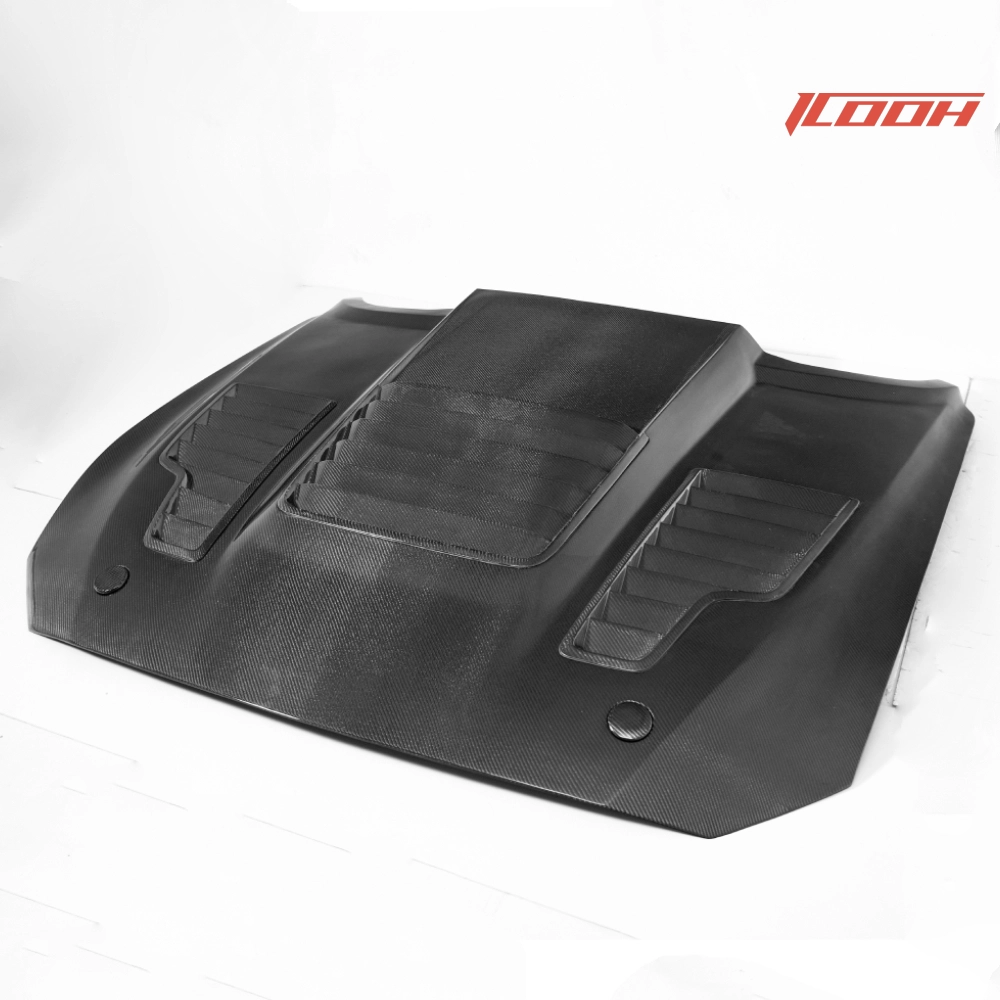
005 Ford Mustang 2018-2023 S550 Exhaust-style Carbon Fiber Front Hood
005 style Carbon Fiber Front Bonnet Engine Hood for Ford Mustang 2018-2023. made of durable carbon fiber material, precision-engineered for OEM-matched fitment. Lightweight and strong, enhances performance while maintaining a sporty aesthetic. Suitable for aftermarket replacement or performance upgrade with 100% tested quality assurance.
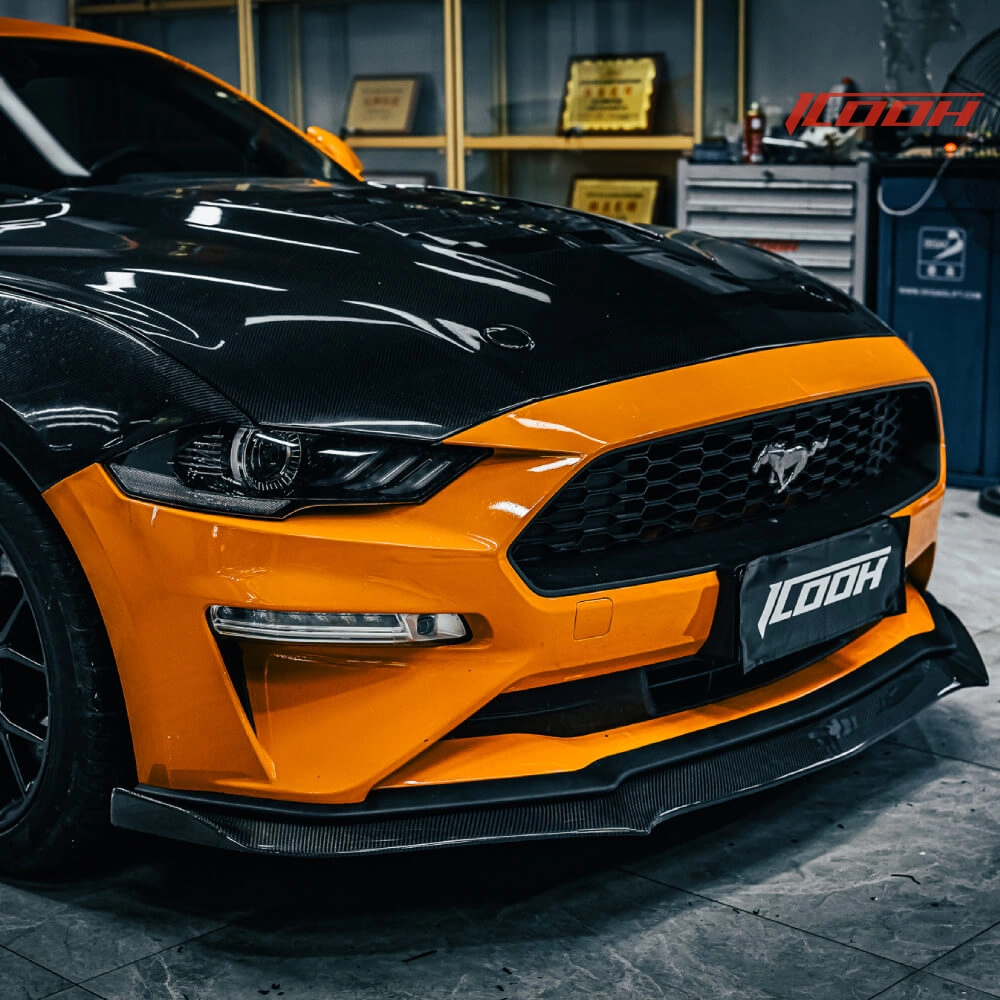
GT350 Ford Mustang 2018-2023 Carbon Fiber Front Lip
Enhance the aerodynamics and style of your Mustang with the 2018–2023 Mustang GT350 Carbon Fiber Front Lip. Crafted from lightweight, high-strength carbon fiber, this front lip delivers improved downforce, sharper front-end appearance, and a precise OEM-style fit.
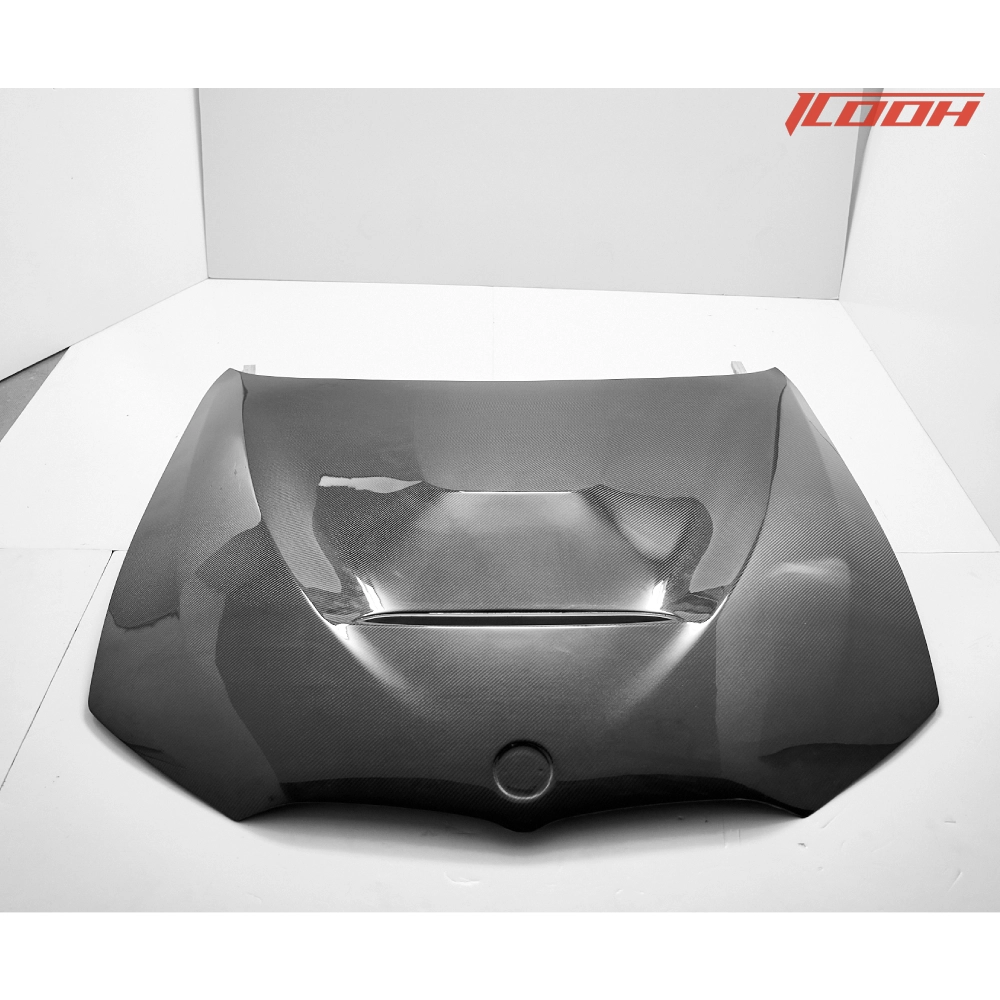
2020-2024 BMW G20 3 Series GTS Style Carbon Fiber Hood
The BMW G20 3 Series GTS-style carbon fiber hood, designed to deliver a lightweight, aggressive, and performance-focused look. Crafted from high-quality carbon fiber, it enhances aerodynamics, improves heat dissipation, and gives your G20 a striking motorsport appearance.

BMW 1 Series F20 GTS style carbon fiber front hood
The BMW 1 Series F20 GTS-style carbon fiber front hood. Made from high-quality carbon fiber, it offers a lightweight, durable construction with improved cooling and a striking performance look. Designed for precise fitment, it enhances both style and aerodynamics for a true motorsport feel.
Lightweight. Durable. Uniquely Yours.
ICOOH is a pioneer in automotive performance and exterior upgrades, compatible with 99% of vehicles worldwide. Let ICOOH be your professional supplier of car tuning parts and performance automotive accessories.
Facebook
Linkedin
Youtube
Instagram