













Compatibility Guide: Big Brake Kits for Popular Models
- Choosing the Right Brake Upgrade for Your Car
- Why Choose Big Brake Kits: Performance and Safety Benefits (Big Brake Kits)
- Key Compatibility Factors When Selecting Big Brake Kits (brake kit compatibility)
- Fitment Checklist: Measure Before You Buy Big Brake Kits (fitment checklist)
- Typical Big Brake Kit Configurations for Popular Models (popular models big brake kits)
- Wheel Clearance and Rim Selection for Big Brake Kits (wheel clearance big brake)
- Common Fitment Issues and How to Solve Them (aftermarket brakes solutions)
- OEM vs Aftermarket Big Brake Kits — Which Is Right? (big brake kits comparison)
- Installation, Maintenance and Thermal Management for Big Brake Kits (brake maintenance)
- ICOOH: Integrated Big Brake Kits and Global Compatibility
- How to Choose ICOOH Solutions for Your Vehicle (contact for big brake kits)
- FAQ
- References
Choosing the Right Brake Upgrade for Your Car
Big Brake Kits have become a common and effective upgrade for drivers who want improved stopping power, fade resistance, and a more assertive look. But “big” alone doesn’t guarantee better braking — compatibility and correct sizing are the keys to safe, reliable performance. This guide explains how to evaluate fitment for popular models, what measurements and technical checks you must perform, typical aftermarket configurations, and how to choose a supplier who can deliver true plug-and-play solutions.
Why Choose Big Brake Kits: Performance and Safety Benefits (Big Brake Kits)
Big brake kits typically upgrade three main components: larger-diameter rotors, multi-piston calipers, and performance pads. The benefits include higher thermal capacity, greater clamping area, and reduced brake fade under repeated heavy use. For track drivers and spirited road use, increasing rotor diameter and caliper piston count produces a measurable improvement in deceleration and consistency: larger rotors provide a longer moment arm to the wheel hub, and more caliper pistons improve pressure distribution over the pad.
These are real-world benefits when the kit is correctly specified and compatible with wheel clearance, hub geometry, and vehicle systems such as ABS and electronic parking brakes. Incorrect fitment can lead to rubbing, ABS faults, or compromised steering feel.
Key Compatibility Factors When Selecting Big Brake Kits (brake kit compatibility)
Before you add a big brake kit to your cart, confirm the following compatibility factors:
- Wheel clearance and minimum wheel diameter (inner spoke clearance, lip-to-caliper distance)
- Rotor-to-hub mounting method (one-piece hat/bell vs. 2-piece conversion)
- Caliper mounting boss or adapter availability for your knuckle
- Wheel stud/bolt pattern and hub bore fitment
- ABS sensor and tone ring compatibility
- Parking brake integration (mechanical or electronic)
- Master cylinder volume and pedal feel changes (may require MC upgrade or bias adjustment)
- Brake line length and hardline routing (longer caliper offset may need longer hoses)
- Thermal management and ducting — ensuring sufficient cooling for larger assemblies
Each of these factors can create a showstopper during installation if overlooked. A thorough compatibility check avoids returns, extra machining, or unsafe compromises.
Fitment Checklist: Measure Before You Buy Big Brake Kits (fitment checklist)
Follow this measurement checklist to verify whether a specific big brake kit will fit your vehicle:
- Measure current rotor diameter and hat/bell offset from hub center to rotor face.
- Measure caliper clearance inside the wheel: measure distance from wheel inner barrel to face of hub and spoke profile.
- Record wheel stud pattern, hub bore, and center cap depth.
- Confirm OEM ABS tone ring position (measure from hub flange to tone ring) and sensor mounting points.
- Check parking brake type — is it integrated in rotor/hardware or caliper-mounted?
- Measure available spindle/knuckle space for caliper bracket and confirm bolt pattern and strength.
- Estimate master cylinder piston area and brake bias; if upgrading significantly, consider a larger MC for consistent pedal travel.
Document each value and provide it to the brake kit supplier or installer to confirm fitment before purchase.
Typical Big Brake Kit Configurations for Popular Models (popular models big brake kits)
The following table summarizes typical aftermarket front brake kit upgrades for commonly modified performance models. Numbers are representative ranges based on aftermarket offerings; final fitment depends on kit design, hub adapters, and wheel choices. Always verify specific kit fitment with the vendor and installer.
| Model | Typical Rotor Diameter (Front) | Typical Caliper Piston Count (Front) | Minimum Wheel Diameter (Typical) | Notes |
|---|---|---|---|---|
| BMW M3 (E90/E92/F80) | 380–394 mm | 6-piston (some kits 4/6) | 19 | Common aftermarket upgrade mirrors OEM M performance sizes; requires correct hub hat. |
| Porsche 911 (991/992) | 380–410+ mm (models vary) | 6–8 piston | 19–20 | High-performance Porsche variants use large rotors and multi-piece designs; fitment tight on Carrera rims. |
| Ford Mustang GT (S550) | 360–380 mm | 4–6 piston | 18–19 | Aftermarket kits commonly upgrade to 6-piston calipers for track use. |
| Subaru WRX / STI | 350–380 mm | 4–6 piston | 17–18 | Smaller hubs often limit maximum rotor size without hat conversion. |
| Honda Civic Type R (FK8) | 350–370 mm | 4–6 piston | 18 | OEM space is limited; many kits require specific wheel offsets. |
| Audi S4 / RS3 | 365–380 mm | 6-piston (RS variants higher) | 19 | Quattro hubs allow robust calipers but check ABS ring compatibility. |
Sources for typical ranges include OEM performance packages and major aftermarket suppliers; specific kit pages and fitment charts should be consulted for exact values (references listed below).
Wheel Clearance and Rim Selection for Big Brake Kits (wheel clearance big brake)
Wheel selection is one of the most frequent reasons a big brake kit will not fit. Caliper width and piston count directly influence required inner clearance and minimum wheel diameter. Use the table below as a starting guideline; individual caliper profiles vary by manufacturer.
| Caliper Type | Typical Max Caliper Outer Diameter / Width | Typical Minimum Wheel Diameter |
|---|---|---|
| 4-piston monobloc | approx. 110–130 mm | 17 |
| 6-piston staggered | approx. 130–160 mm | 18 |
| 8-piston wide-body | approx. 150–180 mm | 19+ |
Practical tip: if your wheels barely clear the stock calipers, a larger kit will likely not fit without switching to wheels with greater inner barrel clearance or different offset. Always dry-fit the wheel over the caliper profile or request a caliper mock-up from the vendor.
Common Fitment Issues and How to Solve Them (aftermarket brakes solutions)
Typical problems and remedies:
- Rubbing between caliper and wheel spokes — remedy: choose wheels with larger inner clearance, use different offset, or slim-caliper kit.
- ABS warning light after installation — remedy: verify tone ring position; some kits include spacers or replacement tone rings.
- Parking brake not engaged — remedy: use rotor with integrated mechanical parking brake hat or install a caliper with electronic-parking-brake actuator compatible with vehicle.
- Incorrect pedal travel / soft brake feel — remedy: bleed system, fit braided stainless lines, or upgrade master cylinder if necessary.
- Hub bearing overload or premature wear — remedy: consider hub adapters/distribution of load; consult installer to confirm bearing load ratings for larger rotor mass.
OEM vs Aftermarket Big Brake Kits — Which Is Right? (big brake kits comparison)
OEM high-performance brake packages (M Performance, Porsche PCCB, RS brakes) are engineered specifically for the vehicle and integrate into ABS, stability control, and parking brake systems. Their advantages are perfect integration, warranty alignment, and tested thermal performance. Aftermarket kits offer cost, variety, aesthetic options, and sometimes superior performance-to-cost ratios, but they require careful compatibility checks and may need additional parts (hats, spacers, hoses).
Choose OEM when you prioritize plug-and-play integration and resale value. Choose aftermarket when you need a specific performance target, custom appearance (colored calipers, slotted/drilled rotors), or budgeted performance gains. For many tuners, a high-quality aftermarket kit from a reputable manufacturer will deliver the best balance of performance and cost — provided the supplier offers precise fitment data and technical support.
Installation, Maintenance and Thermal Management for Big Brake Kits (brake maintenance)
Installation should be performed by an experienced technician. Key items to address during installation and ongoing maintenance:
- Correct torque on caliper and wheel fasteners; use threadlocker where specified.
- Proper bedding-in procedure for new pads and rotors to achieve consistent friction levels (follow pad manufacturer instructions).
- Use high-temperature brake fluid (DOT 4/5.1 racing-grade) and change on a schedule appropriate to use (track use: every 6–12 months depending on frequency).
- Check rotor runout and hat mounting torque to avoid vibration or uneven wear.
- Consider brake cooling ducts or vent upgrades if the vehicle sees sustained high-speed or track use; thermal soak reduces pedal feel and increases stopping distances.
ICOOH: Integrated Big Brake Kits and Global Compatibility
Founded in 2008, ICOOH has grown into a pioneering force in the global automotive performance and modification industry. As a professional performance car parts manufacturer, we specialize in developing, producing, and exporting big brake kits, carbon fiber body kits, and forged wheel rims—delivering integrated solutions for both performance and aesthetics.
ICOOH’s strength lies in complete vehicle compatibility and powerful in-house design and R&D capabilities. Our products cover more than 99% of vehicle models worldwide, providing precise fitment and exceptional performance. Whether you are a tuning brand, automotive distributor, or OEM partner, ICOOH delivers solutions tailored to your market needs.
Our R&D center is staffed with over 20 experienced engineers and designers dedicated to continuous innovation. Utilizing 3D modeling, structural simulation, and aerodynamic analysis, we ensure every product meets the highest performance and design standards. At ICOOH, our mission is to redefine automotive performance and aesthetics through precision engineering and creative innovation.
Why this matters for compatibility: ICOOH’s vertical capabilities (in-house hat designs, CNC machining, and dedicated fitment testing) reduce surprises that commonly occur when mixing aftermarket components from different vendors. If you need a big brake kit solution that is engineered for specific wheel clearances, ABS systems, or parking brake styles, ICOOH’s tailored approach simplifies selection and shortens lead time.
How to Choose ICOOH Solutions for Your Vehicle (contact for big brake kits)
If you’re evaluating a big brake kit, provide ICOOH with the following information to receive a precise quote and fitment confirmation: vehicle VIN, wheel size and offset, current rotor diameter, hub bore, preferred caliper color and finish, and intended use (street/track/competition). ICOOH can supply CAD mock-ups, fitment reports, and compatibility certifications to help you make an informed decision and reduce installation risk.
To learn more about specific models, compatibility, and customization options, contact ICOOH technical sales or request a fitment worksheet via the product catalog.
FAQ
- 1. Will a big brake kit reduce my stopping distance?
- Yes — when properly matched to the vehicle and pads, larger rotors and multi-piston calipers improve heat capacity and clamp force, reducing fade and improving repeated-stop consistency. Actual stopping distance gains depend on tires, brake pad compound, and vehicle weight.
- 2. How do I know if my wheels will fit a big brake kit?
- Measure inner barrel clearance and compare it with the caliper’s maximum depth and outer diameter. Many manufacturers publish minimum wheel diameter and recommended offsets for each kit — use those values as a baseline and perform a dry-fit if possible.
- 3. Do I need new brake lines or a different master cylinder?
- Often you should fit braided stainless steel lines to reduce expansion. A master cylinder upgrade is only necessary when pedal travel becomes excessive or if the kit changes caliper volume significantly; consult an experienced installer for brake bias assessment.
- 4. Can I keep my parking brake with an aftermarket big brake kit?
- Some aftermarket kits include rotor hats or calipers with integrated mechanical parking brake options; others require an electronic or separate parking-brake conversion. Verify with the vendor before ordering.
- 5. Are 2-piece rotors better than 1-piece for big brake kits?
- Two-piece rotors allow a lightweight aluminum hat with a separately replaceable cast or forged friction ring, reducing unsprung mass and easing replacement. They also improve thermal expansion control, which can reduce runout under heat. Costs are typically higher than one-piece rotors.
- 6. How should I bed-in new pads and rotors?
- Follow the pad manufacturer’s recommended bedding procedure — usually a sequence of controlled decelerations from moderate speed to low speed repeated several times, then a cool-down period. Proper bedding establishes an even transfer layer on the rotor for consistent friction.
If you’d like tailored help choosing a big brake kit for your vehicle or want to view ICOOH product options and fitment documentation, contact our technical team or view our product catalog to request a fitment worksheet and CAD fit reports.
References
- Brake (vehicle) — Wikipedia. https://en.wikipedia.org/wiki/Brake_(vehicle) (Accessed 2025-12-17)
- How Car Brakes Work — Car and Driver. https://www.caranddriver.com/features/a15123303/how-car-brakes-work/ (Accessed 2025-12-17)
- Brembo — Official website (technology and product pages). https://www.brembo.com (Accessed 2025-12-17)
- Wheel Fitment Tech — Tire Rack. https://www.tirerack.com/wheels/wheeltech/techpage.jsp?techid=1 (Accessed 2025-12-17)
- Aftermarket brake kit sizing and fitment summaries — manufacturer fitment charts and product pages (refer to specific kit pages for exact fitment data; consult vendors for vehicle-specific confirmation). (Accessed 2025-12-17)
Contact ICOOH for product specifics, CAD fitment files, and a complete compatibility assessment for your vehicle.
The latest trends for big brake kits in 2026 | ICOOH Ultimate Insights
The latest trends for wheel rims in 2026 | ICOOH Ultimate Insights
Best wheel rims manufacturers and supplier brands in 2026
Top 10 big brake kits Manufacturers and Supplier Brands in Asia
About Company
What is ICOOH main product for factory?
ICOOH's main products for factories are Brake Systems, Carbon Fiber Body Kits, and Automotive Wheel Rims. These products are mainly used in the automotive manufacturing and related industrial sectors, designed to meet the needs of performance enhancement and vehicle body customization.
About Customized Services
Can the brake kits be sold under our own brand?
Absolutely. We support full OEM and private label branding, including logo engraving, packaging, and documentation.
Off-Road Vehicles
Which off-road vehicles are suitable?
It is compatible with SUVs, pickup trucks, and various off-road adventure-adapted vehicles, and customization is available.
ICOOH IC6
How do I choose the right product?
Please send us an inquiry or contact us through TradeManager and provide your vehicle model and year of production. We will provide you with the right product as soon as possible after receiving your information.
GT500
Do you make custom parts for my car?
We are able to make most parts in carbon fiber. We are interested in custom jobs in the form of special orders with quantity.
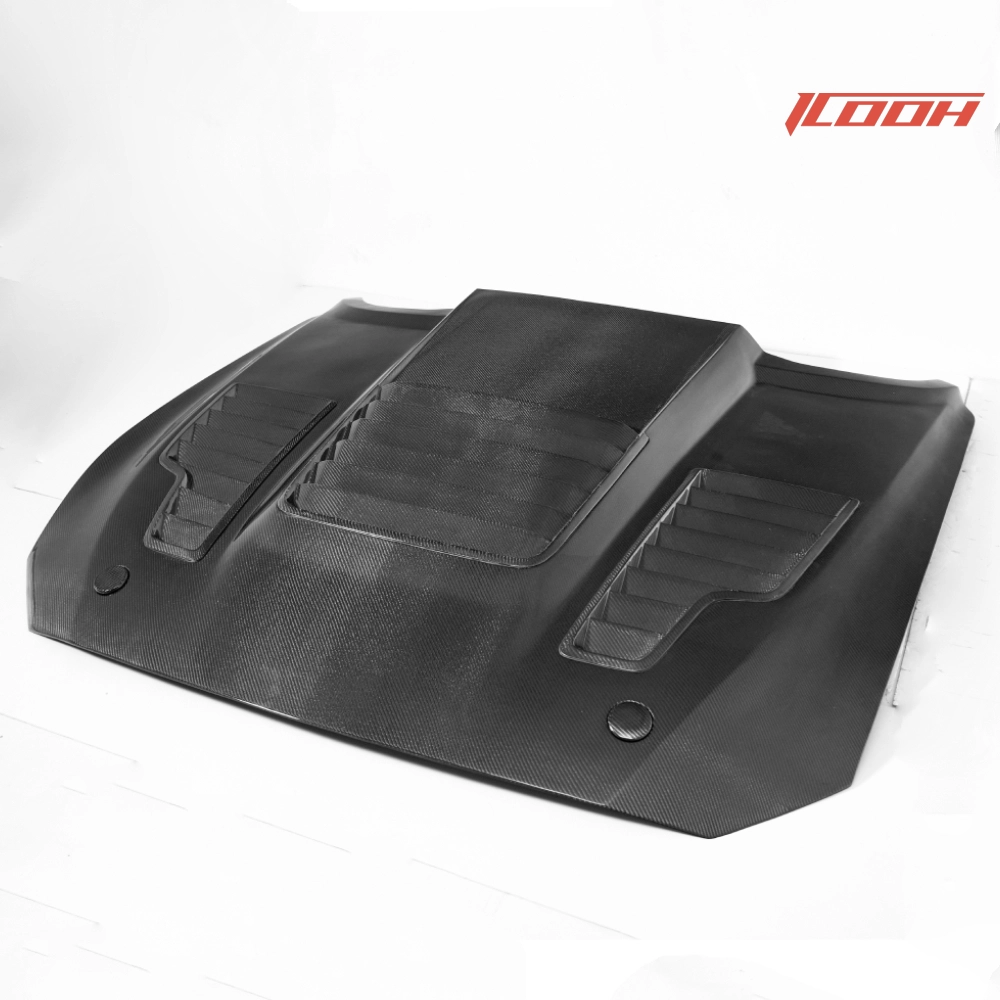
005 Ford Mustang 2018-2023 S550 Exhaust-style Carbon Fiber Front Hood
005 style Carbon Fiber Front Bonnet Engine Hood for Ford Mustang 2018-2023. made of durable carbon fiber material, precision-engineered for OEM-matched fitment. Lightweight and strong, enhances performance while maintaining a sporty aesthetic. Suitable for aftermarket replacement or performance upgrade with 100% tested quality assurance.
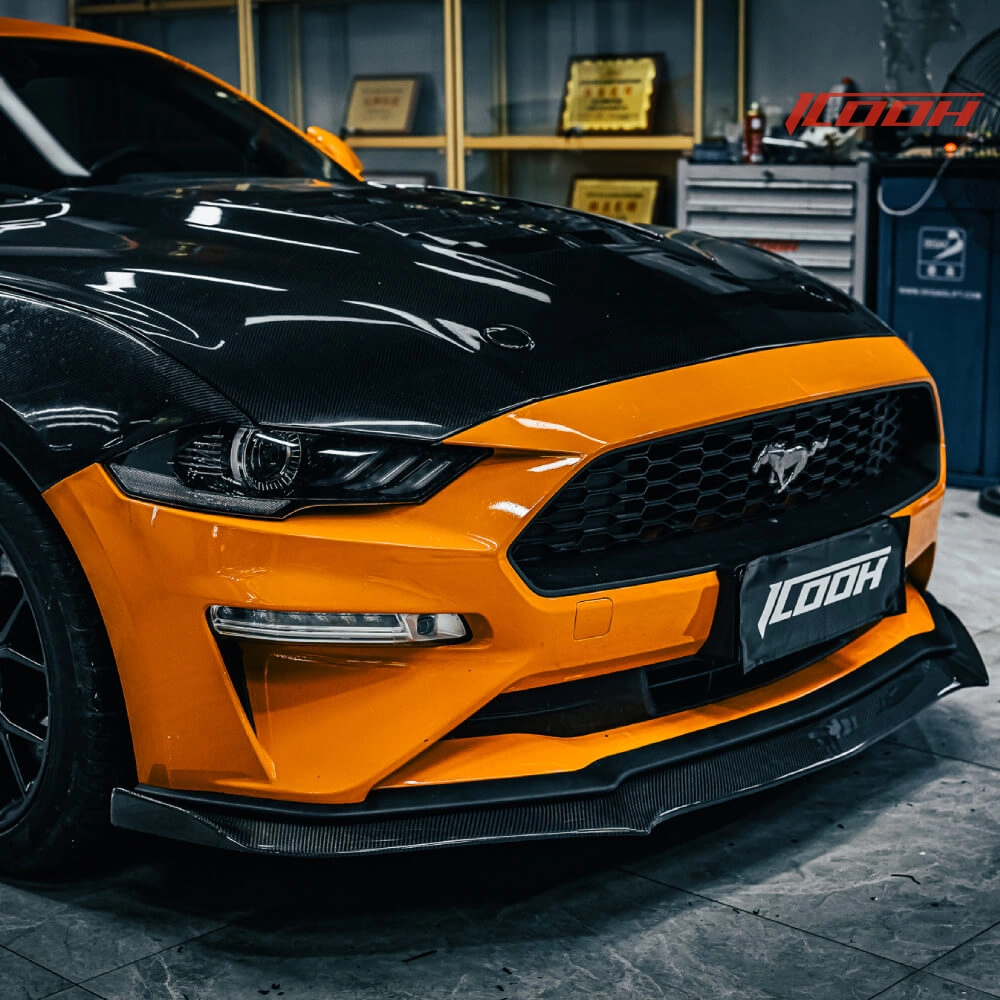
GT350 Ford Mustang 2018-2023 Carbon Fiber Front Lip
Enhance the aerodynamics and style of your Mustang with the 2018–2023 Mustang GT350 Carbon Fiber Front Lip. Crafted from lightweight, high-strength carbon fiber, this front lip delivers improved downforce, sharper front-end appearance, and a precise OEM-style fit.
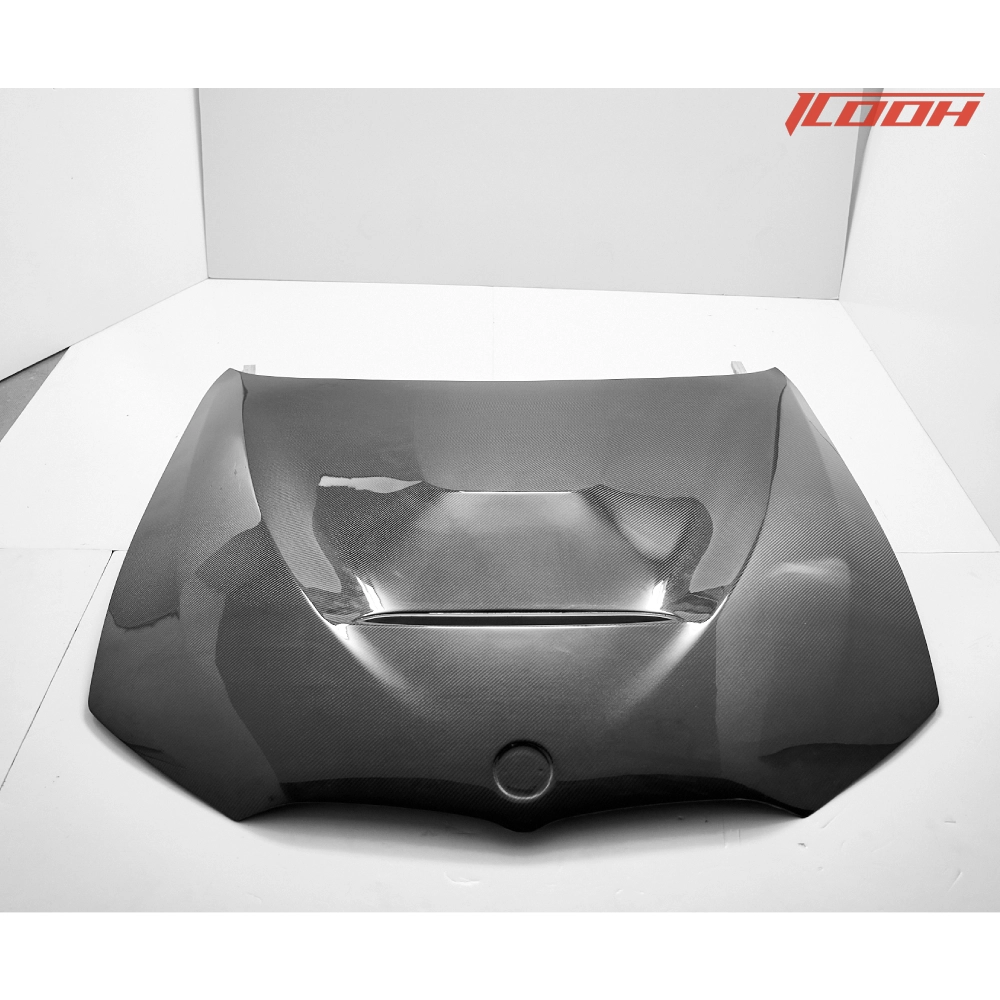
2020-2024 BMW G20 3 Series GTS Style Carbon Fiber Hood
The BMW G20 3 Series GTS-style carbon fiber hood, designed to deliver a lightweight, aggressive, and performance-focused look. Crafted from high-quality carbon fiber, it enhances aerodynamics, improves heat dissipation, and gives your G20 a striking motorsport appearance.

BMW 1 Series F20 GTS style carbon fiber front hood
The BMW 1 Series F20 GTS-style carbon fiber front hood. Made from high-quality carbon fiber, it offers a lightweight, durable construction with improved cooling and a striking performance look. Designed for precise fitment, it enhances both style and aerodynamics for a true motorsport feel.
Lightweight. Durable. Uniquely Yours.
ICOOH is a pioneer in automotive performance and exterior upgrades, compatible with 99% of vehicles worldwide. Let ICOOH be your professional supplier of car tuning parts and performance automotive accessories.
Facebook
Linkedin
Youtube
Instagram