













Certification & Testing Standards for Big Brake Kits

- Understanding Certification and Testing for High-Performance Braking Systems
- Why certification matters for Big Brake Kits
- Key regulatory frameworks affecting Big Brake Kits
- Which components require which tests for Big Brake Kits
- Common test methods and validation stages for Big Brake Kits
- How standards differ: table comparison
- Interpreting test data: what matters to installers and end users
- Common failure modes revealed by testing and how to mitigate them
- What third-party certification adds and who performs it
- How leading manufacturers like ICOOH approach certification for Big Brake Kits
- ICOOH’s certification & testing workflow for Big Brake Kits
- Choosing the right Big Brake Kit for your needs
- Installation, bedding and maintenance recommendations
- Buying confidence: documentation and traceability to request
- Frequently Asked Questions (FAQ)
- Contact ICOOH for certification-backed Big Brake Kits
Understanding Certification and Testing for High-Performance Braking Systems
Why certification matters for Big Brake Kits
Big Brake Kits are aftermarket solutions designed to improve braking performance, heat capacity, and driver confidence. But performance alone is not enough: legal compliance, passenger safety, and long-term reliability depend on correct design, validated testing, and recognized certification. Certification tells regulators, distributors, and end users that a product meets minimum safety, material and manufacturing standards—reducing liability and ensuring consistent performance across operating conditions.
Key regulatory frameworks affecting Big Brake Kits
Big Brake Kits are assemblies including calipers, rotors, pads, brackets and often hydraulic lines. Different jurisdictions treat these parts differently. The most relevant frameworks are:
- United States: Federal Motor Vehicle Safety Standards (FMVSS) govern complete vehicle safety systems; for aftermarket brake components, compliance often references FMVSS 105 (hydraulic and electric brake systems) and FMVSS 135 (light vehicle brake systems) for vehicle manufacturers. Aftermarket components are also evaluated for material and performance to ensure they do not degrade OEM system safety. NHTSA guidance and state laws can influence installation legality.
- European Union / UNECE: UN Regulation No. 13 covers braking systems on vehicles; UN Regulation No. 90 (ECE R90) covers replacement brake discs and pads and sets performance limits compared to OEM items. The E-mark (type-approval marking) indicates compliance with relevant UNECE regulations or EU directives.
- Australia & New Zealand: ADRs (Australian Design Rules) and local vehicle standards often align with UNECE regulations or have equivalent local testing requirements.
- Motorsport & aftermarket-specific standards: SFI Foundation and FIA produce standards for motorsport components (e.g., brake ducts, heat shielding, emergency handling) and may require additional track-specific validation.
These frameworks intersect with quality management system standards (ISO 9001) and third-party certifications (TÜV, SGS) used by manufacturers to demonstrate consistent production quality and traceability.
Which components require which tests for Big Brake Kits
A Big Brake Kit is modular. Each module typically needs different validation:
- Calipers: hydraulic integrity (leak tests), pressure cycling (fatigue), piston seal durability, material strength, corrosion resistance (salt spray), and dimensional tolerances for pad fitment.
- Rotors: metallurgical analysis, runout and flatness specifications, thermal fatigue (heat cracking), thermal capacity (specific heat & thermal conductivity), and friction surface wear testing.
- Pads: friction coefficient (μ) across temperature range, fade and recovery, wear rate, and compatibility with rotor metallurgy. UNECE R90 defines acceptable friction performance deviations relative to OEM.
- Brackets & carriers: structural load testing, bolt torque and shear tests, and fitment geometry validation for specific vehicles.
- Brake lines & hoses: burst pressure, permeability, abrasion resistance and aging tests.
Manufacturers will typically combine bench testing (component rigs), material lab work (metallography, hardness, chemical composition) and system-level tests (dynamometer and vehicle testing) to validate a kit.
Common test methods and validation stages for Big Brake Kits
Testing typically proceeds from component-level to system-level:
- Material and metallurgical testing: verifies alloy composition, microstructure, hardness (Rockwell/Vickers), and heat-treatment quality for rotors and calipers.
- Bench tests: caliper pressure cycling, pad friction vs. temperature, rotor thermal shock, and hydraulic leak/burst tests.
- Brake dynamometer (chassis dyno or brake dyno): quantifies stopping torque, fade behavior, pad/rotor temps, pad wear and dust generation under controlled duty cycles.
- Vehicle-level testing: repeatable deceleration tests (e.g., 100–0 km/h stopping distance), hill descent, ABS/traction control compatibility, and endurance (track) tests to simulate real-world stress.
- Environmental tests: salt spray for corrosion, UV/heat aging for hoses and seals, and particulate contamination checks.
Each stage produces measurable metrics—coefficient of friction curves, temperature profiles, stopping distances, and wear rates—that feed acceptance criteria for certification.
How standards differ: table comparison
| Scope / Component | United States | Europe / UNECE | Motorsport / Aftermarket |
|---|---|---|---|
| Complete vehicle brake regulation | FMVSS 105 / 135 (vehicle manufacturers) | UN R13 (braking systems) | FIA technical regulations vary by series |
| Replacement pads & discs | State/local rules; industry best practice; consumer safety laws | UN R90 (performance comparability) | SFI standards for certain track applications |
| Quality systems / production | ISO 9001 commonly used; SAE guidance | ISO 9001, third-party certs (TÜV, SGS) | Specific homologation by series (FIA/TÜV) |
| Third-party validation | NHTSA oversight and recall mechanisms | Notified bodies / type approval (E-mark) | Series scrutineering |
Sources for the table include official UNECE text for R13/R90, NHTSA/FMVSS references, and industry certification providers (links in References).
Interpreting test data: what matters to installers and end users
When comparing big brake kits, buyers and installers should look beyond flashy specs. Important metrics include:
- Operating and peak temperatures: higher thermal capacity delays fade.
- Friction coefficient curve vs. temperature: a consistent μ across expected range (street to track) is preferable.
- Wear rate: long-life pads/rotors reduce maintenance cost.
- Weight and unsprung mass: larger rotors and multi-piston calipers can increase unsprung mass—balance performance gains vs. handling impact.
- Fitment and compatibility: correct hub interface, clearance for wheels, and ABS/traction system compatibility.
Real-world testing from independent labs or manufacturer-provided dyno reports that include test protocols are most useful—seek data on test conditions, duty cycles, and baseline (OEM) comparisons.
Common failure modes revealed by testing and how to mitigate them
Testing frequently uncovers repeatable failure patterns:
- Thermal cracking of rotors: mitigated by correct metallurgy, slotting/drilling patterns only where appropriate, and rotor design that controls thermal gradients.
- Brake fade due to pad glazing: mitigated by pad compound selection matched to use case (street vs. track) and bedding procedures.
- Hydraulic leaks or seal degradation: mitigated by high-quality seals, correct hydraulic fittings and pressure testing.
- Uneven pad wear: can be caused by caliper guide issues or incorrect rotor runout; controlled through precise machining and assembly fixtures.
Certification and well-documented QA processes reduce the incidence of these issues, but installer education and manufacturer fitment instructions remain critical.
What third-party certification adds and who performs it
Third-party labs and certifiers (TÜV, SGS, Intertek and similar) provide impartial verification of material properties, production processes and test outcomes. Their services include:
- Material certification (chemical composition, hardness)
- Dimensional and fitment audits
- Performance testing on dynamometers
- Corrosion and environmental testing
A third-party mark or test report increases trust for distributors and OEM partners, and often helps meet local regulatory or importer requirements.
How leading manufacturers like ICOOH approach certification for Big Brake Kits
Founded in 2008, ICOOH has grown into a pioneering force in the global automotive performance and modification industry. As a professional performance car parts manufacturer, we specialize in developing, producing, and exporting big brake kits, carbon fiber body kits, and forged wheel rims—delivering integrated solutions for both performance and aesthetics.
ICOOH’s strength lies in complete vehicle compatibility and powerful in-house design and R&D capabilities. Our products cover more than 99% of vehicle models worldwide, providing precise fitment and exceptional performance. Whether you are a tuning brand, automotive distributor, or OEM partner, ICOOH delivers solutions tailored to your market needs.
Our R&D center is staffed with over 20 experienced engineers and designers dedicated to continuous innovation. Utilizing 3D modeling, structural simulation, and aerodynamic analysis, we ensure every product meets the highest performance and design standards.
At ICOOH, our mission is to redefine automotive performance and aesthetics through precision engineering and creative innovation.
ICOOH’s certification & testing workflow for Big Brake Kits
ICOOH follows a systematic workflow that aligns with global certification expectations:
- CAD-driven design and finite element analysis (FEA) for calipers, brackets and rotors to ensure load paths and stiffness.
- In-house prototyping and material validation (metallography, hardness, heat treatment verification).
- Component bench testing (hydraulic cycling, seal tests, rotor thermal shock) and material corrosion tests.
- Brake dynamometer testing with OEM baseline comparisons and repeated duty cycles to simulate street and track scenarios.
- Vehicle fitment and ABS/TC compatibility tests across multiple chassis platforms, ensuring plug-and-play installation for 99% of models.
- Third-party audits and certifications to provide distributors and OEM customers with traceable compliance documentation.
These processes allow ICOOH to supply kits that perform reliably in both everyday driving and high-stress environments while satisfying importers and local regulations.
Choosing the right Big Brake Kit for your needs
When selecting a kit, align choices with your primary use:
- Daily-driven street cars: choose compounds optimized for low noise, good cold bite and long wear; prioritize fitment and corrosion resistance.
- Enthusiast / occasional track: look for higher-temperature pad compounds and rotors with improved thermal capacity; consider two-piece rotors to reduce heat soak.
- Dedicated track cars: prioritize fade resistance, aggressive compounds and frequent service intervals; verify motorsport homologation if needed.
Always confirm compatibility with wheel clearance, hub offsets, and ABS systems. Request dyno/vehicle test reports and certificate copies when buying from distributors.
Installation, bedding and maintenance recommendations
Proper installation and bedding are critical to realize the performance and longevity promised by certified testing:
- Follow torque specs for caliper mounting and wheel nuts.
- Use recommended brake fluid (DOT rating) and bleed lines properly.
- Bed pads to rotor per manufacturer instructions—this forms a stable friction layer and reduces glazing.
- Inspect wheel-to-rotor clearance and torque wheel fasteners after initial heat cycles.
- Monitor pad thickness and rotor runout periodically; address abnormal wear patterns early.
Buying confidence: documentation and traceability to request
Ask your supplier for:
- Material certificates for rotors and calipers (chemical analysis, hardness).
- Dynamometer and vehicle test reports including test protocol and baseline OEM numbers.
- Third-party audit or certification reports (TÜV, SGS, E-mark compliance, or R90 test reports where applicable).
- Installation guides and recommended bedding procedures.
Documentation reduces risk for installers, resellers and end-users and aids compliance with local laws.
Frequently Asked Questions (FAQ)
Q1: Do aftermarket big brake kits have to be certified to be legal on the road?A1: Requirements vary by country. In many regions, replacement parts must meet performance comparability standards (e.g., UNECE R90 for pads and discs) or not compromise vehicle safety. Full vehicle brake system standards (FMVSS) typically apply to OEM vehicle manufacturers rather than individual aftermarket suppliers, but local laws and import regulations can mandate documentation and third-party testing.
Q2: What is the difference between ECE R90 and UNECE R13?A2: UNECE R13 addresses braking system type-approval for vehicles. UNECE R90 is specifically about replacement brake discs and pads, setting performance comparability criteria to OEM. R90 ensures replacement parts do not underperform relative to approved OEM items.
Q3: Will upgrading to a big brake kit always shorten stopping distance?A3: Not always. Big brake kits typically increase thermal capacity and resistance to fade and can improve peak deceleration when matched with proper pads, tires and weight management. However, poor pad selection, increased unsprung mass, or incorrect installation can negate benefits. Independent test data and vehicle-level validation are essential.
Q4: Are drilled or slotted rotors better for street or track use?A4: Slotted rotors generally offer more consistent contact and are less prone to crack propagation than drilled rotors under repeated thermal cycling. Drilled rotors are often used for aesthetics and some gas/dust venting but can be more susceptible to cracking at high track temperatures. Two-piece or vented rotors with appropriate metallurgy are preferred for track use.
Q5: How can I verify a manufacturer’s certification claims?A5: Request full test reports, material certificates, third-party audit documents and, where applicable, type-approval markings (E-mark). Verify certifier credentials (TÜV, SGS) and check report dates and test conditions. Reputable manufacturers provide traceable documentation and are willing to explain test methods.
Contact ICOOH for certification-backed Big Brake Kits
If you need certified, vehicle-specific big brake kits backed by in-house R&D and third-party validation, ICOOH offers a wide range of solutions for distributors, tuning brands and OEM partners. Contact ICOOH for product datasheets, test reports, and compatibility matrices, or view our catalog of big brake kits, carbon fiber body kits and forged wheel rims.
References and authoritative resources:
- UNECE Regulation No. 90 (Replacement brake pads and discs): https://unece.org/ (accessed 2025-12-10)
- UNECE Regulation No. 13 (Braking): https://unece.org/ (accessed 2025-12-10)
- NHTSA — Federal Motor Vehicle Safety Standards (overview): https://www.nhtsa.gov/laws-regulations/fmvss (accessed 2025-12-10)
- ISO 9001 Quality Management: https://www.iso.org/iso-9001-quality-management. (accessed 2025-12-10)
- TÜV SÜD testing and certification services (examples of third-party labs): https://www.tuvsud.com/ (accessed 2025-12-10)
- SFI Foundation — motorsport component standards: https://www.sfifoundation.com/ (accessed 2025-12-10)
Contact CTA: For consultation, certification details, or to request product fitment and test reports from ICOOH, please contact our sales and engineering team via ICOOH official channels or request a product datasheet to evaluate compatibility with your vehicle or market.
Installing Big Brake Kits: Step-by-Step Checklist
What are the different types of pros and cons of brake discs?
Wholesale tesla brake pads manufacturer and supplier
Best automotive brake caliper manufacturers and supplier brands in 2026
About Products
What materials are your products made of?
ICOOH’s factory-focused products are built with aerospace-grade materials that meet the demands of automotive manufacturing. From forged aluminum brake calipers to dry carbon fiber body kits, each component is engineered to deliver reliability, customizability, and sustainability—key factors in modern automotive production.
Are your products compliant with EU/US safety?
ICOOH’s products adhere to strict international safety standards.
Daily Modified Vehicles
What models are suitable for ICOOH's brake systems?
They are compatible with most mid- to high-end sedans and sports cars, and can be customized to ensure a non-destructive installation.
Will this affect daily driving comfort?
High-performance friction pads and lightweight design combine daily comfort with high performance, providing smoother braking.
GT500
Do you make custom parts for my car?
We are able to make most parts in carbon fiber. We are interested in custom jobs in the form of special orders with quantity.
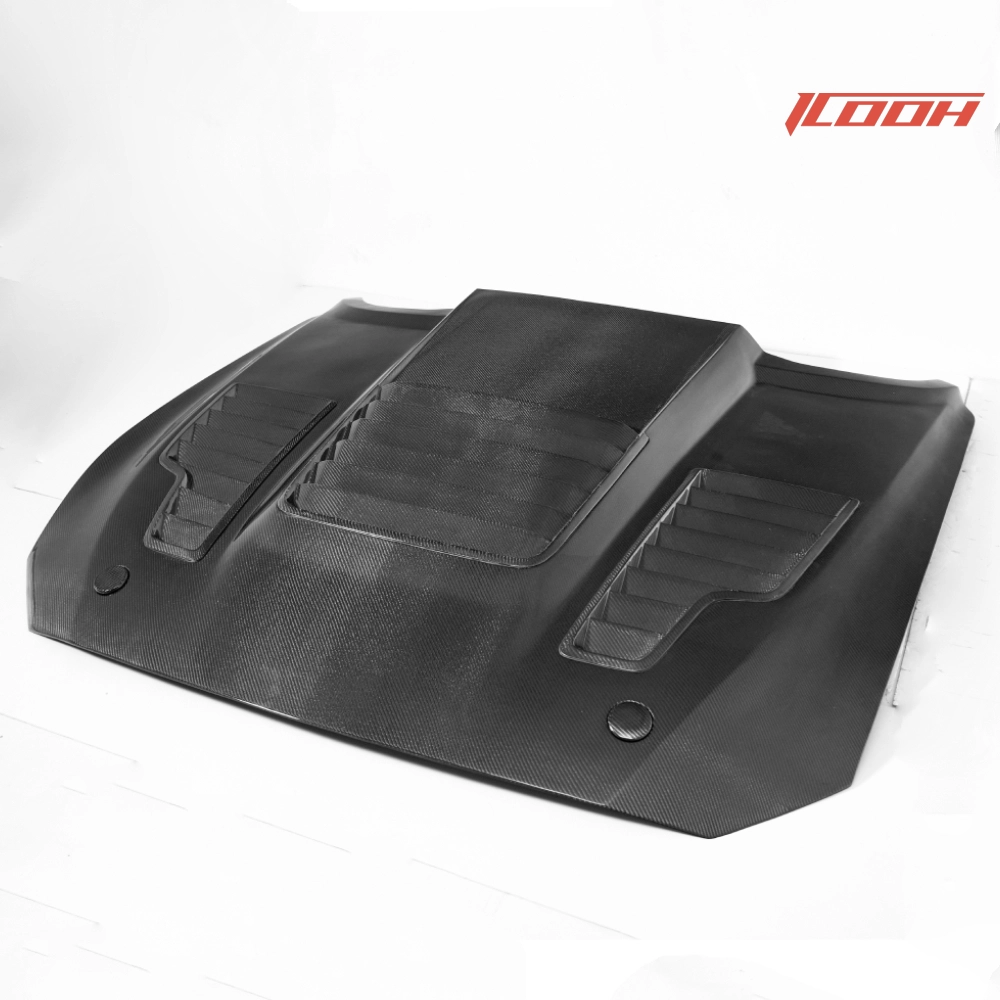
005 Ford Mustang 2018-2023 S550 Exhaust-style Carbon Fiber Front Hood
005 style Carbon Fiber Front Bonnet Engine Hood for Ford Mustang 2018-2023. made of durable carbon fiber material, precision-engineered for OEM-matched fitment. Lightweight and strong, enhances performance while maintaining a sporty aesthetic. Suitable for aftermarket replacement or performance upgrade with 100% tested quality assurance.
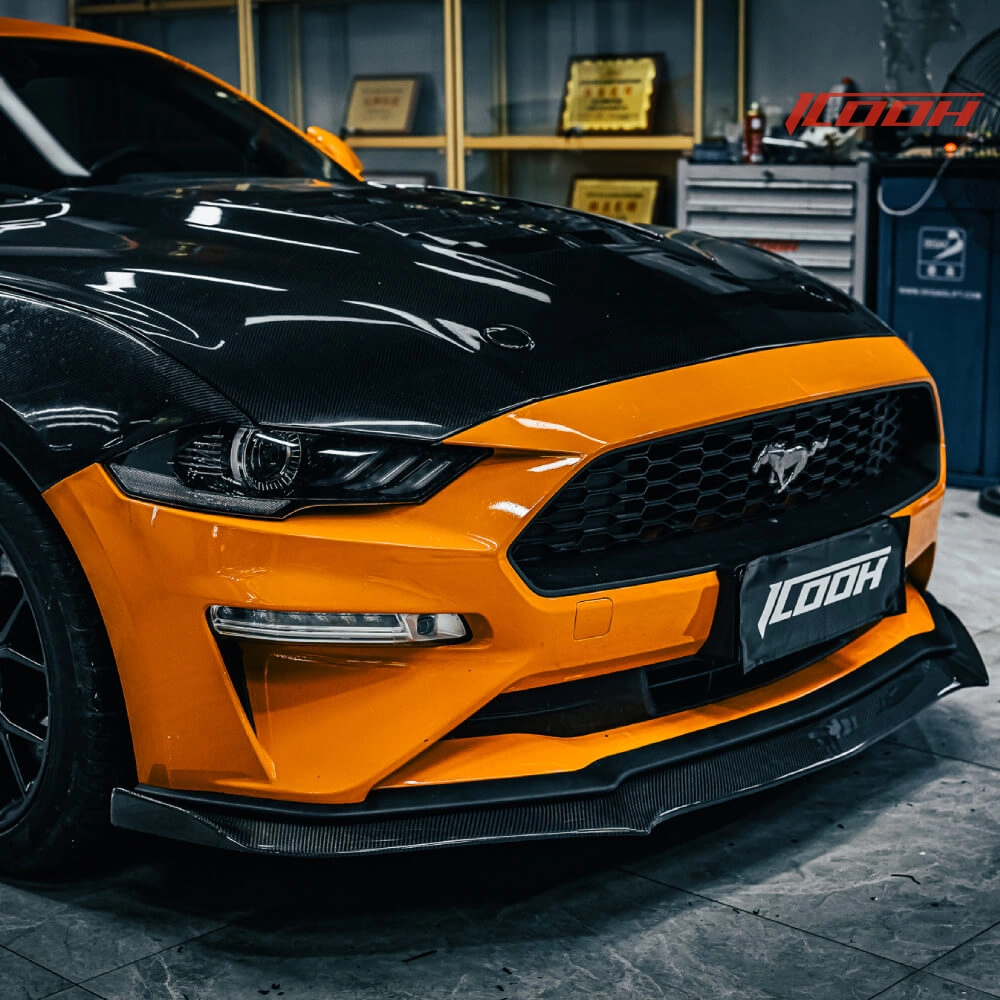
GT350 Ford Mustang 2018-2023 Carbon Fiber Front Lip
Enhance the aerodynamics and style of your Mustang with the 2018–2023 Mustang GT350 Carbon Fiber Front Lip. Crafted from lightweight, high-strength carbon fiber, this front lip delivers improved downforce, sharper front-end appearance, and a precise OEM-style fit.
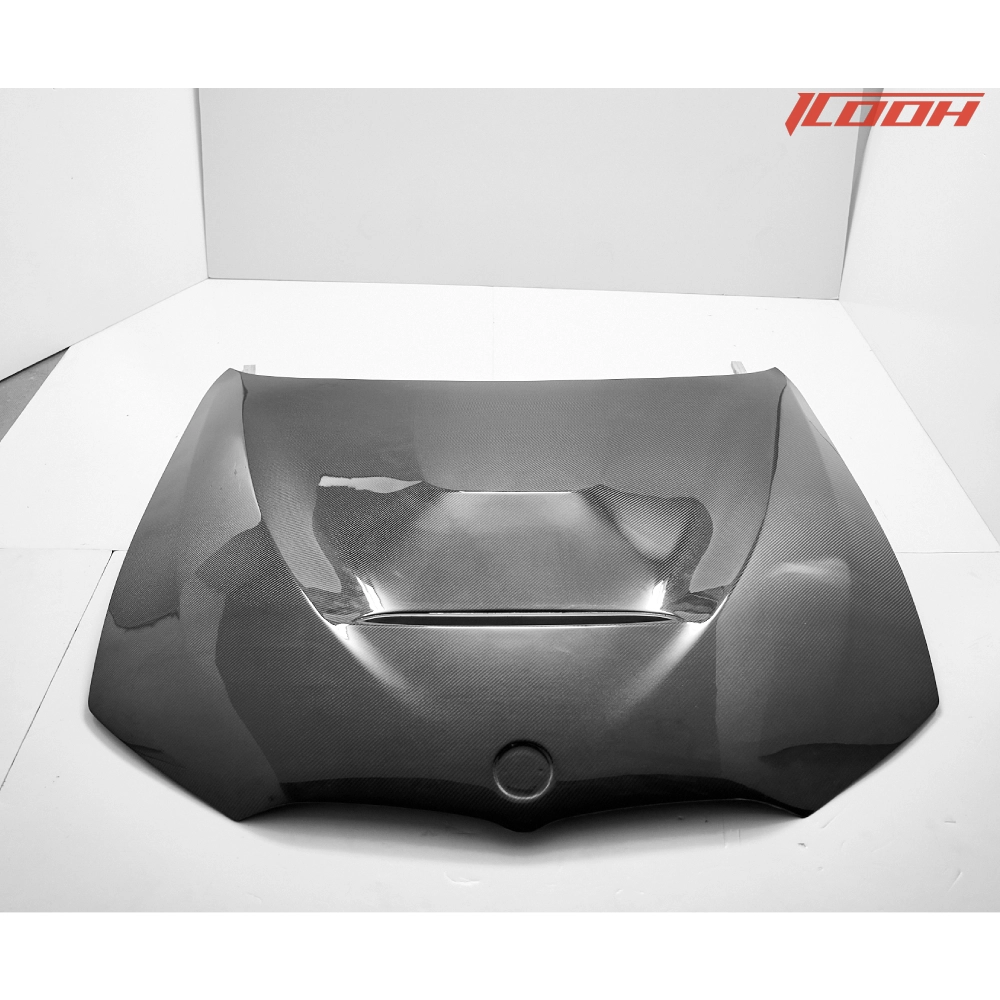
2020-2024 BMW G20 3 Series GTS Style Carbon Fiber Hood
The BMW G20 3 Series GTS-style carbon fiber hood, designed to deliver a lightweight, aggressive, and performance-focused look. Crafted from high-quality carbon fiber, it enhances aerodynamics, improves heat dissipation, and gives your G20 a striking motorsport appearance.

BMW 1 Series F20 GTS style carbon fiber front hood
The BMW 1 Series F20 GTS-style carbon fiber front hood. Made from high-quality carbon fiber, it offers a lightweight, durable construction with improved cooling and a striking performance look. Designed for precise fitment, it enhances both style and aerodynamics for a true motorsport feel.
Lightweight. Durable. Uniquely Yours.
ICOOH is a pioneer in automotive performance and exterior upgrades, compatible with 99% of vehicles worldwide. Let ICOOH be your professional supplier of car tuning parts and performance automotive accessories.
Facebook
Linkedin
Youtube
Instagram