





MOQ, Lead Times and Pricing for Big Brake Kits for BMW
- Understanding Supply Variables for BMW Big Brake Upgrades
- Why MOQ, lead time and pricing matter when sourcing Big Brake Kits for BMW
- Typical MOQs for Big Brake Kits for BMW and why they vary
- MOQ definitions and industry norms for performance brake kits
- Typical MOQ ranges
- Lead times: production stages from prototype to delivery for BMW big brake kits
- Breakdown of typical lead-time components
- Typical overall lead-time scenarios
- Pricing structure for Big Brake Kits for BMW: component-level drivers
- What determines the price of a big brake kit?
- Price range comparison table for BMW applications
- How volume (MOQ) impacts pricing and supplier negotiation
- Economies of scale and per-unit pricing
- Negotiation levers to reduce cost or MOQ
- How to shorten lead times without paying a High Quality
- Practical steps
- Comparing suppliers: a quick checklist for sourcing Big Brake Kits for BMW
- Supplier evaluation criteria with procurement intent keywords
- Why choose a vertically integrated supplier: ICOOH’s value proposition
- ICOOH capabilities in Big Brake Kits for BMW
- How ICOOH addresses MOQ, lead time and pricing
- Sample procurement scenarios: recommendations for different buyer types
- Distributor or e-commerce retailer
- Tuning shop or installer
- OEM or private-label partner
- Risk management: certifications, warranty and quality assurance
- Essential tests and approvals to request
- FAQ — common buyer questions about Big Brake Kits for BMW
- 1. What is a reasonable MOQ for a custom BMW big brake kit?
- 2. How long does it take from order to delivery for a new BMW big brake kit?
- 3. How much do big brake kits for BMW typically cost?
- 4. Can I reduce MOQ or lead time by compromising on features?
- 5. Should I prioritize price or quality when sourcing braking systems?
- 6. What shipping methods are best for time-sensitive orders?
- 7. How do I verify fitment for a specific BMW model?
- Contact ICOOH — discuss MOQ, lead times or request a quote
- References and further reading
Understanding Supply Variables for BMW Big Brake Upgrades
Why MOQ, lead time and pricing matter when sourcing Big Brake Kits for BMW
For distributors, tuners, and OEM partners, the decision to source Big Brake Kits for BMW isn’t just about product fitment and performance — it’s a supply-chain decision. Minimum order quantities (MOQ), lead times (prototype, production, shipping, and certifications), and transparent pricing determine inventory risk, cash flow, and time-to-market. This article explains realistic expectations, provides comparative data, and gives actionable steps to reduce cost and time without sacrificing fitment or safety.
Typical MOQs for Big Brake Kits for BMW and why they vary
MOQ definitions and industry norms for performance brake kits
MOQ (minimum order quantity) is the smallest purchase volume a manufacturer accepts per SKU. For Big Brake Kits for BMW, MOQs vary with production method, component complexity, and whether the item is a catalog product or a custom OEM line.
Typical MOQ ranges
The following ranges reflect common industry practice in aftermarket and contract manufacturing for brake kits (sets = one axle kit unless noted):
| Production Type | Typical MOQ (sets) | Notes |
|---|---|---|
| Drop-in catalog kits (standard BMW models) | 10–100 | Small-batch runs possible when parts are in-stock; larger orders lower price |
| Branded aftermarket runs (custom caliper colors/logo) | 50–300 | Requires tooling and paint/masking setup for caliper branding |
| OEM/private-label or bespoke designs | 200–1,000+ | Includes custom tooling, packaging, certification, and larger runs to amortize costs |
| High-end carbon-ceramic kits | 20–200 | Materials and curing cycles increase complexity; lead times higher |
Sources: typical MOQs are consistent with contract-manufacturing practices and aftermarket supplier listings; small suppliers and specialized manufacturers often offer lower MOQs at higher per-unit cost (see references).
Lead times: production stages from prototype to delivery for BMW big brake kits
Breakdown of typical lead-time components
Lead time should be estimated as the sum of:
- Design and validation (CAD, fitment checks) — 1–4 weeks if using existing platforms; 6–12+ weeks for new bespoke calipers or rotor hats.
- Tooling and casting/machining setup — 4–12 weeks depending on tooling complexity.
- Production run (manufacturing, assembly) — 2–8 weeks depending on volume and capacity.
- Surface treatments and paint — 1–3 weeks, longer for custom colors and masking.
- Quality control, testing, and packaging — 1–3 weeks.
- Shipping and customs — 2–8 weeks (sea freight) or 3–10 days (air), plus customs clearance time.
Typical overall lead-time scenarios
Realistic aggregate lead times:
- Stocked catalog kit reorder: 2–6 weeks (if supplier has parts or production slots open)
- Small custom batch (MOQ 50–200): 8–16 weeks
- Full OEM/private-label launch: 16–28+ weeks (including certification/testing)
Supply chain constraints (raw-material shortages, shipping congestion) can extend these windows — plan contingency time. For global sourcing, sea freight from Asia typically adds 20–40 days, while air freight reduces transit time but can multiply shipping cost by 4–10x.
Pricing structure for Big Brake Kits for BMW: component-level drivers
What determines the price of a big brake kit?
Key cost drivers:
- Caliper design: cast multi‑pot vs forged monoblock (forged is more expensive but lighter and stiffer).
- Rotor construction: one-piece vented vs two-piece floating vs carbon-ceramic (floating and carbon-ceramic cost more).
- Material grade: stainless vs high-grade alloy vs ceramic composites.
- Brake pads (race compound vs street), sensors, hoses, and adapters.
- Finishing: powder coat, anodizing, laser etching, or custom painting.
- Testing and certification costs, packaging, and logistics.
Price range comparison table for BMW applications
The table below summarizes typical market ranges for a front axle big brake kit compatible with BMW models (USD). Ranges are industry-observed estimates and will vary with brand, fitment, and region.
| Kit Tier | Components | Typical Price Range (USD) | Target Customer |
|---|---|---|---|
| Entry-level | Cast calipers (4-pot), 1-piece vented rotors, street pads | $1,200 – $3,500 | Street performance, budget-conscious enthusiasts |
| Performance | Forged/monoblock calipers (4–6 pot), 2-piece floating rotors, performance pads | $3,500 – $7,000 | Track-oriented owners, tuners, performance shops |
| High Quality / Carbon-ceramic | Carbon-ceramic rotors, forged calipers, high-temp pads | $8,000 – $25,000+ | Supercar-grade performance, long-life high-temp braking |
Example: OEM-level carbon-ceramic solutions for high-end performance models routinely exceed $15k for an axle due to material and processing costs. Mid-tier forged kits are common choices for BMW M-series owners seeking a balance between weight savings and price.
How volume (MOQ) impacts pricing and supplier negotiation
Economies of scale and per-unit pricing
Larger MOQs lower per-unit tooling and setup costs. For small orders, tooling amortization and setup time push unit prices higher. Suppliers usually provide tiered pricing: the price per kit might drop 10–30% when quantity thresholds (e.g., 50 → 200 sets) are met.
Negotiation levers to reduce cost or MOQ
- Standardize components across multiple BMW platforms to increase order volume for shared parts (rotor hats, caliper pistons).
- Accept fewer color/branding options — customization increases per-unit cost and MOQ.
- Provide longer payment terms or deposits to help suppliers justify lower MOQ or prioritize production slots.
- Split shipments: accept staggered delivery to reduce initial inventory investment while meeting supplier MOQ.
How to shorten lead times without paying a High Quality
Practical steps
- Choose designs with existing tooling and proven fitment for BMW models — reusing CAD and dies cuts weeks or months.
- Order common-size kits that use standard rotors/hats rather than fully bespoke rotors.
- Reserve production slots in advance and consolidate SKUs to improve scheduling efficiency.
- Use regional warehouses or partial stock programs with the supplier to reduce replenishment transit time.
- Opt for sea + port consolidation but plan for buffer time during known peak shipping seasons.
Comparing suppliers: a quick checklist for sourcing Big Brake Kits for BMW
Supplier evaluation criteria with procurement intent keywords
- MOQ flexibility (ability to scale from prototype to production)
- Lead-time transparency and capacity commitments
- Quality systems and testing (FEM analysis, dynamometer testing, endurance tests)
- Material certifications and traceability
- After-sales support, warranty, and spare parts availability
- Experience with BMW fitment and brake architecture (mounting points, dust shields, ABS sensors)
Why choose a vertically integrated supplier: ICOOH’s value proposition
ICOOH capabilities in Big Brake Kits for BMW
Founded in 2008, ICOOH has grown into a pioneering force in the global automotive performance and modification industry. As a professional performance car parts manufacturer, we specialize in developing, producing, and exporting big brake kits, carbon fiber body kits, and forged wheel rims—delivering integrated solutions for both performance and aesthetics.
ICOOH’s strength lies in complete vehicle compatibility and powerful in-house design and R&D capabilities. Our products cover more than 99% of vehicle models worldwide, providing precise fitment and exceptional performance. Whether you are a tuning brand, automotive distributor, or OEM partner, ICOOH delivers solutions tailored to your market needs.
Our R&D center is staffed with over 20 experienced engineers and designers dedicated to continuous innovation. Utilizing 3D modeling, structural simulation, and aerodynamic analysis, we ensure every product meets the highest performance and design standards. At ICOOH, our mission is to redefine automotive performance and aesthetics through precision engineering and creative innovation.
How ICOOH addresses MOQ, lead time and pricing
ICOOH’s integrated workflow — from in-house CAD and prototyping to casting/machining and final assembly — reduces cross-vendor handoffs that often increase lead times. Key benefits relevant to buyers:
- Lower effective MOQ through multi-platform commonality and SKU consolidation.
- Shorter prototyping cycles using in-house R&D and rapid iteration.
- Competitive pricing via vertical integration and volume negotiations on raw materials.
- Comprehensive fitment coverage for BMW models backed by engineering data and physical testing.
Sample procurement scenarios: recommendations for different buyer types
Distributor or e-commerce retailer
Target mid-tier forged kits initially (MOQ 50–200). Negotiate staggered shipments and keep localized safety stock for top-selling BMW chassis (e.g., E9x M3, F8x M3/M4, G-series). Use marketing co-op with supplier to accelerate sell-through.
Tuning shop or installer
Start with 10–50 catalog kits with common finishes to reduce inventory cost. Offer installation + pad upgrade packages to improve margins and upsell performance services.
OEM or private-label partner
Plan for MOQ 200+ with extended lead times. Invest in early-stage co-development, testing, and certification. Negotiate tooling amortization clauses and phased delivery milestones to control cash flow.
Risk management: certifications, warranty and quality assurance
Essential tests and approvals to request
- Material certificates for steels, alloys, and ceramic composites
- Destructive and non-destructive testing reports
- Brake performance tests (FMVSS/ECE equivalent stopping distance and fade tests where applicable)
- Endurance cycling and thermal shock reports
- Dimensional inspection reports for fitment accuracy
Documented QC reduces warranty exposure and protects ICOOH. Ensure the supplier provides traceable batch records and sample testing for each production lot.
FAQ — common buyer questions about Big Brake Kits for BMW
1. What is a reasonable MOQ for a custom BMW big brake kit?
For a fully custom kit (unique calipers, rotors, and branding), expect an MOQ in the 200–1,000 range. If you leverage existing platform parts or accept standard finishes, many manufacturers can accommodate 10–100 sets at a higher per-unit price.
2. How long does it take from order to delivery for a new BMW big brake kit?
From initial design to physical delivery: 8–28+ weeks depending on complexity. Re-orders of stocked catalog kits can take 2–6 weeks if inventory or production capacity is available.
3. How much do big brake kits for BMW typically cost?
Expect $1,200–$3,500 for entry-level kits, $3,500–$7,000 for high-performance forged kits, and $8,000–$25,000+ for carbon-ceramic solutions. Price varies with materials, caliper construction, and included accessories.
4. Can I reduce MOQ or lead time by compromising on features?
Yes. Using standard colors, existing component designs, and shared parts across models reduces tooling and setup time, lowering both MOQ and lead time. Custom painting, branding, and bespoke rotor profiles are the main drivers of higher MOQ and longer lead times.
5. Should I prioritize price or quality when sourcing braking systems?
Always prioritize quality and documented testing. Brakes are a safety-critical system; cost-cutting without verification increases liability, warranty claims, and brand risk. Work with suppliers who provide test data and material traceability.
6. What shipping methods are best for time-sensitive orders?
Air freight is fastest (3–10 days) but expensive. Sea freight is cost-efficient but slow (20–45 days). For urgent small-batch orders, air is practical; for large volumes, plan sea shipments with adequate buffers and local stocking.
7. How do I verify fitment for a specific BMW model?
Request CAD files, detailed dimensional drawings, or a physical prototype for test-fit. Ensure the supplier provides mounting adapter specs, dust shield compatibility, and ABS/sensor integration guidance.
Contact ICOOH — discuss MOQ, lead times or request a quote
If you’re sourcing Big Brake Kits for BMW at any scale — prototype, small batch or OEM — ICOOH can help. With in-house R&D, broad model coverage, and manufacturing depth, we tailor solutions to balance MOQ, lead time and price. Contact us to review fitment options, request CAD, or start a quote for your market.
View products and request a quote: contact your ICOOH representative or visit ICOOH product pages for big brake kits, carbon fiber body kits, and forged wheel rims.
References and further reading
- Thomasnet — What is Minimum Order Quantity (MOQ)? — https://www.thomasnet.com/articles/custom-manufacturing/what-is-minimum-order-quantity/ (accessed 2025-12-20)
- McKinsey & Company — How to navigate the ongoing supply-chain disruption — https://www.mckinsey.com/industries/automotive-and-assembly/our-insights/how-to-navigate-the-ongoing-supply-chain-disruption (accessed 2025-12-20)
- Statista — Aftermarket automotive industry overview — https://www.statista.com/topics/1386/aftermarket-automotive/ (accessed 2025-12-20)
- Brembo — Official product and technology pages — https://www.brembo.com/en (accessed 2025-12-20)
- StopTech / Performance brake vendor catalogs — product pages and typical pricing examples — https://www.stoptech.com/ (accessed 2025-12-20)
- Industry sourcing and buyer guides (Alibaba seller & wholesale guidance) — https://activities.alibaba.com/alibaba/sourcing-guide.php (accessed 2025-12-20)
For detailed quotes, prototype timelines, and MOQ negotiations tailored to your BMW market segments, contact ICOOH’s sales team directly.
Top 10 big brake kits Manufacturers and Supplier Brands in Asia
Top 10 custom wheel rims Manufacturers and Supplier Brands in Asia
Spec Essentials for Carbon Fiber Body Kits: Measurements & Fitment
How to Source Carbon Fiber Body Kits: Buyer’s Checklist for OEMs
About Application
How is long-term stability guaranteed?
All ICOOH brake system products undergo numerous tests, including high-temperature, corrosion resistance, and fatigue life tests. They undergo rigorous track and vehicle validation before mass production, ensuring stable performance in both everyday and extreme conditions.
Racing Vehicles
How much weight is reduced compared to the stock system?
Depending on the vehicle type, it can be reduced by 20-40%, significantly improving acceleration and handling.
About Cooperation Process
How is your quality?
Certified to ISO 9001. Core components like brake calipers undergo 1200℃ high-temperature resistance testing, and carbon-ceramic materials comply with FMVSS 135 standards.
Do you provide installation or user manuals?
Bilingual (Chinese-English) installation guides are provided with the goods. Complex kits include 3D assembly drawings, and electronic versions can be downloaded online.
About After Sales Support
Customer Feedback & Improvement
Feedback Channel:A special feedback form is available on our official website; customers can submit suggestions on product quality, service experience, or functional needs.
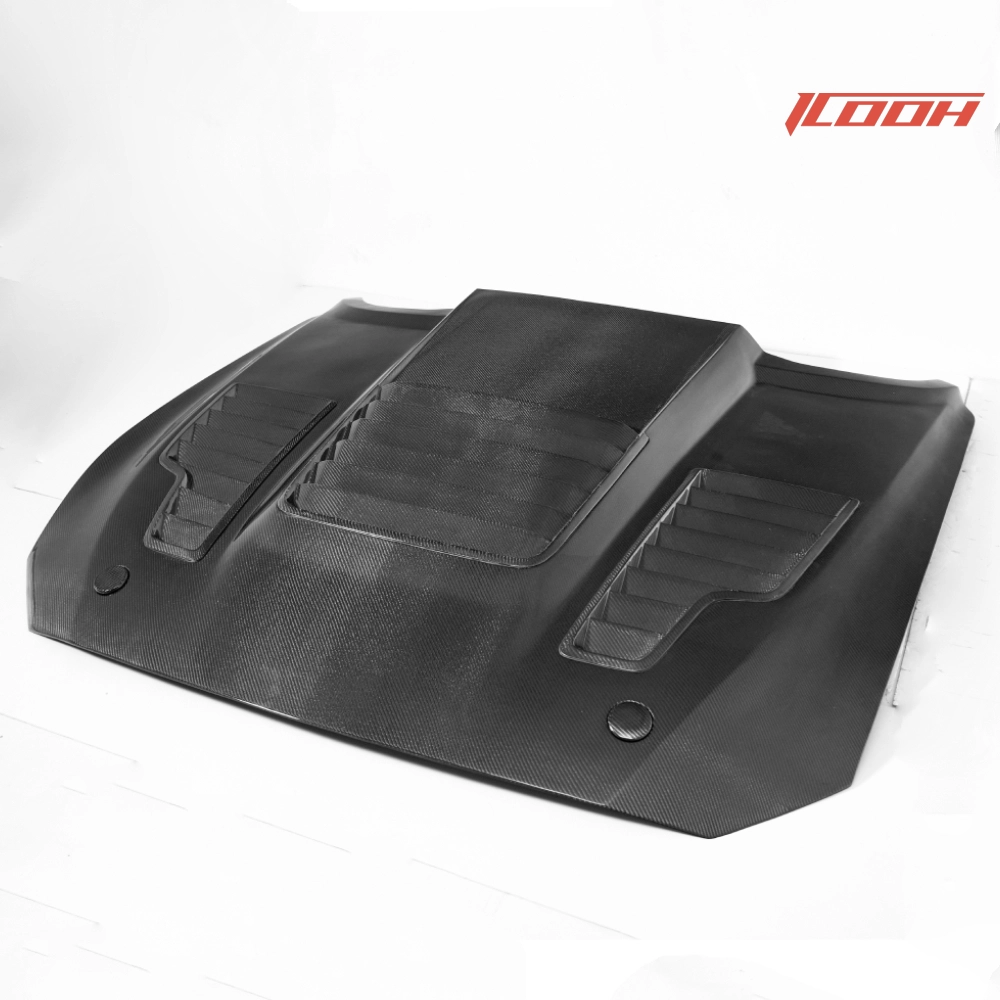
005 Ford Mustang 2018-2023 S550 Exhaust-style Carbon Fiber Front Hood
005 style Carbon Fiber Front Bonnet Engine Hood for Ford Mustang 2018-2023. made of durable carbon fiber material, precision-engineered for OEM-matched fitment. Lightweight and strong, enhances performance while maintaining a sporty aesthetic. Suitable for aftermarket replacement or performance upgrade with 100% tested quality assurance.
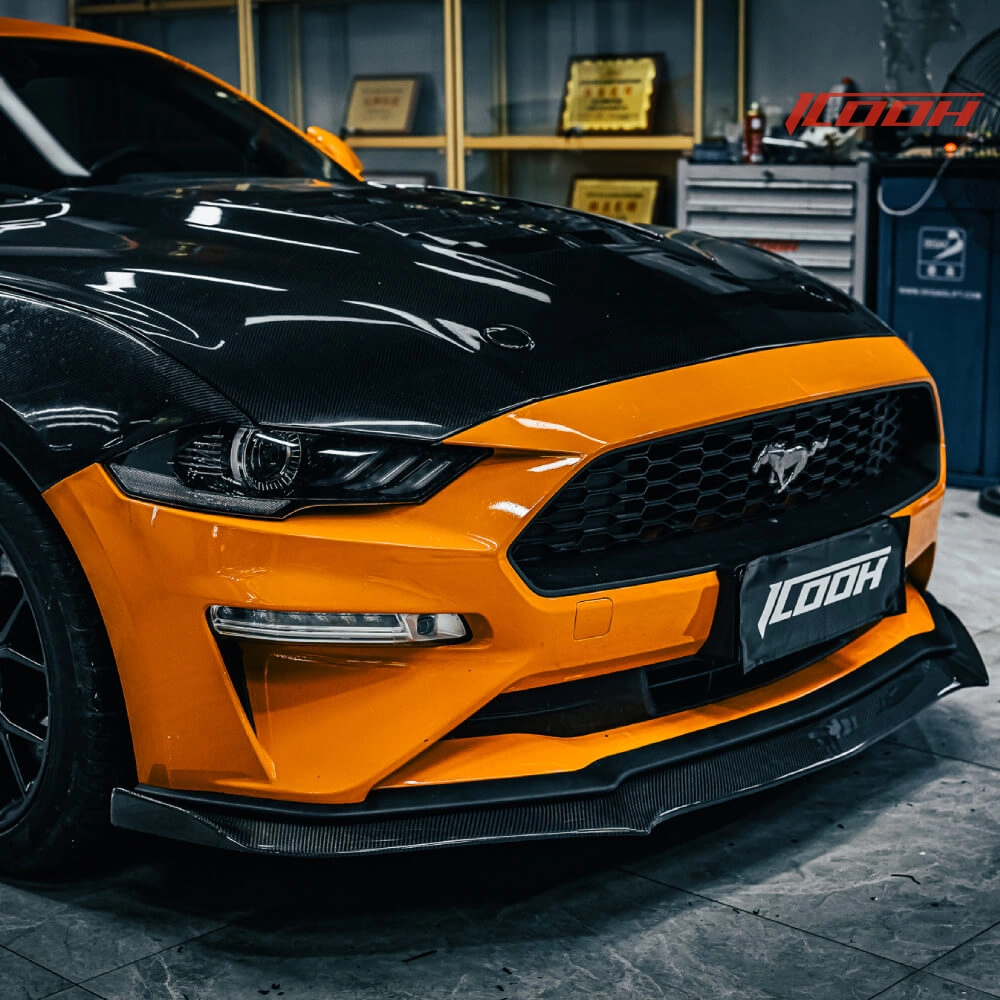
GT350 Ford Mustang 2018-2023 Carbon Fiber Front Lip
Enhance the aerodynamics and style of your Mustang with the 2018–2023 Mustang GT350 Carbon Fiber Front Lip. Crafted from lightweight, high-strength carbon fiber, this front lip delivers improved downforce, sharper front-end appearance, and a precise OEM-style fit.
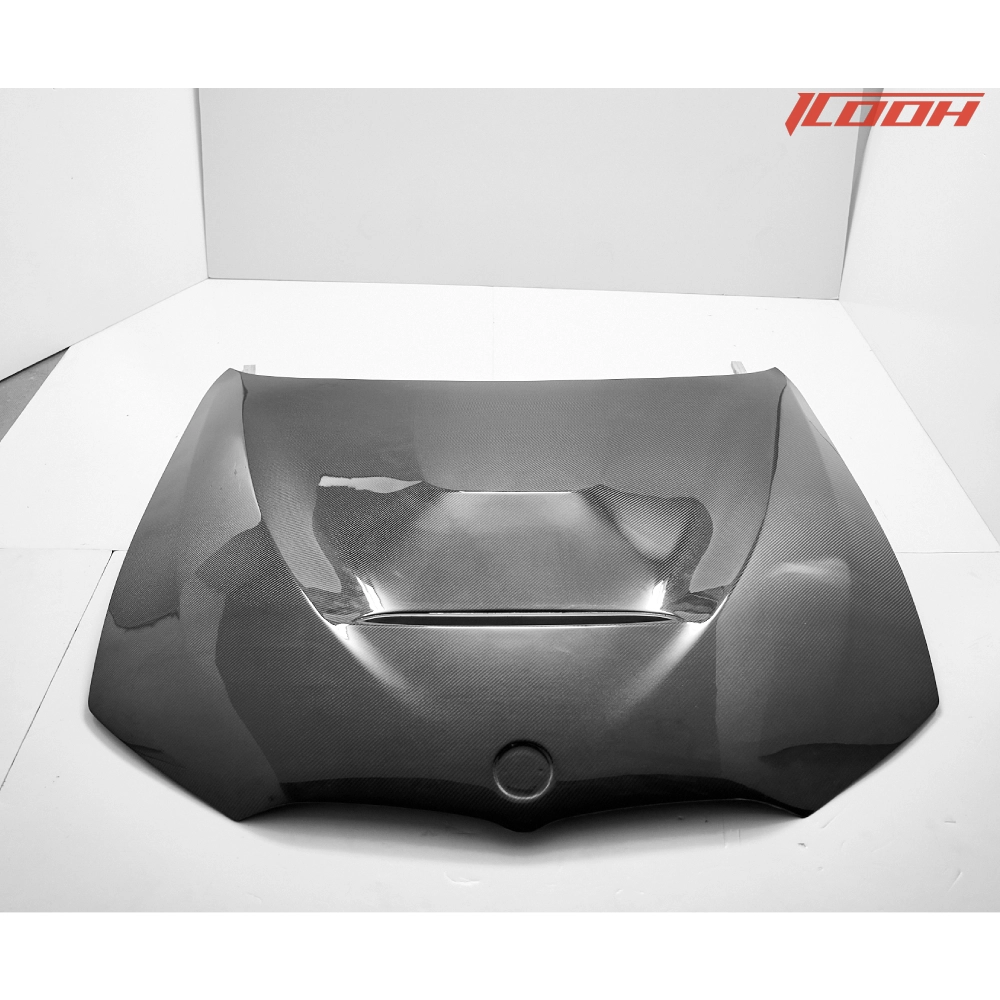
2020-2024 BMW G20 3 Series GTS Style Carbon Fiber Hood
The BMW G20 3 Series GTS-style carbon fiber hood, designed to deliver a lightweight, aggressive, and performance-focused look. Crafted from high-quality carbon fiber, it enhances aerodynamics, improves heat dissipation, and gives your G20 a striking motorsport appearance.

BMW 1 Series F20 GTS style carbon fiber front hood
The BMW 1 Series F20 GTS-style carbon fiber front hood. Made from high-quality carbon fiber, it offers a lightweight, durable construction with improved cooling and a striking performance look. Designed for precise fitment, it enhances both style and aerodynamics for a true motorsport feel.
Lightweight. Durable. Uniquely Yours.
ICOOH is a pioneer in automotive performance and exterior upgrades, compatible with 99% of vehicles worldwide. Let ICOOH be your professional supplier of car tuning parts and performance automotive accessories.
Facebook
Linkedin
Youtube
Instagram