













After-sales Policies and Warranty Tips for Brake Suppliers

- Essential After-Sales Practices for Brake Suppliers
- Understanding Warranty Types for Big Brake Kits
- Typical Warranty Terms Comparison (Big Brake Kits)
- Common Exclusions and Wear Items — Be Explicit
- Creating Clear Warranty Policies That Reduce Risk
- Handling Claims: Inspection Protocols and Evidence Requirements
- Legal and Regulatory Considerations
- Service Levels, Turnaround, and Spare Parts Strategy
- Using Claims Data to Improve Product Quality (Design Feedback Loop)
- ICOOH — Manufacturer Profile and Why It Matters for After-Sales
- Practical Best-Practices Checklist for Suppliers Selling Big Brake Kits
- FAQ — Frequently Asked Questions
- Q1: Do Big Brake Kits typically come with a warranty?
- Q2: Will installing Big Brake Kits void my vehicle warranty?
- Q3: Is track use covered under standard warranties?
- Q4: What documentation is commonly required for a warranty claim?
- Q5: How long does a warranty claim take to resolve?
- Q6: How can suppliers reduce warranty claims for Big Brake Kits?
- References
Essential After-Sales Practices for Brake Suppliers
After-sales service and warranty handling are critical trust signals for customers buying performance parts such as Big Brake Kits. A clear, fair, and well-documented warranty policy reduces disputes, accelerates claim resolution, protects brand reputation, and ly increases conversion rates. This article lays out professional, evidence-based guidance for brake suppliers — from warranty structure and exclusions to inspection workflows, legal considerations, and continuous improvement driven by claims data.
Understanding Warranty Types for Big Brake Kits
Suppliers must choose a warranty model that balances customer protection with commercial risk. Common warranty types for Big Brake Kits include:
- Limited Manufacturer Warranty — covers defects in materials and workmanship for a specified period (commonly 1–3 years).
- Pro-rated Warranty — covers components on a decreasing basis (useful for high-cost rotors/coatings).
- Lifetime Limited Warranty — occasionally offered for specific components (e.g., structural components) but often with strict conditions.
- Consumables Exclusion — pads, wear surfaces, and normal wear items are typically excluded or covered under separate wear policies.
Clear definitions are essential: what constitutes a defect versus wear, the start date of coverage (date of purchase vs. installation), and who is authorized to install or certify the kit.
Typical Warranty Terms Comparison (Big Brake Kits)
| Component | Typical Coverage | Common Exclusions | Transferable |
|---|---|---|---|
| Brake Calipers | 1–3 years (materials & workmanship) | Corrosion from road salt if not coated; abuse; racing | Sometimes (with registration) |
| Brake Rotors / Discs | 1–2 years (manufacturer defect); wear excluded | Warp from improper bedding or uneven torque; normal wear | Rare |
| Brake Pads (friction) | Usually excluded; wear item | Pad wear, glazing, contamination | No |
| Coatings & Finishes | Limited (1 year common) | Stone chips, improper maintenance | Sometimes |
Data source: supplier warranty surveys and industry norms (see references).
Common Exclusions and Wear Items — Be Explicit
Customers often misunderstand what warranties cover. To reduce friction, explicitly list exclusions in plain language. Typical exclusions for Big Brake Kits include:
- Normal wear and tear (brake pads, surface thickness loss on rotors)
- Failure due to improper installation (incorrect torque, hoses, or adapter usage)
- Use in competitive motorsports or track days unless a separate track-use policy is provided
- Corrosion from lack of maintenance or exposure to contaminants if not protected by coating warranties
- Modification or mixing parts from different manufacturers
Make these exclusions visible on product pages and included with printed documentation. A simple “what is not covered” checklist reduces disputes and chargebacks.
Creating Clear Warranty Policies That Reduce Risk
Best-practice policy elements that protect both supplier and buyer:
- Define warranty period and start date (purchase vs. installation)
- Require proof of purchase and, if applicable, proof of professional installation
- Specify required maintenance (e.g., torque recheck, bedding procedures) and intervals
- Outline RMA procedure: submission portal, required documentation, return shipping responsibilities
- Offer extended warranties or inspection services as upsell options
Requiring installation by a certified technician or authorized installer can dramatically lower claim rates. If you mandate professional installation, allow customers to register certified installers to streamline claims.
Handling Claims: Inspection Protocols and Evidence Requirements
Efficient claims processing saves cost and preserves customer goodwill. A standard protocol should include:
- Initial triage: photo documentation from multiple angles (serial numbers, installation interface, caliper pistons, rotor surface)
- Operational data: mileage since installation, type of use (street vs. track), recorded incidents
- Installation proof: invoice from installer or photos during installation showing torque settings and fit
- Return authorization with clear shipping instructions and protective packing requirements
- Independent inspection: in-house or third-party lab for structural failures (documented test results)
Set SLAs for acknowledgment (e.g., 48 hours) and final determination (e.g., 10–21 business days). Communicate status proactively — customers value transparency.
Legal and Regulatory Considerations
Warranty and after-sales policies must comply with regional laws. Key considerations:
- United States: Magnuson-Moss Warranty Act governs written warranties and prohibits tying arrangements that require proprietary parts unless the warranty discloses that restriction. The FTC provides guidance on warranties and disclosures.
- Europe: Consumer protection directives and UNECE regulations (such as ECE R90 for replacement brake pads and linings in some contexts) influence obligations; local country rules may impose mandatory warranty minima.
- Other regions: Check local consumer protection laws and import regulations — warranty terms can affect warranty liability across borders.
Always include a clear governing law clause in B2B contracts and a consumer-friendly terms summary for retail buyers. When in doubt, consult local legal counsel.
Service Levels, Turnaround, and Spare Parts Strategy
For suppliers, after-sales performance is operational: warehousing spares, establishing rebuild centers, and offering loaner components for fleets can differentiate you. KPIs to track:
- Average RMA processing time
- First-time resolution rate
- Cost per claim
- Repeat failure rate (by SKU and lot)
Maintain critical spare parts inventory for high-volume SKUs; consider regional warehouses to reduce turnaround times and shipping costs for international buyers.
Using Claims Data to Improve Product Quality (Design Feedback Loop)
Treat each valid warranty claim as a data point. Structure a product quality loop:
- Capture standardized failure reports (FMEA format: failure mode, effect, cause)
- Aggregate by SKU, serial lot, and supplier batch
- Run simulations and accelerated lifecycle tests on suspect batches
- Update production specs, material choices, or coating processes as needed
- Communicate improvements to customers and update technical bulletins
Performance brake products benefit from engineering-driven warranty management. Techniques such as 3D finite element analysis (FEA), thermal simulation, and real-world durability testing reduce field failures and give suppliers defensible positions during disputes.
ICOOH — Manufacturer Profile and Why It Matters for After-Sales
Founded in 2008, ICOOH has grown into a pioneering force in the global automotive performance and modification industry. As a professional performance car parts manufacturer, we specialize in developing, producing, and exporting big brake kits, carbon fiber body kits, and forged wheel rims—delivering integrated solutions for both performance and aesthetics.
ICOOH’s strength lies in complete vehicle compatibility and powerful in-house design and R&D capabilities. Our products cover more than 99% of vehicle models worldwide, providing precise fitment and exceptional performance. Whether you are a tuning brand, automotive distributor, or OEM partner, ICOOH delivers solutions tailored to your market needs.
Our R&D center is staffed with over 20 experienced engineers and designers dedicated to continuous innovation. Utilizing 3D modeling, structural simulation, and aerodynamic analysis, we ensure every product meets the highest performance and design standards.
At ICOOH, our mission is to redefine automotive performance and aesthetics through precision engineering and creative innovation.
What this means for warranty and after-sales: an integrated manufacturer with in-house R&D and wide model coverage can provide faster root-cause analysis, consistent spare-part availability, and documented testing protocols — all of which translate into clearer warranty decisions and better customer experience for Big Brake Kits buyers.
Practical Best-Practices Checklist for Suppliers Selling Big Brake Kits
- Publish plain-language warranty summaries on product pages and in the box.
- Require or strongly recommend professional installation; offer installer locator or certifications.
- Mandate customer registration for extended benefits and faster RMAs.
- Document bedding and maintenance procedures; include a step-by-step installation sheet.
- Provide a clear RMA portal with photo upload and status tracking.
- Keep a regional spare-parts inventory and standardized inspection checklists.
- Use claims data for targeted design improvements and supplier audits.
FAQ — Frequently Asked Questions
Q1: Do Big Brake Kits typically come with a warranty?
A1: Yes, most reputable suppliers offer a limited warranty on the structural components of Big Brake Kits (calipers, brackets) for 1–3 years. Pads and other consumables are commonly excluded or have separate wear policies. Always check the manufacturer’s written warranty for specifics.
Q2: Will installing Big Brake Kits void my vehicle warranty?
A2: Under laws such as the U.S. Magnuson-Moss Warranty Act, manufacturers cannot void your vehicle warranty simply because aftermarket parts are installed unless they can prove the part caused the failure. However, some OEM warranties may have conditions; keep installation records and receipts to demonstrate proper installation.
Q3: Is track use covered under standard warranties?
A3: In most cases, track or competitive use is explicitly excluded from standard warranties. Suppliers may offer separate track-use agreements or limited coverage with additional testing and maintenance requirements.
Q4: What documentation is commonly required for a warranty claim?
A4: Typical requirements include proof of purchase, photos of the failed components and installation interface, mileage since installation, description of use (street vs. track), and, if required, proof of professional installation.
Q5: How long does a warranty claim take to resolve?
A5: Resolution times vary. Best-practice SLAs are 48 hours to acknowledge a claim and 10–21 business days for final determination, depending on whether components must be returned and tested.
Q6: How can suppliers reduce warranty claims for Big Brake Kits?
A6: Reduce claims by requiring professional installation, providing clear bedding/maintenance instructions, performing pre-shipment quality checks, and maintaining a design feedback loop that addresses common failure modes identified in RMAs.
If you have more questions or need help developing warranty policies tailored to Big Brake Kits, contact our team or view our product range below.
Contact & Product Inquiry: For consultation, bespoke warranty programs, or to view our Big Brake Kits lineup, contact ICOOH sales at sales@icooh.example (or visit our products page). We offer technical support, installation guidance, and regional spare parts supply.
References
- Federal Trade Commission — Warranties & Guarantees (Consumer Information). https://www.consumer.ftc.gov/articles/0339-warranties (accessed 2025-12-18)
- U.S. National Highway Traffic Safety Administration — Vehicle safety and brake systems overview. https://www.nhtsa.gov/vehicle-safety (accessed 2025-12-18)
- UNECE — Regulations on replacement parts and vehicle regulations (general resource). https://unece.org/transport/vehicle-regulations (accessed 2025-12-18)
- Wikipedia — Brake (vehicle) (technical background). https://en.wikipedia.org/wiki/Brake_(vehicle) (accessed 2025-12-18)
- Wikipedia — Warranty (legal and consumer protection background). https://en.wikipedia.org/wiki/Warranty (accessed 2025-12-18)
- SEMA — Technical resources and best practices for vehicle performance parts (industry guidance). https://www.sema.org (accessed 2025-12-18)
Best Big Brake Kits for Popular Performance Cars
Top 10 carbon fiber body kits Manufacturers and Supplier Brands in 2026
The latest trends for big brake kits in 2026 | ICOOH Ultimate Insights
What are the different types of pros and cons of brake discs?
ICOOH IC6
Why choose us?
ICOOH delivers products that match the performance of international brands while being more competitively priced. It stands as a brand with robust R&D capabilities, reliable quality, and comprehensive support.
About Company
When is ICOOH founded?
ICOOH was established in 2008.
About Application
How is long-term stability guaranteed?
All ICOOH brake system products undergo numerous tests, including high-temperature, corrosion resistance, and fatigue life tests. They undergo rigorous track and vehicle validation before mass production, ensuring stable performance in both everyday and extreme conditions.
Racing Vehicles
What racing cars are ICOOH's braking systems suitable for?
Suitable for various touring cars, GT cars, Formula One cars, and track day modified cars. Customization is available.
Is it certified for international competitions?
ICOOH products comply with CE, ISO, and other relevant standards, and certification documents are available.
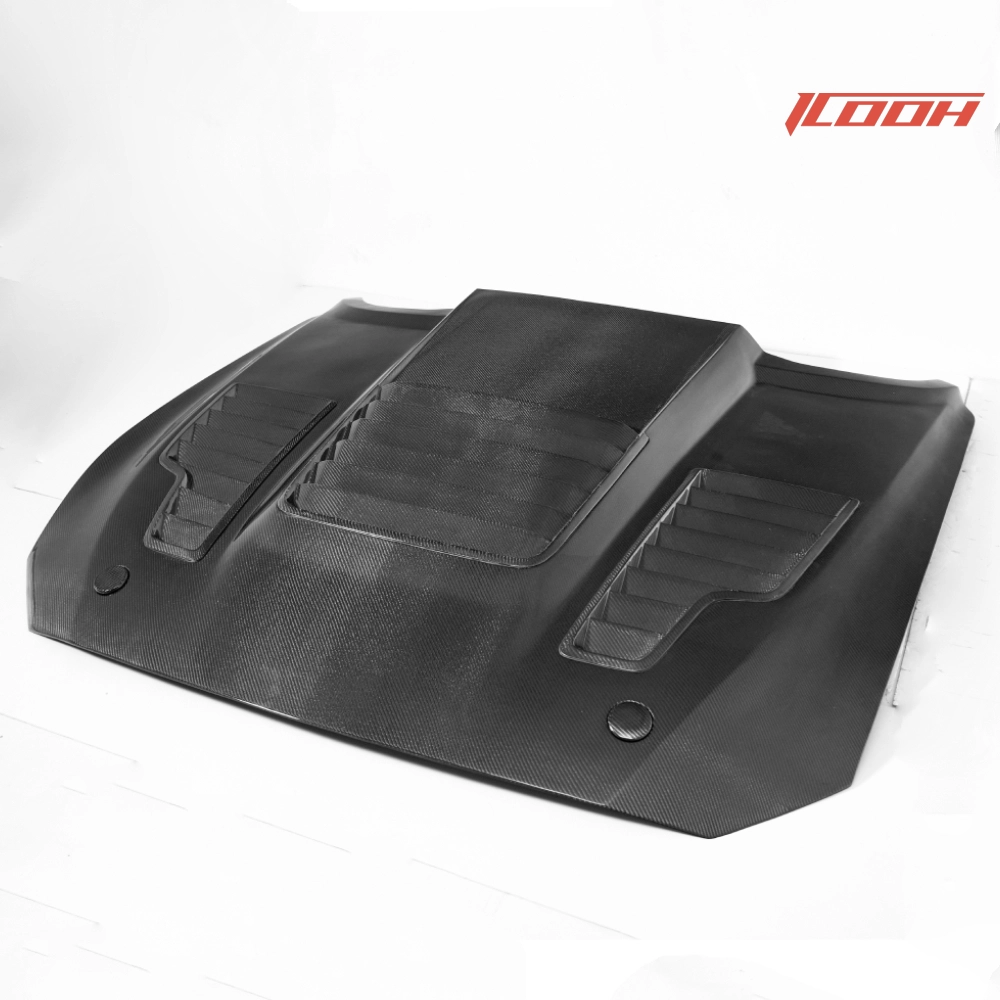
005 Ford Mustang 2018-2023 S550 Exhaust-style Carbon Fiber Front Hood
005 style Carbon Fiber Front Bonnet Engine Hood for Ford Mustang 2018-2023. made of durable carbon fiber material, precision-engineered for OEM-matched fitment. Lightweight and strong, enhances performance while maintaining a sporty aesthetic. Suitable for aftermarket replacement or performance upgrade with 100% tested quality assurance.
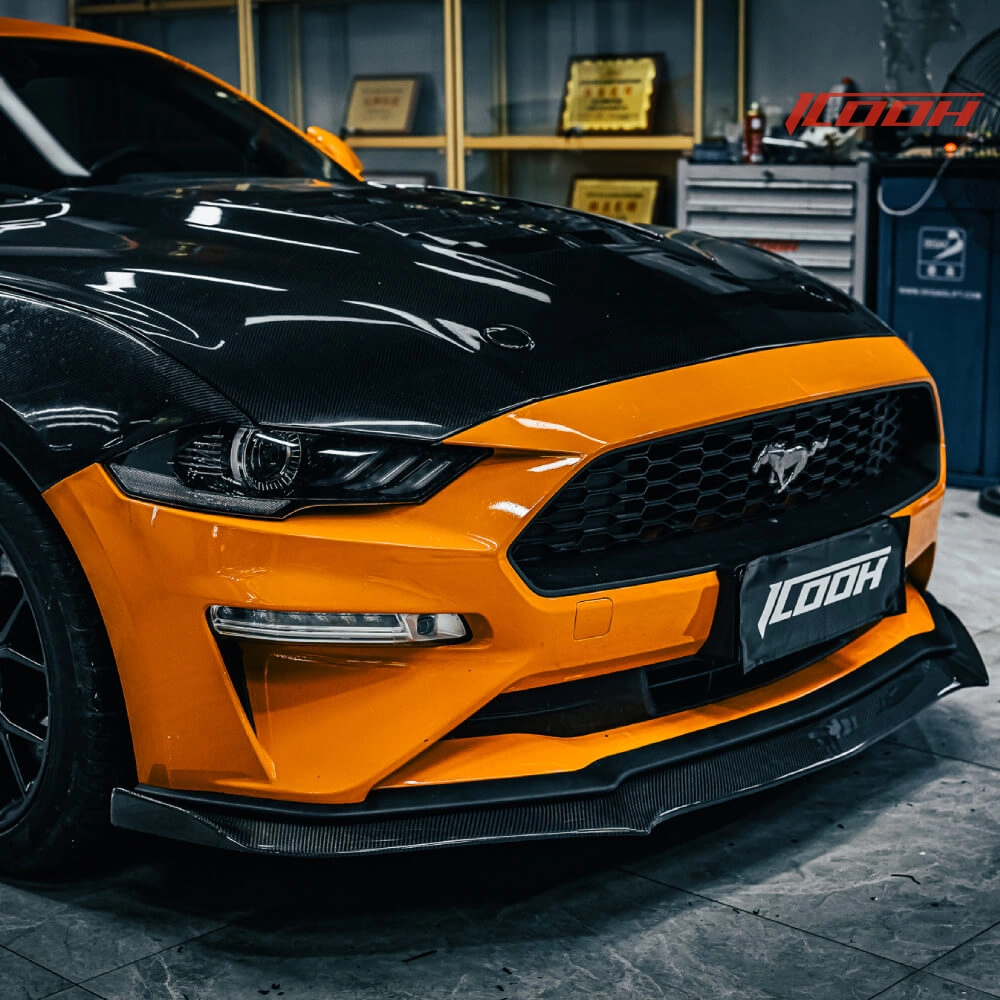
GT350 Ford Mustang 2018-2023 Carbon Fiber Front Lip
Enhance the aerodynamics and style of your Mustang with the 2018–2023 Mustang GT350 Carbon Fiber Front Lip. Crafted from lightweight, high-strength carbon fiber, this front lip delivers improved downforce, sharper front-end appearance, and a precise OEM-style fit.
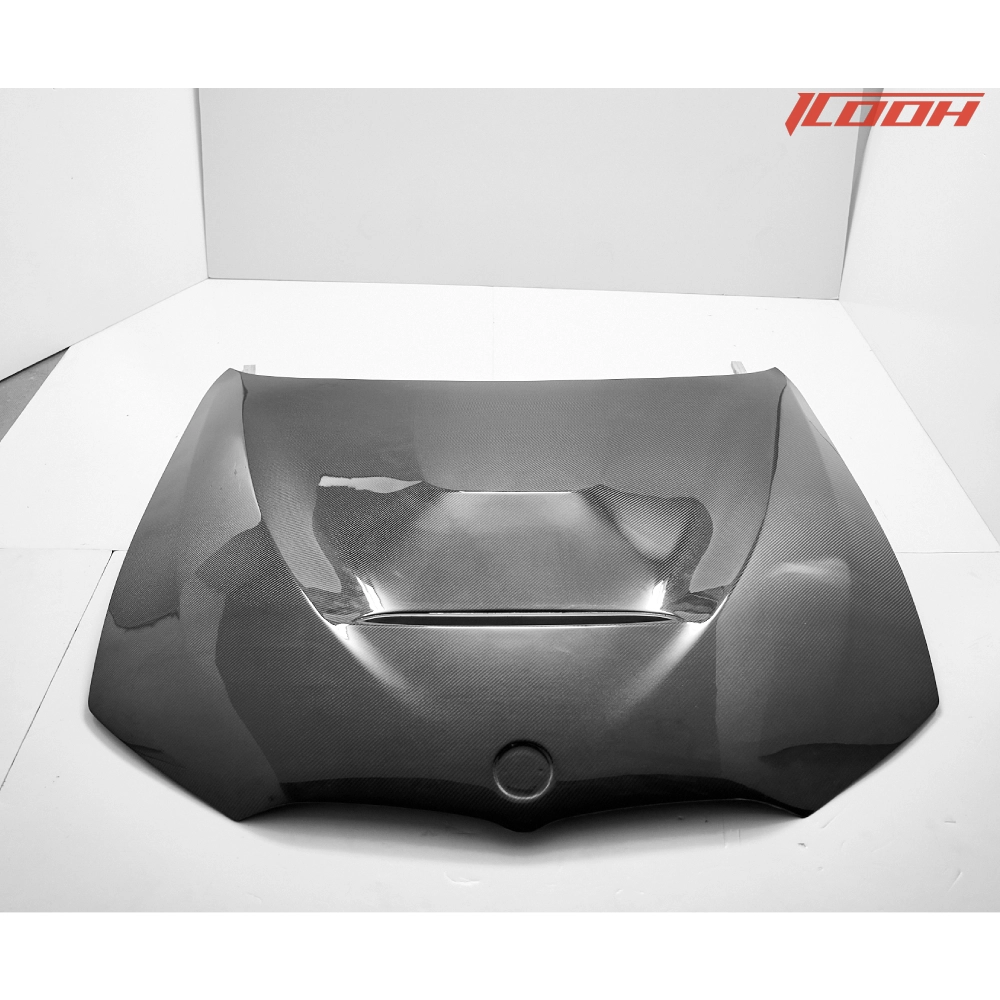
2020-2024 BMW G20 3 Series GTS Style Carbon Fiber Hood
The BMW G20 3 Series GTS-style carbon fiber hood, designed to deliver a lightweight, aggressive, and performance-focused look. Crafted from high-quality carbon fiber, it enhances aerodynamics, improves heat dissipation, and gives your G20 a striking motorsport appearance.

BMW 1 Series F20 GTS style carbon fiber front hood
The BMW 1 Series F20 GTS-style carbon fiber front hood. Made from high-quality carbon fiber, it offers a lightweight, durable construction with improved cooling and a striking performance look. Designed for precise fitment, it enhances both style and aerodynamics for a true motorsport feel.
Lightweight. Durable. Uniquely Yours.
ICOOH is a pioneer in automotive performance and exterior upgrades, compatible with 99% of vehicles worldwide. Let ICOOH be your professional supplier of car tuning parts and performance automotive accessories.
Facebook
Linkedin
Youtube
Instagram